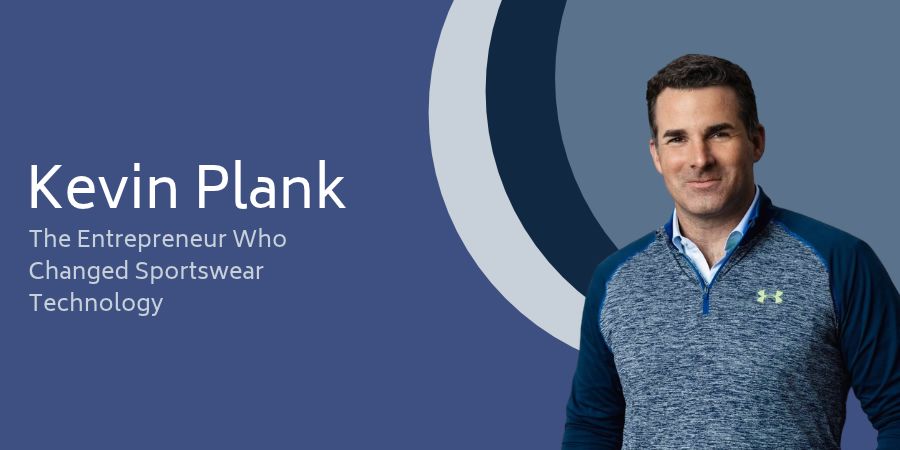
In 1996, a sweat-soaked cotton T-shirt gave Kevin Plank the idea for Under Armour. Thirty years on, the company he founded has grown into an international sportswear brand built on performance apparel and material innovation, and Plank is back at its helm for another phase of change.
The product changed how athletes and sportswear brands thought about clothing. Designers could engineer apparel to support movement, manage moisture and respond to different training conditions. Plank’s journey also carries a business lesson: an innovation can establish a brand, but keeping it alive takes continuous research, commercial discipline and a sharp read on consumer expectations.
Who is Kevin Plank?
Kevin A. Plank is an American entrepreneur and the founder, President and Chief Executive Officer of Under Armour.
He studied business at the University of Maryland, where he also played football as a special teams player. The experience gave him first-hand knowledge of what conventional sportswear got wrong, and he approached the opportunity as someone who had lived with the problem rather than as a fashion entrepreneur.
Under his leadership, Under Armour grew from a small startup into a global company selling performance apparel, footwear and accessories, known for its athlete partnerships and performance-focused marketing. Plank served as CEO and chairman from 1996 to 2019, became executive chair and brand chief in 2020, and returned as President and CEO in April 2024.
His early advantage was his closeness to the problem. Spending time with the people who feel a problem often reveals opportunities that conventional market research misses.
The Problem Which Inspired Under Armour’s Creation
Cotton T-shirts soaked up sweat during intense activity, turning heavy and uncomfortable, especially under football equipment. Plank wanted a shirt that stayed light and managed moisture during training, and he began exploring synthetic fabrics that pulled sweat away from the skin.
In 1996, he developed the company’s first prototype, known as Prototype #0037, or “The Shorty.” The fitted, stretchy shirt was designed to wick sweat faster and keep athletes cool, dry and light. It became the starting point for the Under Armour business.
Plank did not try to compete with established sportswear companies across every category. He picked one performance problem and built a product around it. A product does not need to reinvent an industry on day one, because solving one recurring problem exceptionally well can support a much larger business.
How Kevin Plank Turned Fabric Innovation into a Business
Turning a prototype into a commercial product took more than a better shirt. Plank had to convince athletes, teams and buyers that the apparel gave them a real advantage, so he approached football teams and individual athletes, relying on direct demonstrations and word of mouth.
The start was small. Plank launched the company with about $20,000 in personal savings and close to $40,000 in credit card debt spread across five cards. His first big team sale went to Georgia Tech, and his first year closed with $17,000 in sales. In 1998, Under Armour moved from Washington, DC, to Baltimore, Maryland, where it set up its headquarters and warehouse.
In late 1999, Plank spent $25,000 on an advertisement in ESPN The Magazine, using much of the company’s available cash. The ad produced about $1 million in direct sales the following year. Under Armour went public in 2005, and by 2010 its annual revenue passed $1 billion for the first time.
Four decisions shaped the transition:
- A focused initial product: The first shirts solved one specific problem instead of serving every clothing category.
- Athlete-led validation: Performance apparel earned credibility through use in real sporting environments.
- A recognisable brand identity: Under Armour positioned itself around performance, determination and athletic ambition.
- Product-led expansion: The first fabric innovations became the base for additional apparel categories.
The lesson is that technical innovation needs a route to market. An invention becomes a business when customers understand its benefits, trust its performance and agree to pay for it.
The Technology Behind Under Armour’s Performance Apparel
Under Armour treated clothing as performance equipment. Instead of focusing only on appearance, it developed materials and garment designs that responded to athletes’ physical needs.
Moisture-wicking fabric
Moisture-wicking fabric moves perspiration away from the skin and towards the outer surface of a garment, where it spreads and evaporates more readily. Under Armour built its first product identity on this principle, using lightweight synthetic materials to make close-fitting shirts that athletes could wear beneath traditional uniforms. The benefit was easy to grasp, since athletes did not need a lesson in textile engineering to feel the difference between a heavy cotton shirt and a lighter performance layer.
HeatGear and ColdGear technologies
As the company grew, it developed products for different environmental conditions.
- HeatGear: Introduced through the original performance apparel concept, HeatGear is designed for hot conditions. Its lightweight, moisture-wicking materials help athletes stay dry and comfortable.
- ColdGear: Introduced in 1997, ColdGear was developed for colder conditions. Its dual-layer construction, brushed interior and moisture-management properties provide warmth without excessive bulk.
The two lines let Under Armour move from selling one innovative shirt to building a product ecosystem around different athletic environments.
Performance-focused product engineering
Fabric choice is only one consideration. Under Armour’s engineering approach also covers garment construction that supports movement, compression and stretch-based fits, products suited to different temperatures, and testing to confirm the intended performance benefits. Construction, fit, durability and suitability for the activity all shape the experience. Innovation should be judged by the complete customer experience, not by a single impressive technical feature.
How Under Armour Used Technology to Differentiate Its Brand
Under Armour entered a market where established companies already held strong distribution networks and consumer recognition, so advertising alone could not have won it a place. Plank’s strategy was to make product performance the brand’s defining characteristic. The company was not selling another athletic T-shirt but clothing designed to fix a visible limitation in existing products.
Four elements supported the differentiation:
- Product-based positioning: The company tied its identity to technical performance, not fashion alone.
- Athlete partnerships: Sporting associations showed the products at work in competitive environments.
- Distinctive messaging: Campaigns such as Protect This House linked the brand with determination and athletic identity.
- Category expansion: HeatGear, ColdGear and other products built a recognisable, technology-led portfolio.
The 2003 Protect This House campaign turned a technical product claim into an emotional message about commitment and competition. Technology can earn the first purchase, but consistent product experiences and credible communication earn the next one. Differentiation also needs constant upkeep, because once competitors offer similar features the original innovation may no longer protect a brand’s position.
From Performance Apparel to Digital Fitness and Connected Technology
Under Armour’s interest in technology moved beyond physical clothing. The company explored how digital platforms could help it build relationships with athletes and understand their fitness activities, and it made three acquisitions:
- MapMyFitness (2013): The platform behind applications such as MapMyRun and MapMyRide, recorded in the company’s 2013 SEC filing at approximately $150 million.
- Endomondo (2015): A digital fitness platform, reportedly acquired for about $85 million.
- MyFitnessPal (2015): A nutrition and fitness tracking platform, reportedly acquired for about $475 million.
The three deals came to roughly $710 million. The idea was that a company present in athletes’ training routines through both products and digital services could build a closer relationship with its customers.
The strategy exposed the difficulty of entering businesses with different operating models. In December 2020, Under Armour sold MyFitnessPal to Francisco Partners for a reported $345 million, well below the purchase price, and discontinued Endomondo during the same period. MapMyFitness applications continued operating.
Digital fitness demands software development, platform management, user engagement, data infrastructure and subscription economics, skills that differ sharply from textile development and apparel distribution. An adjacent market may look attractive because it shares the same customers, but customer overlap does not guarantee that the business models fit.
Kevin Plank’s Leadership and Innovation Strategy
Plank’s leadership has centred on product performance and the athlete’s experience. His original idea came from personal frustration, and that problem-solving habit became part of the company’s identity. His approach rests on five principles:
- Start with the customer: Understand the difficulty people face before deciding what to develop.
- Build around a clear purpose: Give the business a product proposition customers can grasp.
- Connect innovation with commercial value: Technical improvements should meet needs customers recognise.
- Use storytelling to communicate product benefits: Help consumers see why an innovation matters.
- Maintain a long-term product vision: Build a portfolio that supports the company’s positioning instead of chasing every market trend.
His return as CEO in April 2024 put the founder back in direct operational control after a period of leadership changes. In the company’s July 2026 annual report, Plank described efforts to simplify operations, improve accountability and concentrate investment on its strongest product opportunities. He also acknowledged that the business still had work to do, particularly on profitability.
Running a mature company calls for different skills from starting one, including organisational discipline, financial management, talent development and the ability to adapt when the market shifts. Plank’s current challenge is therefore as much about execution as innovation.
Business Challenges, Competition and the Road Ahead
As the athletic apparel market evolved, Under Armour faced stronger competition and shifting consumer preferences. Nike, Adidas and Lululemon strengthened their positions across sportswear and lifestyle categories, and the rise of athleisure created demand for products that combined functionality with everyday style.
The company’s fiscal 2026 results show the scale of the challenge.
| Metric | Figure |
| Full-year revenue | $5.0B |
| Year-over-year revenue change | -4% |
| Gross margin | 45.5% |
| Reported net loss | -$496M |
North America revenue fell 8% to $2.9 billion, while international revenue grew 4% to $2.1 billion. Footwear revenue dropped 11% to $1.1 billion, and apparel slipped 2% to $3.4 billion. The net loss includes a one-time accounting charge, a $247 million valuation allowance on US federal deferred tax assets. Adjusted net income was $50 million, compared with $135 million in fiscal 2025.
Plank outlined five priorities in his July 2026 shareholder letter:
- Reducing product complexity: The company reported cutting its stock-keeping units by approximately 25% over two years.
- Strengthening core categories: Running, training, team sports and established apparel franchises are getting more attention.
- Improving profitability: The focus is on operating discipline, product mix and cost management.
- Rebuilding brand relevance: Marketing investment is going towards products, athletes and stories that reinforce its performance identity.
- Improving execution across markets: The company is working to strengthen its regional performance and distribution strategy.
The company also indicated that fiscal 2027 would remain a transition year, with revenue expected to decline slightly. Success in one thing does not guarantee that the original strategy will keep working as markets change. The road ahead depends on whether Under Armour can make its technical strengths relevant to a broader customer base while competing against companies with far greater brand recognition and resources.
What Entrepreneurs Can Learn from Kevin Plank’s Innovation Journey
Five lessons reach well beyond sportswear.
1. Solve a problem you understand. Plank’s first idea came from his own experience as an athlete. Entrepreneurs should spend time understanding customer frustrations before investing heavily in development.
2. Let the product establish your reputation. Under Armour built its early identity around one functional advantage. A strong proposition can persuade more effectively than a large marketing budget, particularly for a new entrant in an established market.
3. Treat technology as an ongoing investment. HeatGear and ColdGear showed how one innovation could grow into a wider portfolio, but technology cannot stay a one-time advantage. It needs continuous investment in research, materials and testing.
4. Expand carefully into adjacent markets. The connected fitness experience shows that entering a related industry takes more than reaching the same customer. Check whether you have the capabilities and business model to compete in the new category.
5. Know when the business needs a different strategy. A founding formula may need to change as competition and consumer expectations shift. The current restructuring and product simplification show why leaders should reassess priorities instead of assuming past success will produce future growth.
Frequently Asked Questions
Who is Kevin Plank?
Kevin Plank is an American entrepreneur who founded Under Armour in 1996. He is the company’s President and CEO and is known for developing performance apparel that helps athletes manage sweat and stay comfortable.
What inspired Kevin Plank to start Under Armour?
His experience playing football at the University of Maryland. Cotton T-shirts became heavy and uncomfortable when soaked with sweat, which led him to create Under Armour’s first performance shirt.
What is Kevin Plank known for in sportswear technology?
He is known for building Under Armour around moisture-wicking performance apparel. The company’s early innovations included HeatGear and ColdGear, which met athletes’ needs in different temperatures.
When was Under Armour founded?
Under Armour was founded in 1996. Its first prototype, known as #0037 or The Shorty, became the starting point for its performance apparel business.
Is Kevin Plank still the CEO of Under Armour?
Yes. As of November 2026, Plank serves as President and CEO. He returned to the position in April 2024.
What is Under Armour’s biggest innovation?
Its early moisture-wicking performance apparel established the company’s identity. HeatGear and ColdGear later extended that innovation into products for different training conditions.
What can entrepreneurs learn from Kevin Plank?
They can learn to identify genuine customer problems, build products around measurable benefits, create a distinctive brand and adapt strategy as markets evolve.
Conclusion
Kevin Plank career began with a simple observation about athletic clothing. What made the idea commercially significant was his ability to turn it into a product, build a brand around its benefits and grow the business into a global sportswear company.
The company’s later years show that innovation does not remove the pressures of competition, changing consumer preferences or financial management. In 1996, Plank had to convince athletes that better performance apparel was possible. Today he has to show that a company built on that belief can regain commercial momentum in a far more competitive market.
For entrepreneurs, the lesson is that a great product can start a business, but the ability to keep improving it, understand the market and make difficult decisions determines how long that business lasts.
Author’s Note:
What stood out to me about Kevin Plank’s journey was how an ordinary frustration became the starting point for an entirely new business. He was not trying to create the next big sportswear brand when he started. He simply wanted a better shirt for athletes. I find that an interesting reminder that some of the strongest business ideas come from paying attention to problems people experience every day.
But what I find even more worth discussing is what happens after the initial success. Under Armour grew because it gave athletes something different, but staying relevant in a competitive market has proved much harder. Its recent struggles show that having a good product and a recognised name does not automatically guarantee continued growth.
In my view, this is where Plank’s story becomes particularly valuable for entrepreneurs. Building a business requires the courage to try something different, but leading it over the years requires the willingness to question your own decisions, recognise what is no longer working and make changes. Under Armour’s current effort to return to its core strengths is a reminder that sometimes a business needs to simplify before it can move forward.
For me, the biggest takeaway from Plank’s journey is that innovation is not about constantly coming up with something new. It is about understanding what people need, improving what you offer and having the patience to keep doing that even when the business faces difficult periods.