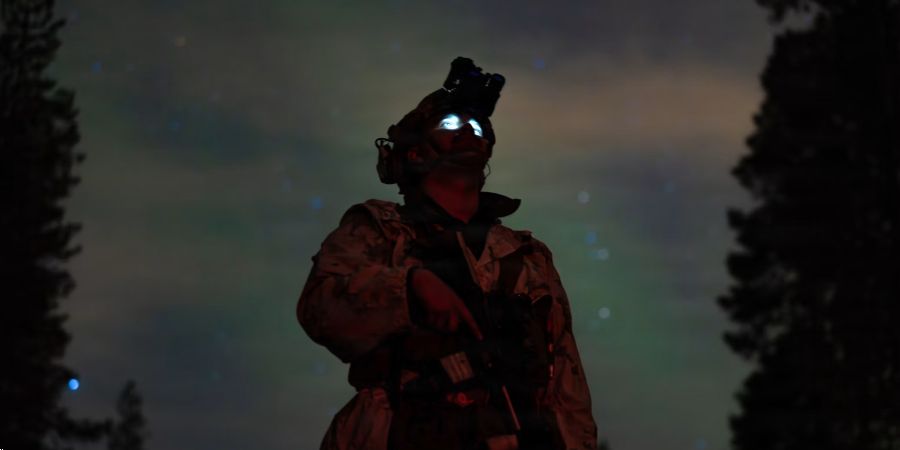
Tactical helmet users often struggle with neck strain, discomfort, and fatigue when cameras, night-vision optics, and communication devices create an unbalanced setup. These issues can compromise mobility and make extended wear increasingly difficult, even with advanced equipment. Discover how better weight distribution, ergonomic design, and effective counterbalancing can improve comfort, maintain stability, and support reliable performance in the field.
The Rise of Headborne Sensor Suites
Modern headgear has become a mounting platform for connected electronics. Common configurations combine visual sensors, identification lights, hearing protection, and communications hardware. Broader explanations of military wearable systems show how body-worn technology can collect information and support communication, while also creating challenges around power, integration, and comfort. Emerging sensor-equipped wearable technology also demonstrates how cameras and movement-tracking components are being incorporated into head-mounted devices, making weight distribution and ergonomic design increasingly important.
Each added module affects more than total mass. A compact device mounted at the front produces a different loading pattern from the same weight positioned close to the crown. Cables can also catch on straps or restrict adjustment. Designers should map the location of every component, connector, and power source before field testing begins. That simple inventory makes hidden ergonomic problems easier to spot.
Biomechanical Penalties of Front-Heavy Loads
A front-heavy setup creates rotational force around the neck. The farther a component sits from the head’s natural center of mass, the more muscular effort the user needs to maintain a neutral posture. Over time, users may lift the chin or round the shoulders to compensate. Those changes can reduce comfort and interfere with scanning, climbing, and other active tasks.
Related limb biomechanics research illustrates how equipment, movement speed, and repeated loading influence human motion. Headgear evaluations should follow the same systems-based logic. Testers can record neck angle, perceived exertion, and pressure points after 15, 30, and 60 minutes instead of relying on a brief fitting session.
Counterbalancing Forward Weight on Ballistic Shells
Rear counterweight can move the combined center of mass closer to the middle of the head. For tactical users running front-mounted low-light optics, an NVG helmet counterweight pouch can also organize removable weights, cables, and small helmet accessories in one location.
Balance should be tuned, not guessed. Start with the lightest practical rear load, secure all components, and check whether the head remains level without constant neck tension. The rear load must sit firmly against the shell because shifting mass can create new pressure points during quick movement. Users should then repeat realistic activities such as walking, kneeling, and looking upward. A balanced configuration should feel stable across positions, not merely comfortable while standing still.
Engineering the Future of Field Headgear
Next-generation field headgear will require closer coordination among industrial designers, electronics teams, and human-factors specialists. Early prototypes should use modular mounting positions so engineers can test several layouts without rebuilding the complete system. Digital models may estimate mass distribution, but physical trials remain necessary because head shape, strap geometry, and hair can change fit.
Teams should document total system weight and front-to-rear balance for each configuration. They should also test controls with gloves, inspect cable movement, and confirm that modules can be removed without disturbing the fit. A technically capable sensor suite can still fail if it causes headaches after an hour. The most useful design benchmark is a stable system that lets the wearer look, move, and work naturally through the full test period.
Future improvements will likely come from lighter electronics, flatter battery formats, and shared mounting standards. Until then, careful mass placement offers one of the clearest ways to improve headborne hardware without changing its core technology.