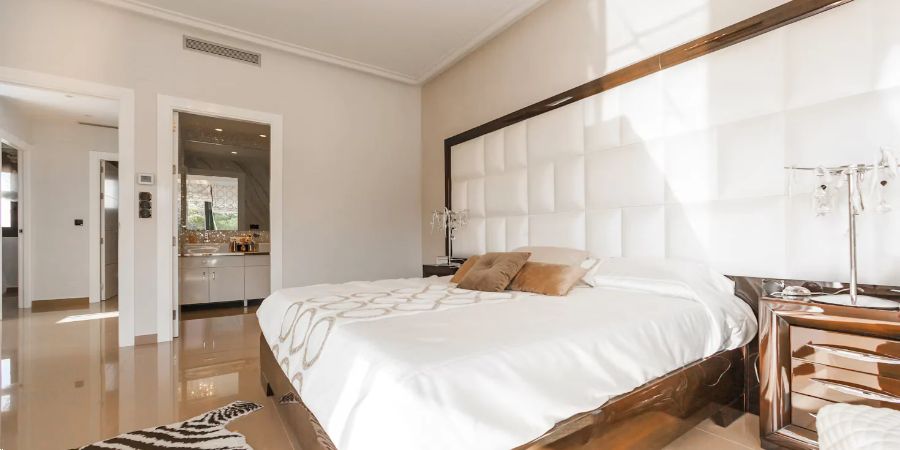
Image credit: Unsplash
A good night’s sleep has become a measurable part of the guest experience, with direct consequences for reviews, repeat bookings and room rates. Hotels can no longer treat rest as a product of mattress quality alone. Temperature, light, sound, textiles and maintenance standards all shape how well a room supports sleep.
For hospitality leaders, this creates an operational challenge and a commercial opportunity. The strongest sleep strategies connect room design with building technology, procurement and performance data. Each improvement should have a clear purpose, from reducing night-time disturbance to shortening housekeeping cycles.
Rise of the Sleep Tourism Economy
Sleep tourism has moved from a niche wellness idea into a recognisable hospitality category. Guests are booking stays that promise quiet rooms, supportive beds, blackout conditions and routines designed around recovery. Some properties now offer sleep menus, guided relaxation sessions and rooms located away from lifts or busy communal areas.
The wider demand makes commercial sense. Many travellers arrive tired before they have even checked in. Long working days, time-zone changes and disrupted routines can make restorative rest one of the most valuable outcomes of a stay. Adults generally need at least seven hours of sleep each night, yet unfamiliar surroundings often make that target harder to reach.
Hotels don’t need to create an elaborate wellness programme to respond. A more practical starting point is to audit the entire night-time experience. Teams can record corridor noise at peak hours, test how much exterior light enters through curtain edges and inspect whether room controls remain visible and easy to use after dark.
Guest communication also matters. A short pre-arrival form could ask about preferred room temperature, pillow firmness or sensitivity to noise. The property management system can store those choices for future visits, allowing staff to prepare the room before arrival. This turns sleep personalisation into a repeatable service process instead of an informal favour dependent on individual employees.
Smart Climate and Lighting Architecture
Room temperature frequently becomes a source of frustration because the controls are unclear, slow or restricted to a narrow range. Smart heating, ventilation and air-conditioning systems can prepare occupied rooms before arrival, maintain stable overnight conditions and reduce energy use once guests check out. The interface still needs to be simple. A visitor should be able to change the temperature without reading instructions or downloading an app.
Automation works best when guests retain control. Occupancy sensors might place an empty room into an efficient mode, then return it to the visitor’s chosen setting when movement is detected. Facilities teams should monitor complaints and manual overrides, since repeated changes may reveal poor calibration, blocked airflow or a faulty sensor.
Lighting requires similar attention. The effect of light on circadian rhythms means bright, cool-toned illumination close to bedtime can delay the body’s normal preparation for sleep. Hotels can use warm bedside lamps, low-level bathroom lighting and blackout curtains with overlapping edges. A clearly labelled master switch near the bed prevents guests from searching for several controls in a dark room.
Consistent guest room comfort also depends on basics such as comfortable bedding, appropriate lighting, reliable temperature control and dependable maintenance. These details shape how easily guests can settle into an unfamiliar space and relax at the end of the day.
Before rolling out changes across every room, test a small group for four to six weeks. Track temperature adjustments, maintenance requests, laundry feedback and sleep-related review comments. The trial will expose usability problems before they become expensive at scale.
Specifying Durable Luxury for Maximum Rest
Luxury in a guest room depends heavily on consistency. A soft pillowcase on the first night has limited value if it becomes rough after repeated commercial washing. Procurement teams therefore need specifications that cover the full service life of an item, including shrinkage, seam strength, colour stability, drying time and compatibility with existing laundry equipment.
When specifying hotel bedding, procurement teams should assess fabric feel, construction, laundering requirements and consistency across replacement batches. Bed linen, pillows and mattress protection also need to work as a system, since one poorly chosen layer can undermine the comfort of the rest.
Thread count alone gives an incomplete picture. Fibre quality, yarn construction, weave and finishing can all affect feel and durability. Samples should go through real laundry cycles before approval. A hotel might wash each test set 20 or 30 times, then compare dimensions, surface texture and visible wear against an unused control sample. Housekeepers should take part in the assessment because they can identify slow-fitting sheets, awkward fastenings and fabrics that crease excessively.
Standardisation can also improve availability. If several room categories use the same core sheet sizes and pillow formats, the housekeeping team can move stock where demand is highest. A smaller range of well-tested products may reduce emergency purchasing and simplify staff training.
Mattress and pillow choices need careful management because comfort preferences vary. Offering two clearly differentiated pillow types is often more useful than filling the room with several similar options. Labels or a concise room guide can explain which pillow is softer or firmer.
Hotels should also establish replacement thresholds. Stains, thinning fabric, damaged closures and loss of shape can weaken a guest’s impression before an item has technically reached the end of its usable life. Routine inspection data gives procurement managers a realistic lifespan for each product and helps them schedule orders before quality slips or stock runs short.
Quantifying the Return on Sleep Investments
Sleep improvements compete for capital with refurbishment, technology and sustainability projects, so leaders need evidence that links them to business performance. The clearest method is to define a baseline before making changes. Relevant measures include sleep-related complaints, room moves, maintenance calls after 10 pm, linen replacement rates and review scores for comfort and quietness.
A pilot programme can then compare upgraded rooms with a similar control group. Suppose 30 rooms receive better blackout fittings, simplified temperature controls and revised bedding specifications. Over three months, the hotel can compare both groups using occupancy, average daily rate, guest feedback and maintenance records. Seasonal patterns and room location should be considered, since a quiet upper-floor room may naturally perform better than one beside a lift.
Public reviews offer useful qualitative evidence, but manual reading is slow and inconsistent. Text-analysis software can tag comments containing terms such as “noise”, “temperature”, “pillow”, “dark” and “comfortable”. This gives management a monthly view of recurring problems and shows whether a specific upgrade changed guest sentiment. Consistent hotel performance benchmarking can also help teams compare operational measures using a common framework.
Operational savings belong in the calculation. Longer-lasting linen may lower annual replacement spending, whilst effective climate controls can reduce unnecessary heating and cooling in empty rooms. Improved blackout systems may also reduce requests to change rooms. Each avoided move saves staff time and limits the risk of losing revenue from a room that needs to be checked again.
Return on investment should be calculated over the expected life of the improvement. Curtains, control systems and mattresses operate on different replacement cycles, so a single monthly figure can distort the result. Finance, facilities, housekeeping and guest-experience teams should agree on the assumptions before approval.
The most revealing metric may be the gap between what the room promises and what the guest reports the next morning. When that gap narrows across reviews, complaints and repeat-stay data, restorative sleep has become an operational capability that the hotel can price, maintain and improve.