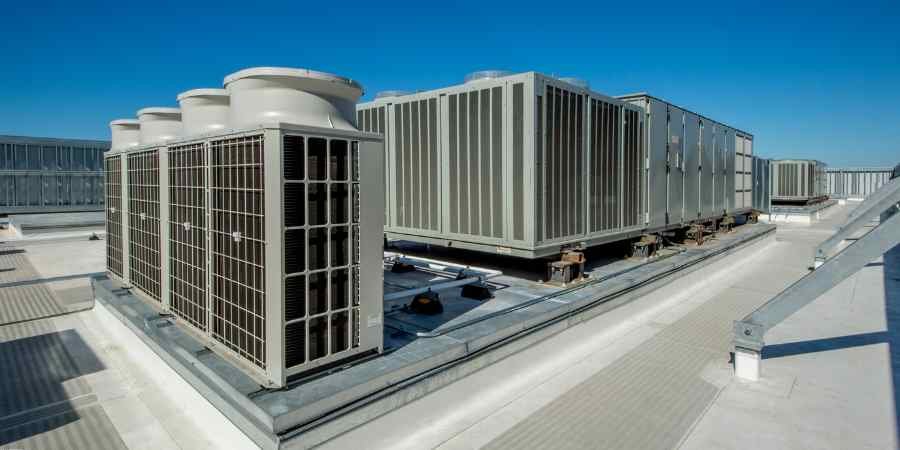
Industrial heating, ventilation and air conditioning (HVAC) systems are essential for maintaining safe, efficient and compliant operations across manufacturing plants, warehouses, healthcare facilities and large commercial environments. For business owners, choosing the right provider is more than just about equipment. It’s about long-term reliability, scalability and service support.
Below is a curated list of some of the best national industrial HVAC companies recognized for their capabilities, reach and reputation in serving large-scale business needs.
- CoolSys
- Johnson Controls
- Trane Technologies
1. CoolSys
CoolSys delivers integrated refrigeration, HVAC, energy, and engineering solutions tailored for complex commercial and industrial environments. It supports businesses across the full equipment life cycle — from system design and engineering to installation, optimization and ongoing maintenance — ensuring consistent performance and reliability. With more than 2,500 technicians, over 110 engineers and tens of thousands of managed locations nationwide, CoolSys combines national scale with deep technical expertise.
Here are the capabilities that make CoolSys a partner for business efficiency:
- Comprehensive HVAC, refrigeration and mechanical services
- Full life cycle support from installation to maintenance
- Multisite and industrial solutions with scalable service
- Proactive monitoring and predictive maintenance programs
- Energy optimization and cost-reduction strategies
- Low global warming potential (GWP) system options
- Support for net-zero design and electrification initiatives
The company helps business owners improve operational efficiency while managing long-term costs. Its nationwide network of self-performing technicians, supported by local expertise, delivers responsive, consistent service across multiple locations. By combining single-source engineering, proactive maintenance and strategic energy management, CoolSys enables organizations to minimize downtime, plan capital investments confidently and advance sustainability goals.
2. Johnson Controls
Johnson Controls approaches industrial HVAC from a building systems perspective, combining climate control with automation, safety and digital intelligence. Its portfolio includes HVAC equipment, smart controls, fire detection and security technologies, all designed to work as a unified ecosystem. This integrated approach allows businesses to manage entire facilities, not just temperature, through a single connected infrastructure.
Below are the ways Johnson Controls delivers operational impact:
- Smart building management with artificial intelligence (AI)-driven analytics
- Centralized control of HVAC, security, fire and automation systems
- Scalable building automation for data centers, schools and hospitals
- Metasys and OpenBlue platforms for performance monitoring
- Predictive maintenance and operational efficiency solutions
- Decarbonization and energy efficiency programs
- Advanced fire protection and safety technologies
Through platforms like OpenBlue and Metasys, Johnson Controls provides actionable insights that automate operations and reduce energy costs. Its scalable, AI-enabled infrastructure supports data-driven decision-making and predictive maintenance, ensuring consistent performance in high-demand environments. Business owners benefit from enhanced efficiency, lower operational risks and the ability to advance sustainability strategies while maintaining asset performance.
3. Trane Technologies
Trane Technologies provides advanced heating, cooling, and thermal management solutions that improve energy efficiency and support industrial-scale operations. Its portfolio includes Trane and Thermo King, serving commercial buildings, manufacturing facilities and global cold chain logistics. By combining HVAC expertise with transport refrigeration and energy innovation, Trane Technologies provides solutions for precise environmental control and operational continuity.
Here are the key capabilities that drive measurable results for businesses:
- Energy-efficient heating, cooling and thermal management solutions
- AI-powered building and thermal system optimization
- Industrial, manufacturing and cold chain logistics support
- Advanced product portfolio for carbon reduction and energy savings
- Circularity initiatives and sustainable operations programs
- Strong focus on measurable environmental impact and return on investment (ROI)
- Gigaton Challenge: reducing carbon emissions across customer operations
The brand integrates sustainability into every aspect of its business, helping organizations reduce energy consumption while maintaining performance. CEO Dave Regnery captures this approach, saying, “Our solutions are good for the environment and good for our customers’ bottom line.” Its AI-enabled systems, high-efficiency products and circularity initiatives support cost savings, operational resilience, and Environmental, Social and Governance (ESG) compliance, making Trane Technologies a reliable partner for businesses seeking both performance and sustainability.
Comparing the Top National Industrial HVAC Companies
Choosing between leading industrial HVAC providers often comes down to how well their capabilities align with business priorities such as cost control, scalability, sustainability and operational reliability.
While all three companies above offer strong national coverage and advanced solutions, their approaches differ in ways that may better suit specific operational needs. The table below highlights key differences to help business owners quickly evaluate which provider aligns best with their goals.
| Company | Core Strength | Best For | Key Business Benefit | Technology Focus | Sustainability Approach |
| CoolSys | End-to-end HVAC-R services and life cycle support | Multisite businesses, retail and industrial operations | Simplified vendor management and proactive maintenance | Data-driven optimization, full life cycle service | Low GWP systems, electrification, net-zero design |
| Johnson Controls | Smart buildings and integrated systems | Large facilities, data centers, institutions | Centralized control of building systems and operations | AI platforms (OpenBlue, Metasys), automation | Decarbonization, energy efficiency, smart infrastructure |
| Trane Technologies | Energy-efficient HVAC and thermal systems | Industrial, manufacturing, cold chain logistics | Reduced energy costs and improved system performance | AI-enabled building solutions, advanced thermal tech | Carbon reduction initiatives (Gigaton Challenge), sustainable product innovation |
How to Choose the Right Industrial HVAC Company
Selecting the best industrial HVAC partner requires more than comparing brand names. Business owners should evaluate providers based on the following criteria:
- National coverage and local support: Companies with nationwide reach but strong local service teams can ensure faster response times and consistent service quality across multiple sites.
- Industry experience: Look for providers with proven experience in a specific sector — whether manufacturing, cold storage, healthcare or data centers.
- Full-service capabilities: Top industrial HVAC companies offer end-to-end services, including system design, installation, maintenance, retrofitting and energy optimization.
- Energy efficiency and sustainability: Energy costs are a major operational expense. Providers that prioritize energy-efficient systems and sustainability initiatives can help reduce long-term costs.
- Technology and automation integration: Modern HVAC systems often integrate with building management systems. Choose companies that offer smart controls, monitoring and predictive maintenance.
- Compliance and safety standards: Industrial environments require strict adherence to safety and regulatory standards. Ensure the company is well-versed in compliance requirements.
- Vendor reliability and reputation: Evaluate the company’s track record for delivering projects on time, within budget and with minimal disruptions to operations. Look for case studies, client testimonials and industry awards that demonstrate consistent performance.
- Scalability and flexibility: Ensure the provider can support growth and changing business needs, including adding new sites, upgrading systems, and adapting to emerging technologies and regulations.
- Financial impact and ROI: Assess whether the company can quantify potential energy savings, maintenance cost reductions and life cycle benefits. Transparent financial modeling helps justify investment decisions to stakeholders.
- Customer service and communication: Strong ongoing support and clear communication are critical for multisite operations. Companies should provide dedicated account management, rapid response teams and transparent reporting.
- Innovation and thought leadership: Providers that invest in research and development, AI-enabled systems, and predictive analytics demonstrate a commitment to continuous improvement and can keep facilities at the cutting edge.
- Training and workforce support: Consider whether the provider offers staff training or resources to help teams operate and maintain systems safely and efficiently, reducing dependency on external support over time.
FAQs
What is an industrial HVAC company?
An industrial HVAC company specializes in designing, installing and maintaining HVAC systems for large-scale facilities such as factories, warehouses, commercial buildings and data centers. These companies often provide solutions that balance temperature control, air quality and energy efficiency, while integrating with building automation, safety and sustainability requirements.
Why should businesses choose national HVAC companies?
National providers bring broad technical resources, consistent service standards and the ability to manage multiple locations under a unified program. This ensures businesses can rely on standardized maintenance practices, access highly trained technicians and implement energy-saving initiatives across all facilities, which is critical for organizations with growing or distributed operations.
How often should industrial HVAC systems be serviced?
Most industrial systems benefit from quarterly or biannual maintenance. High-demand facilities such as manufacturing plants, data centers or laboratories may require more frequent inspections to prevent downtime, maintain precise environmental conditions and extend equipment lifespan. Regular servicing also helps optimize energy use and avoid costly emergency repairs.
What factors affect the cost of industrial HVAC systems?
Costs vary depending on system size, building layout, energy efficiency standards, complexity of integration with existing infrastructure and ongoing service requirements. Other considerations include sustainability features like low-GWP refrigerants, electrification options and smart building controls, which may have higher up-front costs but deliver long-term savings and ESG compliance benefits.
What should businesses look for in an industrial HVAC provider?
Businesses should prioritize providers that offer full life cycle support, from design and installation to predictive maintenance and energy optimization. Features like AI-enabled monitoring, centralized control platforms, rapid multisite service and sustainability-focused solutions ensure reliability, efficiency and compliance with environmental regulations.
Can industrial HVAC systems improve energy efficiency and sustainability?
Yes. Advanced industrial HVAC systems can reduce energy consumption through optimized airflow, AI-driven controls and high-efficiency equipment. Many providers also offer carbon-reduction programs, electrification strategies and circularity initiatives to help businesses achieve sustainability goals while lowering operational costs.
How can businesses minimize downtime and maintenance costs?
Partnering with a provider that offers predictive maintenance, remote monitoring and proactive service planning allows businesses to detect issues early, schedule repairs strategically and avoid costly emergency downtime. Combining smart analytics with experienced technicians ensures systems run at peak performance while extending equipment life.
Choosing the Right Partner for Long-Term Performance
Selecting from the best national industrial HVAC companies is a strategic decision that directly impacts operational efficiency, cost control and workplace safety. By focusing on experience, service capabilities and technological innovation, businesses can secure a reliable HVAC partner that supports both immediate needs and long-term growth.