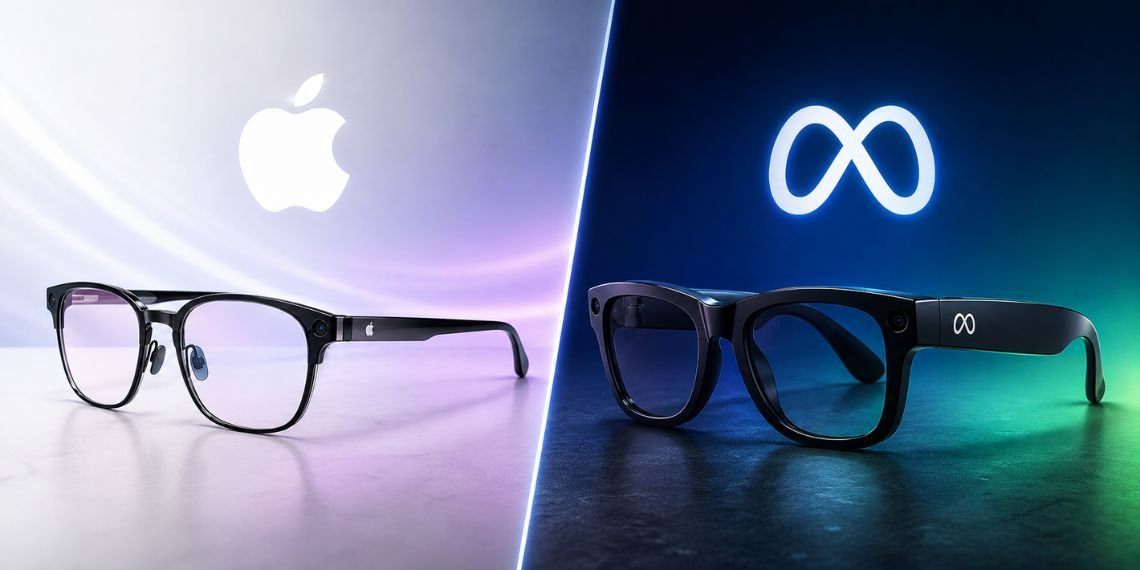
The AI smart glasses race just became a two-horse competition. Meta has been selling camera-equipped AI glasses since 2023 and now holds roughly 80% of the market. Apple is building its own version, codenamed Project N50, targeting a late 2027 launch.
So how do they stack up? Here is a direct, no-fluff comparison across every dimension that matters.
Side-by-Side Comparison
| Feature | Apple Smart Glasses | Meta Ray-Ban Gen 2 |
| Availability | Late 2027 | Available now |
| Starting price | $200–$500 (estimated) | $379 |
| Display | None (Gen 1) | None ($799 Display model available) |
| AI assistant | Siri + Apple Intelligence | Meta AI (Muse Spark) |
| Cameras | Dual (object + visual AI) | Single 12MP |
| Privacy indicator | LED light confirmed | LED light (modifiable, per BBC) |
| Ecosystem | iPhone-dependent | Meta app required |
| Health features | Planned, not Gen 1 | Limited |
| Frame styles | 4 styles in testing | 26+ styles across lineup |
| Facial recognition | Explicitly blocked | Dormant code confirmed present |
Price: Who Wins on Value?
Meta moved aggressively on price in June 2026. Meta launched a new self-branded smart glasses line starting at $299, $80 less than their Ray-Ban Meta Gen 2 entry price, building with EssilorLuxottica but dropping the Ray-Ban branding entirely.
The current Meta lineup by price tier:
- Meta Glasses (Adventurer/Fury): $299, no Ray-Ban branding, 26 style options
- Ray-Ban Meta Gen 2: From $379, the core product
- Oakley Meta: From $399, sport-focused
- Ray-Ban Meta Display: $799, monocular heads-up display included
Apple is targeting the $200-$500 range, competing with products in the same bracket, per Gurman’s reporting from May 2026. At the lower end, Apple could undercut Ray-Ban Meta Gen 2 at launch. At the upper end, it sits at parity.
Edge: Meta right now. You can buy them today. Apple’s pricing advantage, if it materialises, only becomes relevant when the glasses actually ship in 2027.
AI: Different Philosophies
Both companies are betting on AI as the core value proposition, but they are approaching it differently.
Meta’s Muse Spark is the first AI model from Meta Superintelligence Labs, a proprietary, closed-weight model built specifically for low-latency wearable inference. It is faster on-device because it was designed specifically for glasses hardware, not repurposed from a general-purpose model.
Apple is bringing Siri with Apple Intelligence, deeply integrated with iPhone, contacts, calendar, messages, and app data. The advantage here is context. Apple Intelligence already knows your schedule, your habits, your apps. Siri on glasses could answer “what time is my next meeting?” or “who is calling?” without any additional setup.
Edge: Too early to call. Meta’s dedicated wearable AI model is a real technical advantage today. Apple’s ecosystem depth could be a stronger everyday utility advantage at launch.
Privacy: A Meaningful Difference
This is where the two products diverge most sharply, and it matters.
Dormant facial recognition code called NameTag sits inside the Meta AI companion app on more than 50 million phones. Meta quietly removed an earlier version from Ray-Ban smart glasses in June 2026 after backlash from over 70 civil rights organisations, but the underlying capability has not gone away.
Apple is testing privacy features no current Apple product offers: on-device processing, no facial recognition, and no training of AI models on customer recordings. Privacy is the stated priority for the entire Apple Glasses programme.
Additionally, the BBC documented in January 2026 that Meta’s camera indicator LED had been disabled on some units via cheap modification kits, a hardware-level privacy concern Apple is engineering around from the start.
Edge: Apple, by a significant margin on stated intent and architecture.
Design and Style
Meta has a genuine head start here. The Ray-Ban Meta lineup now spans 26+ frame styles across Ray-Ban, Oakley, and the new self-branded Meta line, covering everything from Wayfarer classics to sport frames to a Kylie Jenner collaboration at $399.
Apple is testing four frame styles in premium acetate with multiple colour options. That is a smaller catalogue at launch, though Apple’s design track record with AirPods and Apple Watch suggests the initial lineup will be polished.
Edge: Meta on variety now. Apple likely competitive on premium design at launch.
Who Should Buy What?
Buy Meta Ray-Ban now if:
- You want AI glasses today, not in 2027
- You are comfortable in the Meta ecosystem
- Style variety is important to you
Wait for Apple Glasses if:
- You are deep in the Apple ecosystem (iPhone, Apple Watch, AirPods)
- Privacy is a primary concern
- You want health features in a future generation
- You can afford to wait 12–18 months
Conclusion
Meta currently holds roughly 80% of the AI smart glasses market. That lead is real and growing, Gen 3 hardware is reportedly coming at Meta Connect in September 2026, which will extend the gap further before Apple even ships.
But Apple enters with advantages Meta cannot easily replicate: privacy architecture, ecosystem depth, and a health roadmap that could make these the most medically useful wearable since Apple Watch. The comparison that matters most will be the one we can make in late 2027, when Apple actually ships.
FAQs
When will Apple Glasses be available compared to Meta Ray-Ban?
Meta Ray-Ban smart glasses are available now, starting at $299. Apple Glasses are targeting a late 2027 consumer launch, per Bloomberg’s Mark Gurman.
Are Apple Glasses or Meta Ray-Ban better for privacy?
Apple has explicitly designed out facial recognition and committed to on-device processing with no AI model training on customer data. Meta has dormant facial recognition code confirmed present in its companion app, and the Ray-Ban LED indicator has been shown to be modifiable.
Will Apple Glasses be cheaper than Meta Ray-Ban?
Apple is targeting the $200–$500 range, potentially undercutting Ray-Ban Meta Gen 2’s $379 entry price at the low end. No official price has been confirmed.
Do either Apple or Meta smart glasses have a display?
Meta offers a display model (Ray-Ban Meta Display) at $799 with a monocular heads-up display. Apple Glasses Gen 1 will have no display. A future Apple model with display capability is reported for 2028 or later.