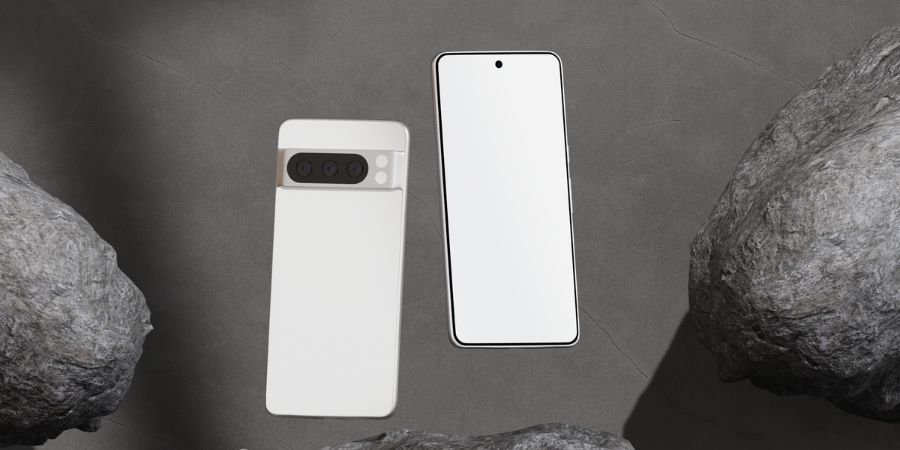
Is the Google Pixel 11 Pro worth buying?
Yes, for anyone who wants a compact flagship with the best computational photography on Android and Google’s deepest Gemini integration to date. It’s a more incremental hardware upgrade than its price suggests, though: the Tensor G6 chip trails Qualcomm’s Snapdragon in raw power, and the base model actually ships with less RAM than last year’s Pixel 10 Pro. If you value camera quality, clean software, and AI features over benchmark numbers, it’s one of the strongest phones you can buy this year.
Full Google Pixel 11 Pro specs
| Spec | Detail |
| Display | 6.3″ Super Actua OLED, 1280 x 2856, 1–120Hz LTPO, ~3,600 nits peak |
| Chipset | Google Tensor G6 (1×4.1GHz Arm C1-Ultra + 4×3.4GHz Arm C1-Pro + 2×2.65GHz Arm C1-Pro) |
| GPU | PowerVR CXTP-48-1536 |
| RAM | 12GB (256GB model) / 16GB (512GB, 1TB models) |
| Storage | 256GB / 512GB / 1TB, no microSD |
| Rear cameras | 50MP main (f/1.68) + 48MP ultrawide (f/1.7) + 48MP 5x telephoto (f/2.8) |
| Front camera | 42MP (f/2.2), ultrawide selfie lens |
| Battery | 4,850mAh, 30W wired, 25W Qi2.2 PixelSnap wireless |
| Build | Gorilla Glass Victus 2, IP68, anti-scratch coating |
| OS | Android 17, 7 years of OS and security updates |
| Weight | 204g |
| Price | From $1,099 (256GB/12GB) |
What’s genuinely new this generation?
- Tensor G6 chip – built on a more efficient process than the Tensor G5, with a claimed 20% efficiency gain and 50% more TPU throughput for on-device AI tasks.
- Redesigned camera bar – now edge-to-edge glass instead of the old crescent metal housing, giving the rear a more seamless look.
- HiLight – a ring of LEDs around the rear camera that glows for Gemini conversations and incoming calls; Pro-series exclusive.
- Brighter display – roughly 300 nits brighter than the Pixel 10 Pro, with a new anti-scratch coating rated 2x more scratch-resistant.
- Upgraded telephoto – jumps to 48MP with improved 5x optical range and better Super Res Zoom up to 120x.
- Rambler – a new AI dictation keyboard that cleans up filler words and verbal stumbles in real time.
How does the Tensor G6 actually perform?
Independent Geekbench 6 listings show the Pixel 11 Pro scoring roughly 2,688 single-core and 6,871 multi-core, with an AnTuTu score around 1.93 million. That’s a real jump over the Tensor G5 in raw numbers, but early comparative testing found the chip running meaningfully behind rival flagships in multi-core workloads, reportedly around 39% slower than the iPhone 17 Pro’s chip and roughly 49% behind the Galaxy S26 Ultra’s Snapdragon in multi-core Geekbench results.
The GPU side tells a similar story: strong generational improvement over the Tensor G5, but still trailing Qualcomm’s graphics silicon in heavy gaming workloads.
Where the Tensor G6 wins:
- On-device AI processing (TPU-accelerated tasks, photo editing, live translation)
- Power efficiency and thermal management
- Photography pipeline speed (HDR merging, Magic Capture)
Where it loses:
- Sustained multi-core performance under heavy multitasking
- High-end mobile gaming frame rates
- Raw GPU compute versus Snapdragon-powered rivals
Google Pixel 11 Pro vs Samsung Galaxy S26 Ultra
| Category | Pixel 11 Pro | Galaxy S26 Ultra |
| Display | 6.3″, 3,600 nits | 6.9″, 2,600 nits |
| Chipset | Tensor G6 | Snapdragon (higher clock, ~4.61GHz) |
| Main camera | 50MP | 200MP |
| Front camera | 42MP | 12MP |
| Battery | 4,850mAh | 5,000mAh |
| Starting price | $1,099 | $899–$922 (varies by retailer) |
| RAM (base) | 12GB | 12GB |
| OS updates | 7 years | 7 years |
The S26 Ultra wins on raw specs and gaming performance; the Pixel 11 Pro counters with a brighter screen, a much stronger selfie camera, magnetic wireless charging, and tighter software-AI integration. For most everyday users, reviewers lean Pixel; gamers and power users lean Samsung.
Google Pixel 11 Pro vs Pixel 11 Pro Fold
| Category | Pixel 11 Pro | Pixel 11 Pro Fold |
| Form factor | Candybar | Book-style foldable |
| Main display | 6.3″ | 8.0″ |
| Cover display | _ | 6.5″ |
| Chipset | Tensor G6 | Tensor G6 |
| RAM | 12GB/16GB | 16GB |
| Starting price | $1,099 | $1,899 |
| Durability | IP68 | IP68, ceramic cover glass |
| Charging | 30W wired / 25W Qi2 | Similar, faster than predecessor |
The Pixel 11 Pro Fold is Google’s best foldable to date according to hands-on reviews, but its Tensor G6 isn’t quite powerful enough for intensive mobile gaming on that larger canvas. Budget roughly $800 more if you want the folding screen over the standard Pro.
How does Gemini AI actually work on this phone, and what does “data center” have to do with it?
A meaningful share of the Pixel 11 Pro’s flagship AI features, Magic Capture, Rambler dictation, and some Gemini conversation processing, don’t run entirely on the Tensor G6’s onboard TPU.
Instead, they route requests through Google’s cloud-based data center infrastructure, which handles the heavier computational lifting before sending results back to the phone.
This hybrid approach is why features like near-instant photo object removal and conversational AI responses feel fast despite the Tensor G6’s modest on-device benchmark numbers, the phone is essentially a front end to a much larger AI system, not a self-contained AI computer. It also means some features require an active internet connection to function at full capability.
Where to buy: T-Mobile deals?
T-Mobile has been aggressive with Pixel 11 launch pricing:
- Pixel 11 Pro: up to $1,100 off with a new line and eligible trade-in on Experience More/Go5G Plus plans.
- Pixel 11 Pro XL: up to $1,300 off (“On Us”) with any-condition trade-in on Experience Beyond/Go5G Next.
- No trade-in option: EIP Flex 36 financing lets qualified customers get $0 down and pay over 36 months.
- Deals typically still require covering taxes, activation fees, and the underlying monthly plan cost.
Compare T-Mobile’s offer against Google’s direct store pricing and other carriers, since “free” promotions are tied to specific higher-cost unlimited plans.
Pros and cons at a glance
Pros:
- Best-in-class computational photography
- Brightest Pixel display ever (3,600 nits)
- Deep, genuinely useful Gemini AI integration
- 7 years of guaranteed software updates
- Magnetic Qi2 wireless charging
Cons:
- Higher starting price than last year ($1,099 vs $999)
- Base model has less RAM (12GB vs 16GB previously)
- Tensor G6 trails Snapdragon in gaming/multi-core performance
- HiLight feature feels underbaked at launch
- Battery life essentially unchanged year-over-year
Conclusion
The Google Pixel 11 Pro is a technically mixed but practically excellent flagship: its Tensor G6 chip won’t win benchmark wars against Samsung’s Snapdragon-powered Galaxy S26 Ultra, but its camera system, display brightness, and data center-backed Gemini AI features make it one of the most capable everyday smartphones of 2026.
Whether you buy it outright, snag a T-Mobile trade-in deal, or step up to the larger Pixel 11 Pro Fold, it remains the most complete expression of Google’s software-first approach to Android hardware.