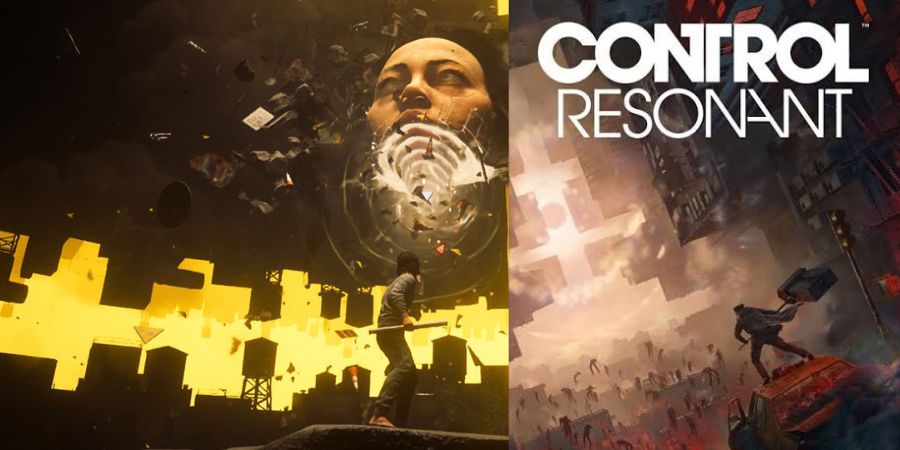
Control Resonant reviews are now live, and the early response is revealing a game that has taken some big risks with the formula established by 2019’s Control.
The sequel moves the action outside the Oldest House, replaces Jesse Faden with her brother Dylan and turns Remedy Entertainment’s supernatural shooter into a melee-focused action game. The result has received strong praise for its world, level design and willingness to experiment, while combat and navigation have emerged as recurring points of criticism.
Game Informer has not published its final score yet. Its review-in-progress, published September 18, says reviewer Marcus Stewart is still working through Dylan’s campaign, with the scored review expected next week ahead of the September 24 launch. Stewart says the world and lore remain as strange and fascinating as the original, particularly in the game’s side stories.
What Are Critics Saying About Control Resonant Reviews?
The early Control Resonant reviews are broadly positive about Remedy’s ambition, but critics do not agree on how successful the new combat system is.
PC Gamer scored the game 76/100, praising its return to Remedy’s supernatural world while arguing that the combat becomes less compelling over time.
Other reviews have been more enthusiastic. VICE praised the game’s level design, traversal and action, while GamingTrend described it as a major gameplay step forward despite some rough edges. Giant Bomb gave it 4.5 out of 5, calling it a strong sequel while acknowledging problems with navigation and some of the game’s roughness.
The current review picture therefore looks less like a simple consensus and more like a debate over whether Remedy’s new direction works across an entire campaign.
Early review themes include:
- Strong praise for the strange supernatural world
- More ambitious exploration than the original
- A major shift toward melee combat
- Mixed reactions to enemy encounters
- Strong interest in Dylan Faden as the new protagonist
- Some criticism of navigation and map design
- Praise for side stories and environmental storytelling
- Different opinions on whether the new combat matches the original game’s appeal
Why Are Critics Divided Over Control Resonant Combat?
The biggest change in Control Resonant is its move from ranged shooting to close-quarters melee combat.
Dylan uses the transforming Aberrant weapon alongside supernatural abilities, dodges, aerial movement and other attacks. Remedy has deliberately removed blocking and parrying, encouraging players to keep moving and attack aggressively. Health is restored through enemies, which also pushes players toward staying involved in combat rather than waiting for recovery.
Some reviewers have found this system satisfying once its different abilities begin working together. GamingTrend and Giant Bomb both highlight the possibilities created by Dylan’s movement and melee abilities.
Other critics have found the encounters less consistent.
PC Gamer’s review specifically points to stretches of middling combat, while GamesRadar describes the combat as one of the weaker parts of an otherwise striking experience.
That difference in opinion is useful context for players familiar with the first game. Control built much of its identity around the combination of Jesse’s powers and the Service Weapon. Resonant is asking players to learn a completely different rhythm.
How Does Control Resonant Change the Original Control Formula?
Control Resonant changes the protagonist, setting, combat system and structure while keeping Remedy’s surreal storytelling at its core.
The first game centered on Jesse Faden inside the Oldest House. The sequel follows Dylan after he emerges from years of confinement, with the Hiss spreading beyond the Bureau and into a distorted Manhattan. Jesse is now missing, leaving Dylan to deal with the consequences.
The major differences are:
| Original Control | Control Resonant |
| Jesse Faden | Dylan Faden |
| Oldest House | Distorted Manhattan |
| Third-person shooter | Melee-focused action |
| Service Weapon | Transforming Aberrant |
| More enclosed environment | Larger city environment |
| Jesse’s powers drive combat | Melee, movement and paranatural abilities work together |
Remedy also retains familiar elements such as altered objects, mysterious documents, recordings and unexplained phenomena. Game Informer says these lore-heavy elements remain a highlight, while other reviews have praised the amount of environmental storytelling spread throughout Manhattan.
What Do Critics Think About Control Resonant’s Manhattan Setting?
The move to Manhattan is one of the most consistently praised parts of Control Resonant.
The city is not a realistic recreation of New York. Remedy has built its own distorted version, where buildings, streets and gravity can behave according to paranatural rules. Dylan’s traversal abilities allow him to double-jump, air-dash and move through parts of the environment in unusual ways.
VICE praised the game’s level design and argued that moving beyond the Oldest House solves some of the frustrations it experienced with the original map. Giant Bomb, however, found the Manhattan map harder to navigate and criticized some of its limited entry points.
That contrast is worth noting: the same expanded environment that gives Resonant more freedom can also make navigation more complicated.
What Makes Control Resonant’s Side Stories Stand Out?
The optional content appears to be one of the sequel’s strongest areas.
Game Informer’s review-in-progress says some of Stewart’s favorite moments so far have come from side stories, which range from humorous to disturbing and can introduce unexpected changes in gameplay.
Other reviews have made similar observations about the amount of optional content in Manhattan.
These side activities also give Remedy more room to explore the strange details of its universe without forcing every idea into the main campaign.
That includes:
- Optional character stories
- Strange altered objects
- Bureau documents and recordings
- Environmental discoveries
- Paranatural events
- Side quests with different outcomes
Dialogue choices can also affect how certain NPCs perceive Dylan, while some side quests can have different endings. Remedy has said the main game has one ending.
How Long is the Control Resonant Story?
The main story takes around 25 to 35 hours, with additional time available for side content and exploration.
Remedy confirmed the 25-to-35-hour range ahead of launch. The game also includes skill trees and additional upgrades that give players room to develop Dylan and experiment with different abilities.
That length gives the new combat system considerably more room to prove itself. It also explains why some reviewers have placed greater emphasis on whether the combat remains enjoyable over the later sections of the game.
What Platforms is Control Resonant Releasing On?
Control Resonant launches September 24, 2026, on PlayStation 5, Xbox Series X/S and PC. A Mac version is planned for later.
On PS5, Remedy has confirmed two display options:
- Performance mode targets 60fps at 1440p.
- Quality mode targets 30fps at 2160p.
PS5 Pro adds Performance, Quality and Balanced modes, with the latter targeting 40fps at 2160p with ray tracing on compatible 120Hz displays.
What is the Biggest Question Around Control Resonant?
The reviews so far suggest that Control Resonant succeeds most clearly when it leans into what makes Remedy unusual: surreal environments, strange stories, experimental level design and a world filled with unexplained details.
The more divisive question is whether the new melee combat can maintain that momentum throughout the campaign.
That gives the final Game Informer review something specific to answer. Its review-in-progress already praises the world, lore and side stories, but the reviewer is still completing the full adventure.
For now, the early reviews present Control Resonant as a sequel that was willing to change a lot rather than simply reproduce the first game’s formula. Whether those changes ultimately work as a complete package is becoming clearer as the remaining reviews arrive before the September 24 release.