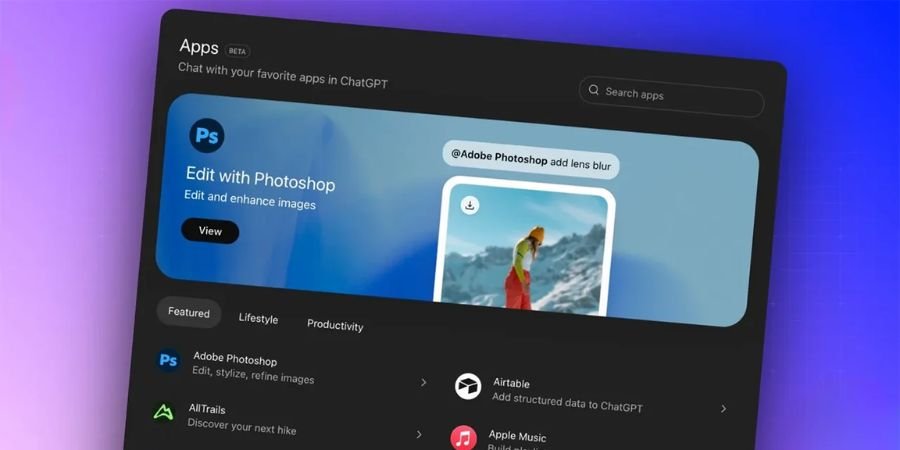
ChatGPT Takes the First Step in Introducing an App Store
In a major move toward a broader platform model, ChatGPT has now an app store as OpenAI names it launched within ChatGPT. Apps created by developers to be inherently compatible with the ChatGPT environment can be submitted by them.
When an app is sent, OpenAI examines it and, if the result is positive, makes it available to the users. This step is a significant one in terms of the new features introduced. Third parties can now add in new tools and services to the platform ecosystem of ChatGPT, which is no longer a standalone chatbot. The essence of the idea is to enable users to do more without having to open a new window outside their ChatGPT session.
What Exactly Has Changed
For the first time, OpenAI has opened app submissions to developers. These apps are listed in an in-chat app directory that functions like an app store. Developers submit their apps for review through the OpenAI Developer Platform, and approved apps appear in a searchable directory inside ChatGPT on web, iOS, and Android.
Previously, ChatGPT supported limited integrations known as connectors, and an ecosystem of custom GPTs existed where users could create specialized assistants. The new app store pushes this further by standardizing a marketplace where diverse third-party services can operate directly inside the chat interface.
Applications are able to prolong interactions by providing more context or by allowing new features to be used. As an illustration, a customer might instruct ChatGPT to assist in scheduling a vacation and at the same time activate a travel booking app to book a flight, place a grocery order, or create a presentation with a design tool – all in one seamless conversation.
Visualization of the App Store
This new app store is a part of ChatGPT’s interface. The users are able to check out apps from the tools menu directly. One could liken it to an internal directory through which people can find apps that cater to their needs. These apps may include productivity tools, travel planning assistants, research helpers, content creation plugins, or scheduling apps.
Developers have to rely on OpenAI’s Apps SDK for their building these integration projects. At present, this SDK is in its beta stage and hence it is open to changes in its features as more developers come building and testing their integrations. Once a developer completes an app, they submit it through OpenAI’s developer platform where it goes through review.
Importance of This
Such an alteration turns ChatGPT into more than a conversational assistant. Within the same chat, this becomes a place where users can run specialized tools supplied by the developers. Example cases can be given as follows:
- An app for travel inside ChatGPT can help book flights or compare
- A productivity app may come up with blog outlines or take care of project
- A finance tool might be a great aid in budgeting and generating
In such a way, these applications open up the possibilities to an extent far beyond simple text responses.
Impact on Developers’ Strategy
An open platform for external developers is a welcome door to new creative possibilities and innovations. So long as ChatGPT’s capabilities are on top, anyone can build on it. Businesses may use it to add premium features to their existing services, while independent developers may create tools for small niche audiences.
Simultaneously, OpenAI stands to benefit monetarily in the long run, although the details of the monetization plan are still unclear. Having a marketplace in place is a prerequisite for OpenAI to share the revenue, let the users have the subscriptions, or provide the value-added services related to the third-party apps, in case they opt for this route.
Initial Users and Subsequent Growth
Integration with ChatGPT is already on the cards for a number of major platforms. There are chatbot-based tools of Spotify, Expedia, Canva, and Zillow that are ready to use. The first applications in this area demonstrate how diverse the services can be that have an existence in the ChatGPT ecosystem.
When developers have more time to create applications, the main benefit would be the growth of the directory in terms of both quality and use. Users get contained in a win-win situation as they can enjoy deep capabilities or even discover very particular ones without having to hop from one software product to another.
Wrap-up
This is an opening shot for a different chapter. ChatGPT is not just a chatbot anymore. It has evolved into an ecosystem of software. Developers are the ones who get the most direct access to it for building. The users may look forward to the better experiences which are the outcome of the merging of generative AI and down-to-earth apps, all inside the ever-familiar ChatGPT interface.
Frequently Asked Questions
What is the ChatGPT app store?
This in-chat marketplace is a new place within ChatGPT where users can see, access, and connect the third-party apps that interact directly with their conversations. Currently, developers can submit their apps for review and publication in this directory.
How is the app store different from the usual ChatGPT features?
Users had to depend on the limited tools and a few integrations before the app store was launched. The app store provides room for outsiders work independently as they can create new features or add new sources of data right within ChatGPT’s interface.
Any restrictions on who can build ChatGPT apps?
Third-party developers worldwide are free to use the SDK provided to create apps and send them in for a review. Following the green light, these apps may be listed in the app directory.
Where is the app store in GPT?
An in-chat app directory is available on the web and mobile through the tools menu. Also, there is a specific URL where users can open and view the listings.
Do I have to install apps to be able to use them?
Yes. As with the installation of extensions, you link apps from the directory. Following setup, you may start them in talks by choosing them or indicating them in prompts.
Can ChatGPT apps perform activities beyond talks?
Quite a few apps push ChatGPT capabilities far beyond simply providing answers to queries. They may do things like building playlists, booking trips, ordering meals, or generating designs, basically, anywhere outside the chat environment.
Are there categories inside the app store?
Yup. The developers behind the apps have grouped them by topic such as productivity, lifestyle, research, and a few to make finding easier.
Is OpenAI regulating the list of apps?
Yes. Developers send their apps to the review stage. After that, OpenAI inspects them for adherence to parameter of quality, safety, and privacy before they become visible to the users in the directory.
What about privacy controls?
The users are the ones that decide what elements of their private life they allow an app to see. Besides that, apps also display privacy policy statements, so you understand how your data might be handled.
Are developers allowed to charge for apps or services?
OpenAI said that it is considering monetization options gradually but the main goal at the beginning is to create a developer-friendly environment and support them.
Is this the end of the Apple App Store or Google Play?
Negative. It’s an in-chat market exclusive to ChatGPT. The traditional mobile app stores remain as they are, but this is a way for the tools to run inside conversational AI.
Will my app usage be part of my ChatGPT subscription?
Usage goes through the standard ChatGPT service. Your subscription won’t be affected by the apps, but depending on the plan you have, it may allow you to do more.
Will it change the way I use ChatGPT?
The update will provide more powerful and task-specific tools right within your talks for the everyday users. For professionals and developers, it means a new way of creating services and getting access to millions of users.