A machine reveals the quality of its engineering not when everything goes according to plan, but when conditions refuse to cooperate. A sensor encounters conflicting information, a vehicle meets a road it was never meant to find, or a minor fault threatens to bring an entire day’s work to a halt. These are the moments when innovation must prove its worth. In automotive engineering, intelligence is only part of the equation; the greater achievement lies in making technology dependable enough to be trusted, affordable enough to be adopted and resilient enough to serve the people who rely on it.
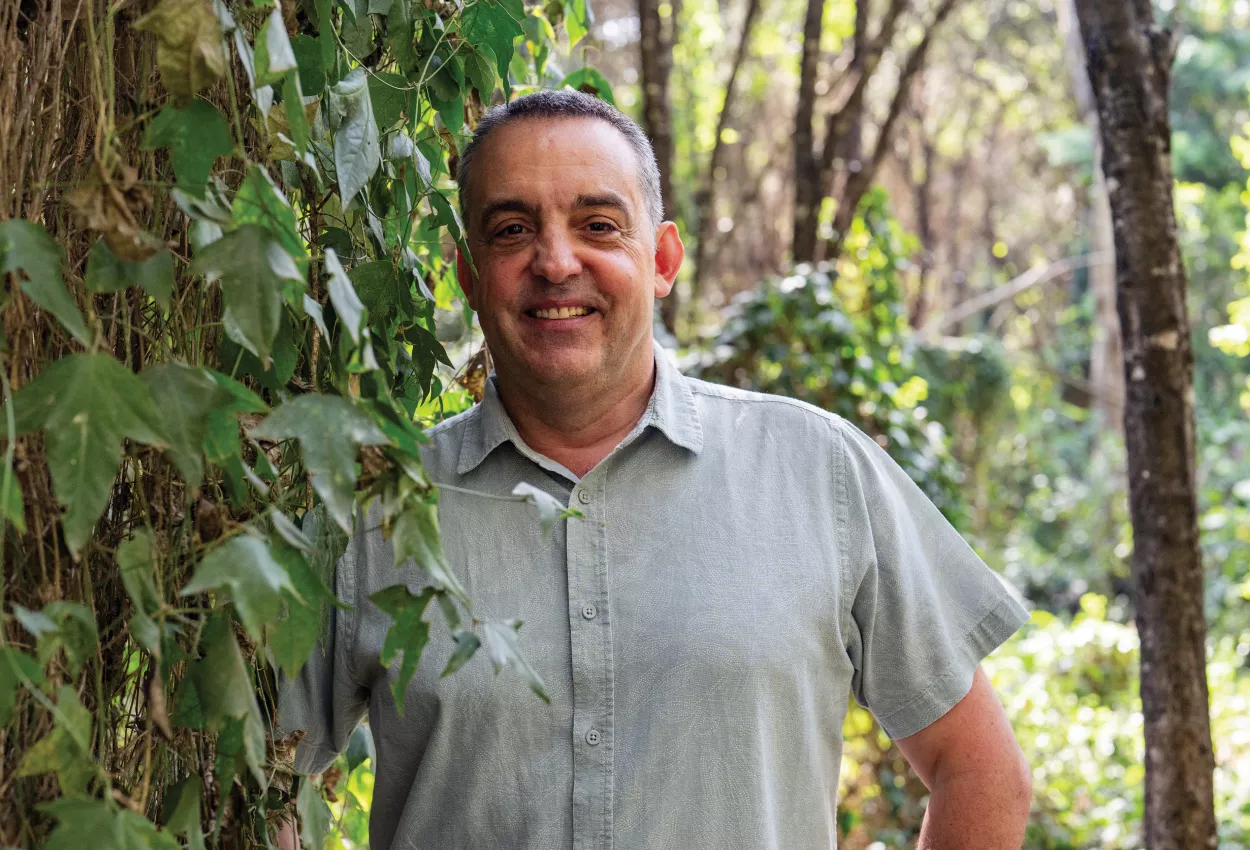
This conviction shapes the work of Abhiram Thuraga, Founder and CEO of THURAGA MOTORS AB, whose career spans advanced automotive software, autonomous driving, functional safety and electric mobility. Drawing on his experience with Volvo, Qualcomm/Zenseact and Capgemini Engineering, he brings a safety-first engineering perspective to a venture focused on practical electric vehicles for Indian operating conditions, alongside the development of FLYGA, an eVTOL platform.
From Limited Means to High-Stakes Engineering
When Abhiram arrived in Sweden from India in 2010, he carried a suitcase, €600 and an ambition to pursue advanced engineering. He enrolled at Linnaeus University to study digital signal processing and control systems, but the journey demanded lessons beyond the classroom. Financial constraints meant living on potatoes for months and taking whatever part-time work was available to sustain his education. Those early experiences shaped his perseverance and understanding of what it takes to keep moving forward when circumstances offer little room for error.
His professional foundation began at Bavina Cars in India, where he worked across hardware, firmware and motor control. He subsequently expanded his expertise through assignments at Volvo AB, Volvo Construction Equipment and Volvo Cars, working on electric drives, simulation, hardware-in-the-loop (HIL) validation and advanced driver assistance systems (ADAS). His responsibilities at Volvo Cars included adaptive cruise control, curve speed assistance and speed limit assistance, followed by decision-making and control systems for autonomous driving. His experience with Qualcomm/Zenseact and consulting through Capgemini Engineering further broadened his understanding of automotive software and system development.
Bringing Engineering Discipline to Everyday Mobility
Abhiram’s experience in advanced automotive engineering also prompted him to consider how established engineering capabilities could address practical mobility needs. His attention increasingly turned towards India, where two-wheelers serve as essential means of transport and sources of livelihood for millions of people. A vehicle failure in such circumstances can mean more than an inconvenience; it can interrupt work and affect a household’s income.
This perspective became one of the motivations behind THURAGA MOTORS AB, the company he founded to bring engineering discipline into practical electric mobility. His ambition is to develop vehicles that people can afford to own, maintain and repair, connecting Swedish engineering expertise with India’s manufacturing capabilities and everyday transportation requirements.
Establishing the company required a significant personal commitment. After obtaining Swedish citizenship, Abhiram left his position at Qualcomm and relied on consulting work to support himself while developing the business outside regular working hours. With no large team to distribute the responsibilities, he had to engage with mechanical design, electronics, software and the commercial aspects of building a company.
The decision demanded a willingness to place personal security behind a longer-term ambition. For Abhiram, entrepreneurship became a practical expression of his conviction that advanced engineering should serve identifiable human needs rather than exist solely as a technical achievement.
Beyond Simulation: Preparing Systems for the Real World
Developing automotive systems that perform reliably outside controlled environments remains one of the industry’s most demanding challenges. Simulations allow engineers to recreate scenarios, test assumptions and investigate failures under repeatable conditions. Public roads, however, introduce variables that cannot always be anticipated or represented completely.
Abhiram approaches this challenge by establishing clear operating boundaries, connecting requirements to potential hazards and building evidence across software testing, simulation, HIL validation and controlled vehicle testing. Each method reveals different weaknesses, making it essential to avoid treating success in one environment as proof of readiness in another.
His attention extends to degraded sensing, timing issues, unexpected road users and transitions between normal and degraded operating conditions. These situations require engineers to understand how a system responds when information is incomplete, inconsistent or unavailable.
For Abhiram, production readiness involves more than achieving successful test results. It requires the ability to explain the evidence supporting a release, acknowledge the system’s limitations and justify the decision to proceed. He believes this perspective changes how engineers investigate even seemingly minor failures, because each test case can represent a situation that a real person may eventually encounter.
Making Safety an Architectural Principle
Abhiram’s experience in functional safety, including work involving ISO 26262, has reinforced his belief that safety must influence system architecture from the earliest stages of development. When safety considerations enter the process only during final reviews, fundamental design decisions may already be difficult or expensive to change.
His approach begins with understanding the intended function, defining its boundaries and assessing the consequences of potential malfunctions. These considerations then inform system requirements, interfaces, diagnostics, fault handling and verification activities. Traceability connects each identified hazard to the requirements intended to address it, the implementation of those requirements and the evidence demonstrating their effectiveness.
His previous work has included safety assessments using hazard analysis, fault-tree analysis and failure-mode analysis. He sees the value of these methods in the engineering decisions they influence rather than the documentation they produce.
“A beautifully completed document is of little comfort if a critical assumption remains untested,” he said, underscoring the difference between procedural compliance and meaningful safety assurance.
Equally important is the culture surrounding engineering decisions. Abhiram believes engineers must be able to raise concerns without fearing that they are obstructing project schedules. An unresolved safety issue does not disappear simply because a meeting concludes or a deadline approaches. Leadership, in his view, must allow technical evidence to take precedence when a decision carries consequences for human safety.
Artificial Intelligence and the Next Generation of Vehicles
Artificial intelligence and software-defined vehicles are changing how automotive systems are designed, evaluated and maintained. Abhiram sees these developments creating opportunities to adapt vehicle behaviour, analyse operational information and improve functionality throughout a vehicle’s life. However, he also recognises that greater software flexibility extends the responsibilities of the engineering team beyond the point of manufacture.
He advocates clearly defined boundaries around AI-enabled functions, supported by systematic evaluation of data quality, unusual scenarios, uncertainty and regression performance. Where necessary, deterministic limits and independent monitoring should provide additional safeguards.
Software-defined architectures also require disciplined configuration management, reliable interfaces, effective diagnostics and controlled update processes. Engineers need to establish what has changed, which vehicles are affected, what testing has been completed and how recovery will be handled if an update fails.
At THURAGA MOTORS AB, Abhiram wants technological intelligence to demonstrate its value through practical applications, including clearer diagnostics and more useful maintenance information. The objective is to ensure that technological sophistication translates into an experience that matters to the vehicle owner. As he explained, “The person paying for the vehicle deserves a benefit they can experience. Technical sophistication alone is not that benefit.”
Verification That Goes Beyond the Test Bench
Hardware-in-the-loop testing occupies an important place in Abhiram’s approach to automotive verification. By connecting actual control hardware to simulated operating environments, HIL allows engineers to investigate system responses and introduce certain faults under controlled conditions that might be difficult or unsafe to reproduce on a vehicle.
Nevertheless, he cautions against judging a verification strategy solely by the sophistication of its equipment or the number of tests it executes. The more important question is whether the strategy can expose significant failures before they reach production.
His approach calls for testing across normal operating conditions, system boundaries, communication faults, sensor failures, power disturbances and recovery behaviour, where applicable. Every test should have defined acceptance criteria and a clear connection to the requirements and risks it is intended to address. The test bench itself must also be validated against observed vehicle behaviour to establish confidence in the relationship between simulated and real-world results.
Ultimately, a production release should be supported by evidence gathered across multiple verification methods, alongside an explicit assessment of unresolved issues. Abhiram emphasises that automated testing is valuable, but it cannot replace the engineering judgement required to interpret results and understand their limitations.
For him, the central question remains whether the available evidence is sufficient to justify the next stage of development. This principle connects his work across automotive software, functional safety, verification and electric mobility.
Aligning Engineering Teams Around a Shared Vision
Complex automotive programmes often involve multiple stakeholders, from original equipment manufacturers (OEMs) and Tier-1 suppliers to software developers and system engineers. Each participant brings distinct priorities, technical capabilities and interpretations of project requirements. According to Abhiram, difficulties frequently arise when teams believe they have reached an agreement but are working with different understandings of the same requirement. Such inconsistencies may remain unnoticed until integration, when resolving them becomes considerably more expensive.
Drawing on his experience across vehicle functions, decision and control systems, and consulting, Abhiram emphasises the importance of making assumptions visible early. This involves clarifying the behaviour expected by the OEM, identifying what suppliers can deliver, assigning responsibility for interfaces and failure responses, and establishing clear acceptance criteria.
He advocates concrete interface agreements, shared verification evidence, early integration and clearly assigned ownership of unresolved decisions. When priorities conflict, he believes teams must openly examine the technical and programme consequences rather than conceal difficulties behind optimistic reporting.
Equally important is creating an environment where engineers can raise concerns before they become major problems. As Abhiram explained, “Engineers should spend their energy resolving uncertainty. If they spend it defending themselves, the programme loses the information it needs most.” For him, effective collaboration depends on transparency, technical accountability and the willingness to address uncomfortable questions before they threaten delivery.
Electric Mobility Built Around Everyday Needs
Through THURAGA MOTORS AB, Abhiram is pursuing a vision of electric mobility designed for people who depend on their vehicles to earn a living. Delivery riders, small business owners and individuals travelling rural routes require dependable transportation that can withstand demanding operating conditions without creating excessive ownership costs.
His approach centres on rugged, serviceable electric vehicles developed with Indian conditions in mind. Heat, dust, uneven roads, carrying requirements, access to repairs and replacement-part availability are among the considerations he believes must influence product development from the beginning.
This philosophy also reflects his own experiences with financial uncertainty. Having arrived in Sweden with limited resources and navigated years of financial constraints, he understands the importance of making carefully considered purchases. These experiences continue to influence how he views the relationship between engineering decisions and customer expectations.
For Abhiram, affordability cannot be considered independently of reliability and maintenance. A vehicle must deliver value throughout its working life, not simply offer an attractive purchase price. He wants THURAGA MOTORS AB to develop products that respect the financial sacrifices customers make while recognising that trust must ultimately be earned through validation, manufacturing discipline and dependable service.
Three Platforms, Distinct Mobility Requirements
India’s transportation landscape presents widely varying demands, from rural distribution routes and utility applications to congested urban streets. Abhiram approaches this diversity by beginning with the intended purpose of each vehicle and the conditions in which it must operate.
The WBR utility platform, whose name stands for Works Beyond Roads, reflects an emphasis on carrying capability, durability and straightforward maintenance. The BWR platform, meaning Balance Won’t Relent, represents an urban mobility direction focused on everyday usability, reliability and ownership costs.
Abhiram also sees value in using common components and architectural elements where they improve engineering efficiency and simplify maintenance, while retaining the differences required by each vehicle’s intended application.
Beyond ground transportation, FLYGA represents the company’s eVTOL platform, which remains under development. Its development portfolio includes 17 innovations addressing areas such as airborne hybrid energy, autonomous emergency landing and predictive stability control. Unlike the ground-vehicle platforms, FLYGA follows a distinct aerial engineering pathway with its own safety, validation and certification requirements.
Across these programmes, Abhiram maintains that ambitious concepts must be supported by evidence. A design may communicate an engineering vision, but development and testing must establish what a platform can reliably achieve.
Reliability as a Business Requirement
For commercial electric vehicle operators, reliability directly affects productivity and profitability. A vehicle that remains out of service can mean missed deliveries, interrupted operations and lost income. Abhiram therefore wants reliability to influence decisions throughout product development, from component selection to repair procedures and production quality.
THURAGA MOTORS AB’s intended approach includes standardised components, accessible assemblies, useful diagnostics and practical maintenance procedures. Supplier quality, inspection processes and manufacturing consistency are equally important, particularly when moving from individual prototypes towards repeatable production.
Abhiram also believes ownership costs must be assessed across the vehicle’s working life. Energy consumption, maintenance requirements, battery longevity, downtime and repair expenses all contribute to the financial experience of an operator.
A low initial purchase price, he argues, can become an expensive proposition if replacement parts are difficult to obtain or the vehicle cannot remain operational. This makes serviceability and long-term support important considerations rather than secondary features.
At the same time, he is careful to distinguish engineering ambitions from demonstrated results. He does not claim field-proven uptime without the operating history needed to substantiate it. His objective is to establish reliability through representative testing, recorded failures and corrective action, giving customers a stronger basis for planning their work.
The Personal Cost of Building an Engineering Enterprise
Translating an engineering vision into a viable business has required Abhiram to balance technical innovation, affordability, scalability and customer expectations. Consulting work provided income while he developed THURAGA MOTORS AB outside his regular working hours. Limited resources also meant learning across disciplines and assuming responsibilities that would ordinarily be distributed among specialists.
The experience brought considerable demands, including the challenge of ensuring that too much of the company’s progress did not depend on one individual. Living with Parkinson’s has added another dimension to that journey, requiring him to manage his time and energy while acknowledging physical limitations.
Abhiram does not present determination as a substitute for these realities. Instead, he recognises the importance of building processes and teams capable of sustaining the work beyond the founder’s individual capacity.
The company’s stated intellectual property portfolio comprises 64 assets: 14 software and AI innovations, 10 vehicle and hardware IP families, 14 trademarks, five design components, four trade secrets and 17 FLYGA innovations. For Abhiram, these figures represent more than a collection of technical developments. They also reflect the sustained effort involved in learning, experimenting and progressing with limited resources.
Yet he recognises that innovation must remain commercially grounded. Every promising idea must eventually be sourced, assembled, inspected, serviced and priced appropriately. A technically impressive feature can become counterproductive if it makes a vehicle unnecessarily expensive or difficult to maintain.
Building Towards a More Dependable Electric Mobility Ecosystem
With regard to the coming five years, Abhiram foresees dependable ownership, service availability, battery and operational costs as the key factors in the Indian electric mobility sector. As opposed to presenting these trends as facts, he thinks that they are priorities which need to be taken into account when developing the product by manufacturers.
For THURAGA MOTORS AB, the immediate challenge is to turn the engineering development process into a product and a reliable ownership proposition. It means validating vehicles, improving relations with suppliers, quality of manufacturing and development of the servicing capability for deployments.
Expansion, in his opinion, has to be done after ensuring consistency in performance. Growth faster than manufacturing and servicing capabilities would mean jeopardizing the very consistency that is needed.