Most people see technology as a race. Faster chips, smarter machines, stronger systems, better profits. Progress is often measured by speed, by numbers, by who reaches the market first. Yet beneath that race lies a quieter and more important question: what is all this progress actually for?
If innovation only creates power without responsibility, it becomes dangerous. If science advances without humanity at its center, it loses its purpose. True invention must do more than impress industries. It must protect lives, preserve the planet, and leave something better for the generations that follow.
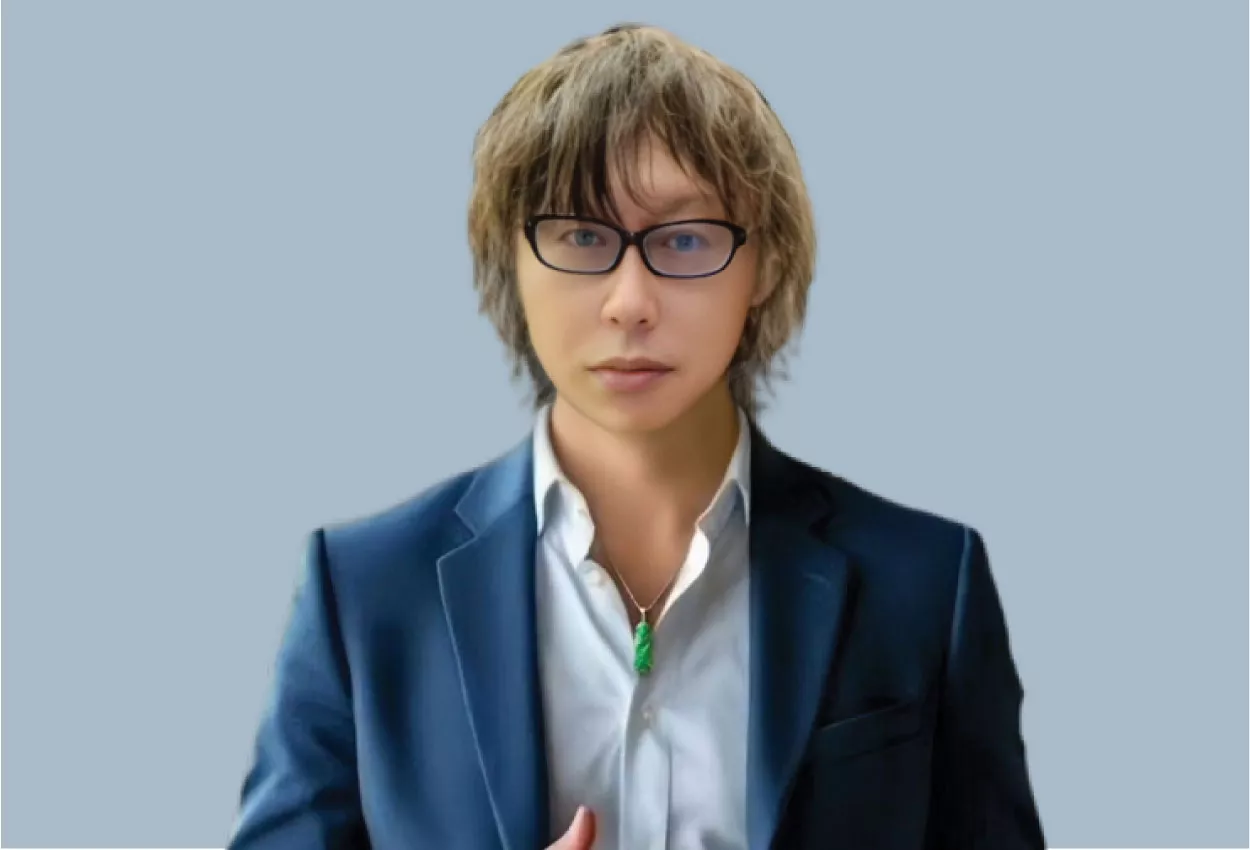
This belief stands at the heart of Dr. Ko-Cheng Fang’s life and work.
As the Founder of LongServing Technology, Dr. Fang is not interested in improving yesterday’s systems by small margins. He is focused on replacing them entirely. His work in photonic quantum chips, powered by his original X Photon material, challenges the very foundation of traditional semiconductor technology. While the world continues refining silicon, he is building a future powered by light itself.
But his vision stretches far beyond computing. From laboratory-grown Imperial Green jadeite to anti-cancer biotechnology, advanced cloud security systems, and future photonic robotics, every project reflects the same principle: invention must serve civilization, not just commerce.
“I do not believe progress should come from repeating the past,” he says. “Real innovation begins when we dare to question what everyone else accepts.”
That refusal to accept limits has become the defining force behind a career built not on imitation, but on transformation.
Thinking Beyond What the World Accepts
Long before photonic quantum chips and advanced materials, Dr. Fang’s way of thinking was already different. He never believed innovation should begin with copying what already exists. For him, real progress starts when people stop asking how to improve old systems and start asking whether those systems should exist at all.
He often points to one dangerous habit in business and technology: the comfort of repetition. Many industries spend years refining the same structures, making small adjustments, and calling it innovation. Dr. Fang believes this creates movement without true advancement.
He says, “Many people improve what already exists. Very few are willing to replace it.”
This mindset shaped his approach to every field he entered. Whether in computing, luxury materials, or biotechnology, he was never interested in becoming another participant in a crowded market. He wanted to create something that did not exist before.
Even in his early years, this instinct was clear. His success in financial markets during his twenties came from building proprietary formulas rather than following conventional strategies. That experience strengthened his confidence in trusting independent thought over accepted wisdom.
For Dr. Fang, invention is not about fitting into an industry. It is about changing the industry itself.
Why Light Matters More Than Silicon
The world’s dependence on electronic chips has created a silent crisis. Every advancement in artificial intelligence demands more computing power, and more computing power demands more energy. Data centers continue expanding, consuming enormous amounts of electricity, while semiconductor manufacturing itself places increasing pressure on global sustainability.
Dr. Fang saw this problem clearly. He realized that the future could not be built by forcing traditional chips to work harder. The problem was the system itself.
His answer was photonic quantum computing.
Unlike electronic chips that rely on electrons, photonic chips use photons, the fastest transmission medium known to humanity. Light moves faster, carries more information, and generates significantly less heat. In theory, this could create computing systems thousands of times faster while drastically reducing energy consumption.
But there was one major problem. Existing silicon photonics operated at wavelengths too large for modern nanoscale chip architecture.
Dr. Fang’s breakthrough came through the invention of X Photon, a new photonic quantum material capable of emitting light at a two nanometer wavelength. Through years of nanomaterial development, Raman spectroscopy, and X ray diffraction testing, he discovered a completely new material that matched no known spectrum.
This made something previously impossible achievable: a photonic gate system where photons themselves could be controlled for data processing.
Patent protection has already been secured across 26 major semiconductor nations, including the United States and the European Union.
He explains it simply: “If the future of AI depends on endless electricity, then we are building progress on collapse. Light offers us another path.”
For him, photonic chips are not simply faster processors. They are a survival strategy for the future.
The Scientist Who Thinks Like an Artist
Despite his achievements in science, Dr. Fang often describes himself first as an artist.
His creative life began with traditional Chinese gongbi flower and bird painting before expanding into watercolor, oil painting, and sculpture. His childhood was surrounded by artistic influence, from plaster sculptures of David and Venus to shelves filled with art books and the smell of paint filling the home.
This artistic foundation shaped more than his creativity. It shaped the way he sees life.
He believes success works like sculpture. Perfection is not achieved by adding more, but by removing what is unnecessary. Whether building a company, developing a material, or solving a problem, the process is the same: eliminate distractions, refine constantly, and reveal what truly matters.
“Life itself is sculpture,” he says. “You create something valuable by removing what should not remain.”
This philosophy became especially powerful during his work with laboratory grown Imperial Green jadeite. Many global institutions had failed to recreate the gemstone successfully. What stood before him looked impossible.
Instead of accepting failure, he embraced thousands of unsuccessful experiments. Each failure was not a loss, but part of the carving process. Eventually, the breakthrough came.
Today, he plans to recreate the legendary Jadeite Cabbage once treasured by Empress Dowager Cixi, using his own laboratory grown jadeite.
To him, science and art are not separate disciplines. Both require patience, discipline, and the courage to create what does not yet exist.
Fighting Cancer Through Nature and Precision
While computing may define headlines, one of Dr. Fang’s most personal missions lies in biotechnology.
When cancer emerged as one of the defining medical challenges of modern society, LongServing Technology turned its attention toward treatment research. Dr. Fang believed that solving this problem required the same courage as reinventing computing: the willingness to look where others were not looking.
Using organic essential oils tested under dozens of European Union standards, his team began extracting bioactive plant compounds designed to inhibit and destroy cancer cells.
Laboratory results showed promising effectiveness, including against highly aggressive lung cancer cells.
But Dr. Fang’s ambition goes further.
He plans to enhance treatment using nanotechnology and material modification, allowing these compounds to penetrate deeper and be delivered directly into tumor cells through probe based injection. His goal is not simply treatment, but targeted suppression of tumor growth and prevention of metastasis without invasive surgery.
He says, “Technology must fight the diseases that define our century. Otherwise, what is innovation really for?”
Every stage of this research has been funded through his own capital. Now he seeks stronger partnerships and collaboration to accelerate progress.
For him, medical innovation is not a business category. It is a human obligation.
The Future of Robots Will Be Photonic
While the discussions revolve around artificial intelligence, Dr. Fang is convinced that we have yet to witness the revolutionary breakthrough. He considers today’s development in terms of robotics and computerization to be just a start because, while industrial robots and self driving vehicles are real, intelligent machinery faces the issue of computing capacity.
The problem, according to Dr. Fang, is that the conventional semiconductor technology has met its physical limitations, and there can be no intelligent robots without an appropriate level of computing power.
Photonic quantum computing, however, changes the perspective dramatically.
Thanks to chips that operate a thousand times faster than today’s computers, photonic quantum robots are bound to appear and transform the way we work, rescue people, build houses and provide health care.
No longer standing alone, these machines will perform as a network of interconnected devices that communicate at incredible speeds and efficiency.
It is hardly science fiction for Dr. Fang.
“I am not here to talk about the future,” he claims. “I am here to build it before anyone notices it is already here.”
Innovation Without Responsibility Is Failure
Dr. Fang holds that there must always be one principle that triumphs over ambition – humanity comes first.
As technology evolves, Dr. Fang rejects the notion that efficiency should dictate the direction of invention. He is vehemently against any systems that sacrifice people in order to automate processes.
Technological advancement should improve life, fortify society, and ensure equity and equality rather than exacerbate disparity.
This ideology drove the development of X Photon material at its inception. Rather than concentrating on performance and speed, Dr. Fang insisted that the material adhere to strict human and environmental guidelines.
The material had to be non-toxic, sustainable for the environment, and easily scalable in a factory without causing pollution.
After meeting all of the aforementioned prerequisites, further research began.
Many of the current compound semiconductors, such as gallium arsenide and indium phosphide, pose environmental threats, but Dr. Fang wanted to innovate an entirely different solution.
“True success,” says Dr. Fang, “is a breakthrough that does not hurt people and the planet.”
Legacy Beyond Recognition
Dr. Fang does not base success on clapping.
He vividly recalls when his encryption systems and cloud security technology were introduced. Instead of accolades, they were met with skepticism and ridicule. However, he persevered.
Today, millions have benefited from his inventions, unaware of his identity.
And for him, that is enough.
“Success is not applause,” he says. “It is understanding that billions of people have had their lives made more secure, stronger, or better because of my creations.”
He thinks back to innovators such as Nikola Tesla, ridiculed in their own lifetime but vital to the progress of civilization in the future. He believes rare thinkers like himself are often misunderstood because they are capable of seeing the unseen possibilities.
His own reputation, he hopes, will never be based on praise but on courage.
He wants other inventors to know that ridicule is not proof of failure. In fact, it is quite likely proof of creating something revolutionary.
“The role of the inventor,” he says, “is not to control an industry but to create an age.”
Such thinking guides all his inventions.
For Ko-Cheng Fang, the act of inventing is not about leaving a legacy.
It is about ensuring there is a legacy left at all.