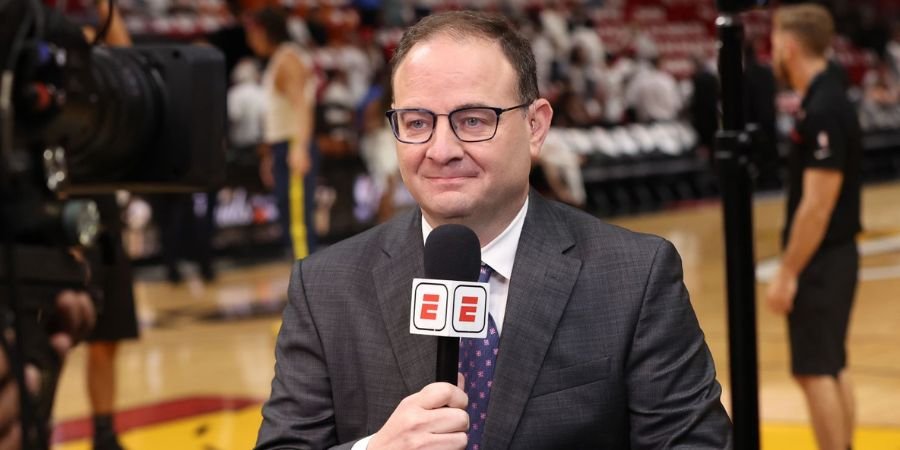
Adrian Wojnarowski, known simply as “Woj,” has become a household name in professional basketball for breaking news. His reporting has been always fast, true, and trusted, which makes Wanarnowski one of the most powerful names in sports journalism. Over the past 20 years, the entire landscape of how sports reporting operates has changed, and Wojnarowski has been leading that charge.
To talk about Adrian Wojnanowski’s net worth and the distance we’ve come to get there it is useful to look at what used to a “sports media career.”
Sports reporting used to only rely on newspapers and daily TV broadcasts, and reporters would wait for press releases or scheduled interviews. Now, news can break literally as it happens on social media, and speed may create outsized value with a verified story. Wojnarowski illustrates how expertise, credibility, and speed can translate into financial success and influence as an individual .
Adrian Wojnarowski’s Career Path
Adrian Wojnarowski started in the more traditional medium of print. He worked for The Record in New Jersey, where he reported on local sports, then continued to cover the NBA for Yahoo Sports. His early years were characterized by hard work, establishing contacts, and learning the ins and outs of the business of basketball. He learned how to build relationships, confirm information, and report without bias.
The breakthrough moment came when Wojnarowski joined ESPN in 2017. Before that he had developed a reputation as a journalist who could report on trades, drafts, and contracts, before anyone else. ESPN understood the value of that talent and provided a medium where his scoops could reach millions, instantly. Thus, Wojnarowski’s career became a manifestation of how sports reporting could become as frenetic and high stakes as the events it covered.
Adrian Wojnarowski’s Net Worth
Adrian Wojnarowski’s estimated net worth is approximately 15 million dollars. His compensation comes from several sources, primarily his ESPN salary and previous work at Yahoo Sports. Adrian Wojnarowski’s net worth also indicates the general shift in the economics of media. For instance, as those who follow Wojnarowski know, journalists with a significant following can command big dollars in relationship to their audience and credibility.
Reportedly, he makes seven figures at ESPN, including bonuses for breaking news stories. Wojnarowski has worked on podcasts, paid media appearances, and lectures, contributing to his financial bottom line. Adrian Wojnarowski’s net worth shows how specialization, trust, and time in the business can lead to financial upside in sports journalism.
The Evolution of Sports Media Careers
To grasp Wojnarowski’s achievement, it is valuable to investigate the employment of sports media professionals has developed and taken shape. Traditionally, sports reporters worked at a newspaper or a sports news television network, the latter of which could be considered a mature field of employment for journalists today. Sports reporters typically did not have opportunities to break news, since they worked with working and schedule news cycles. Instead, sport journalists relied heavily on pre-scheduled press conferences or pre-scheduled statements, and on-site reporting. Careers took much longer to develop, and income was fairly predictable, although much more modest than we would consider today’s income.
The digital revolution has changed all of this. Social media, blogs, and the rise of online sports media networks, are adapted feeding reporters, the covering news, relationships, leagues, traditional organizations, and credibility also as their previous work in print or broadcast. A reporter who sells credibility can achieve millions of followers nearly overnight. In fact, speed and accuracy become even more important. Sports reporters still have credibility, like Wojnarowski, have leverage in establishing their personal brand as they accumulate an audience that followers who seem to find them reliable and credible to the organizations they represent.
Take Wojnarowski’s Twitter account as an example; followers consider it the primary source for project news around the NBA both proximity to NBA coaches, players, and organizations. He would break the “big trade” news, draft picks, free agent signings before the announcement would come from the team. The connection to the audience strengthens the credibility and created vehicle for Wojnarowski to leverage the social media account for even more financial opportunity.
Skills that Define Modern Sports Journalists
Wojnarowski’s career illustrates the abilities necessary to survive and thrive in modern sports media. The first is establishing and sustaining relationships with sources. Sports media relies on insiders willing to divulge unpublished, private details. Sports reporters must build trust with sources, be forthright in their communication, and keep their sources out of harm’s way.
Secondly, verification and accuracy are imperative. In an increasingly chaotic and unclear world, we credibly grant credibility with journalists. Wojnarowski’s scoops are taken to the bank because he verified the details before disclosing them.
Thirdly, flexibility is necessary. Careers in sports media no longer move in a linear fashion. Journalists scout moving from print to TV, to a podcast, and then to social media. Reporters who capture more platforms, like Wojnarowski, reach more people and extend their careers further.
Lastly, and importantly, engagement is critical. Modern sport journalists are in direct communication with fans when they can offer direct dialogue with them by way of publicizing their platforms. This human connection enhances the sports media journalist’s influence and adds a layer of value.
The Impact of Social Media on Sports Journalism
Social media, most notably Twitter and Instagram, has altered the reporting and consumption of news articles. For Wojnarowski, Twitter became a mechanism and a platform. His constant flow of information satisfies fans and professionals when they want to know. The immediacy that social media provides has created a marketplace where first is just as important as fact.
This has also changed how we handle payments. Journalists with large followings on social media can now ask for higher pay or take a slice of the revenue. They can also generate money through sponsorships, partnerships, and appearances. In this way, social media has redefined the nature of professionalism, moving from the traditional organization-centered model to an individuals-centered brand and visibility model.
Challenges in 21st-Century Sports Media Careers
Despite the remarkable benefits, there are downsides to working in the sports media space in the 21st century. The pressure to get information out quickly in the moment to avoid missing accuracy and reliability is ever-present due to continuous engagement with the world via social media. Social media can amplify an error or quick opinion that creates an incorrect interpretation of a report, leading to credibility being damaged, even for the most reliable sports journalist.
Competition has increased. There are even more reporters, bloggers and independent content creators today than ever and standing out in the field requires the ability and skill to do so consistently by developing your style and unique voice. Wojnarowski accomplished this by combining accurate information, timeliness, and a level of insider knowledge that seems impossible for even the most experienced reporter to replicate.
Burnout is also a major concern. The expectation to be “on” 24/7 and respond to breaking news can create challenges for a healthy and meaningful personal and family life as well as issues related to scruples and mental health. Ensuring a balance while maintaining credibility and accuracy, and speed, is a complicated, yet necessary, part of a successful career.
Lessons from Wojnarowski’s Career
Adrian Wojnarowski’s journey provides many teachings to those who aspire to be sports journalists. One, specialization matters. Wojnarowski was focused entirely on the NBA and he became an expert in one subject, instead of a generalist who covers many sports.
Second, building up a network is extremely important. Sources, relationships, and trust allow journalists to get information that is not accessible otherwise. Relationships are a long term investment and they require consistent nurturing but the work pays off.
Third, adaptability is a necessity. Wojnarowski transitioned successfully from print to digital media, social media platforms, and multimedia engagement. Adapting to change is highly valuable to business.
Fourth, credibility is the most valuable currency. Speed and reach are great, but without trust you cannot value influence or make a strong economic return on it.
Lastly, personal branding has taken on new meaning as essential to success. Wojnarowski’s brand as “Woj” exists beyond ESPN. Fans, analysts and insiders have all come to know him as a credible and trusted voice and that played into his career growth and earning potential.
Shifting Thinking About Sports Media Careers
Looking at Adrian Wojnarowski’s impressive net worth and professional trajectory begs us to update our thinking about careers in sports media. Careers in sports media aren’t just reporters associated with newspapers and television stations, but rather requires skill in personal brand management, social media, multimedia craft, and professional networking. Success is the combination of talent, credibility, flexibility, and the ability to hold the audience’s attention.
That said, although future journalists can look to Wojnarowski for inspiration, they also must grapple with the difficulties ahead. True influence will derive from managing strong relationships, strong organizational skill, and examples of accuracy. Money is attracted to reputation and reach, not the other way around.
Conclusion
Adrian Wojnarowski has an amazing net worth but that’s not even the full scope of his careers. Adrian’s career represents the evolution of someone’s career in sports media from a methodical pace to a fast pace in the digital-first approach. It highlights the notion of success being rooted in specialization, credibility, adjustment, and personal branding.
For a sports journalist now, when someone talks about just covering reporting with real-time progress, engaging the social media dynamics, creating appeal and an avenue back to accuracy and trust. Adrian’s journey presents a blueprint to the possible journeys of aspiring sports journalists who want to be successful in the likely realms of influence and ultimately financial freedom.
To understand his journey is to change how someone understands a career in sports media. Not to consider a career in sports journalism is a traditional job but as it really is a modifying domain of knowledge, speed, and trust. For anyone whom will create knowledge, cultivate networking, and be present on multiple platforms, the landscape is there. Adrian’s journey recognizes the part of credibility in sports journalism and the diligence it creates into the journey and daily lived careers of sports journalists.