The U.S. Air Force wants to buy two Tesla Cybertrucks, not to drive them, but to blow them up.
In August 2025, the Air Force Material Command filed procurement documents for Tesla Cybertrucks “for target vehicle training flight test events” at White Sands Missile Range in New Mexico. Of the 33 vehicles on that target list, sedans, SUVs, pickup trucks, the Cybertruck was the only one requested by name.
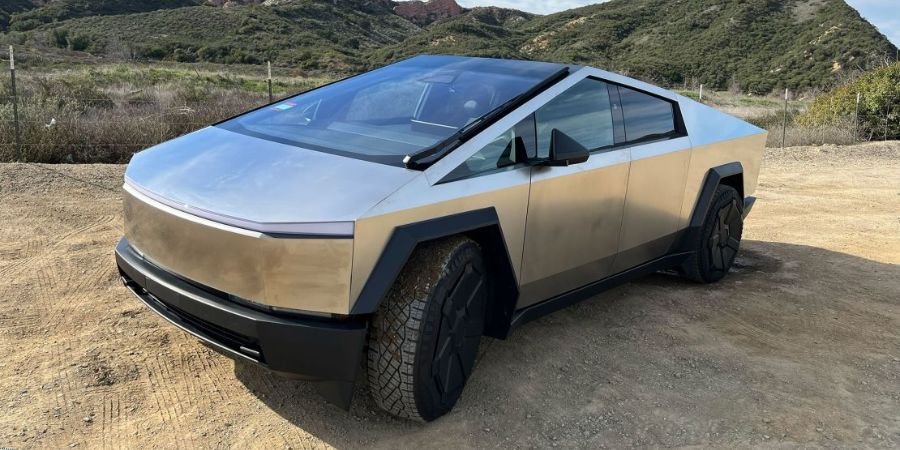
Why? A market study found the Cybertruck’s “aggressively angular and futuristic design, paired with its unpainted stainless steel exoskeleton,” set it apart from every other vehicle on the market. The Air Force also noted that adversaries may start using Cybertrucks in conflict zones, and the military needs to know exactly how to destroy one.
That single procurement request says more about where America’s defense strategy is heading than a dozen policy speeches.
The Pentagon, Big Tech, and Tesla Cybertruck are now tied together in a relationship that’s growing faster than most people realize. Elon Musk’s companies have already received approximately $22 billion in Pentagon deals through SpaceX, and Palantir, the AI defense company, just secured a 10-year, $10 billion software contract with the U.S. Army. OpenAI followed with a $200 million Pentagon deal in June 2025.
Silicon Valley is no longer just selling us smartphones. It’s shaping how America fights wars.
This article breaks down exactly how that happened, what it means, and why it should matter to everyone, not just defense analysts.
Quick Facts
| Detail | Info |
| Air Force Cybertruck Request | 2 units, August 2025, White Sands Missile Range |
| Purpose | Live missile fire targeting and precision munitions testing |
| Why Cybertruck specifically | Stainless steel exoskeleton, angular design, 48V architecture |
| SpaceX defense contracts | ~$22 billion in Pentagon deals |
| Palantir Army contract | $10 billion, 10-year deal (August 2025) |
| OpenAI Pentagon deal | $200 million (June 2025) |
| Pentagon private sector spend | $445 billion out of $755 billion total (FY2024) |
Early Life of a Defense Icon: How the Cybertruck Got Here
When Elon Musk unveiled the Tesla Cybertruck in 2019, the reaction was split between laughter and genuine fascination. The angular, wedge-shaped body looked like it belonged in a science fiction film. Musk said the steel used in its exoskeleton was the same alloy used in SpaceX rockets. He called it “apocalypse-proof.” The windows failed on stage.
Nobody expected the Pentagon to be paying attention.
The Cybertruck went into production in late 2023, priced starting around $80,000 for the base model. How much does a real Tesla Cybertruck cost? The base rear-wheel-drive model starts at approximately $79,990. The top-tier Cyberbeast tri-motor version retails near $99,990. These are consumer prices, the Air Force, notably, does not plan to buy them new from Tesla.
The vehicle built its early reputation not through sales but through cultural presence. Does Dubai police use Cybertruck? Yes – Dubai Police added the Tesla Cybertruck to its tourist patrol luxury fleet in June 2024, where it was photographed escorting Dubai’s Crown Prince. Elon Musk responded with one word: “Cool.” The truck bore the coveted number “5” license plate, valued at $9 million at auction – making it arguably the most expensive Cybertruck combination on earth.
Who owns Cybertruck in India? As of 2025, India has at least one, a private import by Gujarat businessman Lavji Daliya, registered in Dubai and shipped to India under special permissions. The landed cost with import duties nearly doubled the base price to close to ₹1 crore.
The tesla cybertruck new model trajectory, from memed truck to Dubai patrol car to Air Force missile target, tells a story that no marketing team planned.
The Air Force Cybertruck: What Actually Happened
Why Did the Air Force Request Cybertrucks for Target Practice?
The Air Force Test Center’s justification document explained that a February 2025 market study found the Cybertruck’s “aggressively angular and futuristic design, paired with its unpainted stainless steel exoskeleton, sets it apart from competitors typically using painted steel or aluminum bodies.” The study also cited the vehicle’s 48V electrical architecture as a feature “rivals are only beginning to develop.”
In plain terms: the Air Force believes America’s adversaries may start driving Cybertrucks, and they want to know how to destroy them.
The Air Force wrote in its justification document: “In the operating theater, it is likely the type of vehicles used by the enemy may transition to Tesla Cybertrucks, as they have been found not to receive the normal extent of damage expected upon major impact. Testing needs to mirror real-world situations.”
This is the Air Force Cybertruck story in a nutshell. Tesla cybertruck military target practice is not symbolic, it reflects real intelligence assessments about adversary vehicle adoption. In 2024, Chechen leader Ramzan Kadyrov posted a video of a gun-mounted Cybertruck he claimed had been sent to the front lines of Russia’s war in Ukraine. That image likely shaped the Air Force’s calculus.
Is a Tesla Cybertruck Bulletproof?
Is a Tesla Cybertruck bulletproof? Partially. The Cybertruck’s windows and side panels have been shown to be bullet-resistant, stopping subsonic pistol caliber rounds, a feature Tesla heavily touted when the vehicle was first unveiled in 2019. Tesla also posted a video showing the exoskeleton withstanding fire from a tommy gun, pistol, and shotgun. High-caliber rifle rounds are a different story, which is exactly what live missile testing is designed to evaluate.
The Cybertruck target practice program at White Sands is about answering the question that stainless steel marketing materials cannot: what happens when a precision munition hits one?
The Pentagon Tech Partnerships Powering This Alliance
How $445 Billion in Defense Contracts Changed Silicon Valley
More than half of the U.S. government’s total contract obligations now flow to the private sector, reaching $445 billion out of $755 billion in total defense spending in fiscal year 2024, according to data from the Government Accountability Office.
That shift happened over decades, but it accelerated sharply after 2020. Today, Big Tech defense contracts are not a side business, they are a core revenue pillar for some of the most powerful companies on earth.
SpaceX alone has received approximately $22 billion in Pentagon deals, including launch services contracts and Starlink satellite connectivity deployed in Ukraine and other remote military operations.
These are Elon Musk’s companies. The same person whose electric truck the Air Force wants to blow up is also the person whose rockets carry military satellites and whose internet service supports combat operations in active war zones. The Pentagon Big Tech Tesla Cybertruck dynamic is inseparable from the broader Musk-Pentagon relationship, and from the broader Silicon Valley-Pentagon relationship now taking shape.
Palantir, OpenAI, and the AI in Warfare Revolution
The numbers tell the story fastest.
Palantir – the data mining company that Peter Thiel is a co-founder of, signed a deal with the U.S. Army, which would span up to $10 billion in 10 years in August 2025, embedding 75 separate contracts into one enterprise deal. In March 2026, the Deputy Secretary of Defense, Steve Feinberg, issued a memo which made the Maven Smart System an official program of record in all five branches of the military, institutionalizing long-term funding, and making Maven the foundation of AI usage in the U.S. military.
Maven is not a passive analytics tool. It processes vast amounts of sensor data, satellite imagery, and intelligence feeds to identify potential targets and support battlefield commanders, and has already been central to U.S. military strikes in the Middle East.
OpenAI – the company behind ChatGPT, signed a $200 million contract with the Pentagon in June 2025 to deploy generative AI for military use, despite the company’s previous commitments not to develop AI tools for warfare.
AI in warfare has moved from policy debate to operational reality. Since Donald Trump’s election victory, major tech companies have abandoned years of policies restricting military work and sought lucrative defense contracts. Meta’s chief technology officer, Palantir’s CTO, and OpenAI executives Kevin Weil and Bob McGrew were sworn in as lieutenant colonels in the Army’s inaugural “Detachment 201” program, tech executives literally putting on Army uniforms.
Big Tech defense contracts now include senior executives receiving military commissions.
Tesla Cybertruck Military Use: Beyond the Missile Range
Could the Cybertruck Actually Be Used in Combat?
The military Cybertruck conversation extends beyond White Sands.
In early 2025, a State Department procurement mentioned a potential $400 million contract for “Armored Teslas,” later revised quietly to “Armored Electric Vehicles,” suggesting the government wants EVs adapted for secure military use.
Multiple private companies are already selling Cybertruck variants with aftermarket armor, weapon mounts, and tactical accessories aimed at law enforcement, security, and military buyers. The Tesla Cybertruck military use case keeps expanding beyond what Tesla itself is selling.
The logic from a defense standpoint is real:
● Silent operation. Electric motors produce minimal noise, reducing acoustic detection risk
● Reduced thermal signature. No combustion engine means a lower heat profile, harder to spot with infrared targeting
● Energy generation. The truck can power external equipment: radios, medical tools, command modules in the field
● Structural strength. The stainless steel exoskeleton withstands impact forces conventional truck bodies cannot
Air Force Cyber truck testing is designed to understand the limits of that strength under weapons fire, and to train munitions guidance systems to account for reflective, angular, non-standard surfaces.
Tesla Bot, Tesla Optimus, and the Next Frontier
Tesla Optimus robot: Tesla’s humanoid robot, also called the Tesla Bot, adds another dimension to this conversation. Tesla Bot completed basic task demonstrations in 2024 and is now being manufactured in small volumes. Its potential military applications, logistics support, hazardous material handling, surveillance, are being watched closely by defense analysts even though Tesla has made no military deals for it.
Future military technology conversations increasingly include Tesla’s full ecosystem: autonomous vehicles, humanoid robots, satellite internet, and rocket launch capability. The Pentagon Big Tech Tesla Cybertruck story is really the beginning of a much larger integration.
The Business of War: Contracts, Money, and Who Benefits
How the Money Flows
The defense technology ecosystem has never been more financially rewarding for private companies.
Palantir reported 70% year-over-year revenue growth in Q4 2025, with operating margins reaching 41%. Management has forecast 60-61% revenue growth for fiscal 2026, targeting approximately $7.19 billion in revenue. The company’s backlog now stands at $11.2 billion.
Since the release of ChatGPT in late 2022, the Department of Defense has awarded roughly $670 million in AI contracts to over 300 companies.
Pentagon tech partnerships have become a gold rush. Google updated its AI ethics rules in early 2025 to remove previous pledges against building weapons technology. Meta made its LLaMA AI model available for U.S. defense applications. Amazon, Microsoft, and others are actively marketing cloud and AI platforms to defense clients.
The incentive structure is clear: government AI contracts are long-term, well-funded, and carry status. The companies that win them gain classified infrastructure access, military-grade deployment experience, and long-range revenue visibility.
Tesla cybertruck new model development, Palantir’s Maven, OpenAI’s classified deployments, these are all pieces of the same emerging industry. Big Tech defense contracts are not a detour from Silicon Valley’s core business. For many companies, they are becoming the core business.
Ethical Tensions Inside Big Tech
When AI Companies Say No to the Pentagon
Not everyone in Silicon Valley is enthusiastic about this shift.
Anthropic refused to allow its AI models to be used for mass surveillance on Americans or to power fully autonomous weapons. The Pentagon responded by designating the company an “unacceptable supply chain risk” with a removal deadline of September 2026.
After OpenAI struck a classified AI deal with the Pentagon, chalk messages appeared on the sidewalk outside OpenAI’s San Francisco offices: “Where are your redlines?” and “What are the safeguards?” Some OpenAI employees were frustrated, feeling their company had crossed a line.
The Anthropic situation is particularly instructive. The company that built Claude, one of the most capable AI systems in the world, drew specific limits around AI in warfare: no autonomous targeting, no mass domestic surveillance. The Pentagon’s response was to cut them out entirely.
Defense Secretary Pete Hegseth cut the Pentagon’s independent weapons testing office in half in May 2025, reducing staff from 94 to 45 people, the office established in the 1980s after weapons performed poorly in combat now has fewer resources to evaluate AI systems just as they become central to warfare.
That timing, weakening oversight exactly when AI enters weapons systems, is what defense ethicists are most alarmed about.
What This Means for Future Military Technology
Civilian Tech is Now Defense Tech
The future military technology picture emerging from 2024 to 2026 has a clear pattern: the boundary between consumer innovation and military capability has effectively dissolved.
The same truck you can buy at a Tesla showroom is being studied for missile resilience. The same chatbot used for homework is being deployed in classified military networks. The same satellite internet service connecting rural towns is providing battlefield connectivity in active war zones.
Gordon Adams, a defense spending professor at American University, told Fortune: “We’re going full-bore into the privatization of technology through the Defense Department using the high tech capabilities of companies like Apple and Microsoft, Palantir and other contractors, including Elon Musk’s operations. So it’s a process which is very much out of control.”
“Out of control” is strong language from an academic. But the underlying point is real: Pentagon tech partnerships are now moving faster than the oversight infrastructure designed to evaluate them.
The Autonomous Systems Horizon
The logical endpoint of all this is autonomous warfare, drones, ground vehicles, and AI targeting systems that operate with minimal human intervention. Maven already processes battlefield data and flags targets. Tesla’s Full Self-Driving system is one of the most advanced autonomous driving platforms ever built. Combine those trajectories and the shape of future military technology becomes unsettling.
Tesla cybertruck military use in its current form is passive, a target, not an active combatant. But the same engineering that makes it interesting as a target makes it interesting as a platform. An autonomous, armored, electrically silent vehicle that can self-navigate rough terrain and power external military equipment is not a distant concept. It’s an engineering project.
Risks, Criticism, and Controversies
The Cybertruck’s Complicated Record
The Pentagon Big Tech Tesla Cybertruck story cannot be told without acknowledging the vehicle’s messy commercial reality.
Tesla sold just 4,300 Cybertrucks in Q2 2025, a 51% drop. Last year, Tesla sold only 39,000 of the vehicles. Market research found that among current Tesla owners, 73% were likely to buy another Tesla in June 2024, but by March 2025, that figure had fallen below 50%.
The Cybertruck has accumulated a record of recalls, build quality complaints, and safety concerns. There’s some dark irony in the Air Force wanting to blow up a vehicle that consumers are already losing interest in.
The Militarization Question
The deeper concern is structural: what happens to democratic accountability when defense capability is increasingly developed by private companies with no public oversight mandate?
Traditional defense contractors, Lockheed Martin, Northrop Grumman, Boeing, work within regulated frameworks, congressional appropriations, and established weapons testing protocols. Big Tech defense contracts with companies like OpenAI and Palantir operate under different norms, faster timelines, and significantly less scrutiny from independent evaluators.
When AI systems trained on civilian data are deployed for battlefield targeting without adequate testing infrastructure, the risks extend beyond the battlefield. They include bias in targeting systems, accountability gaps when things go wrong, and the normalization of autonomous lethal decision-making.
Expert Perspective: A New Kind of Military-Industrial Complex
The original military-industrial complex, the phrase coined by President Eisenhower in 1961, described the alignment of defense contractors, the military, and political power. What’s forming now is different in character, if not in structure.
The companies involved are consumer-facing, globally trusted, and deeply embedded in daily civilian life. When OpenAI builds warfighting AI and Meta develops AI-powered combat goggles for soldiers, the line between the tech products people use every day and the weapons systems their government deploys grows thin.
Adams warned: “The door is pretty open to the interpenetration of high tech and the Defense Department, and that’s really not going to change under this political situation.”
The Pentagon Big Tech Tesla Cybertruck moment is not an anomaly. It is a data point in a trajectory that is accelerating, not slowing.
The Bigger Picture: 3 Things This Alliance Is Changing
1. Who builds weapons is changing. Traditional defense contractors are being joined, and in some areas overtaken, by consumer tech companies. The implications for accountability, testing, and oversight are profound.
2. Civilian technology is dual-use by default. The Cybertruck was designed for consumers. The AI in ChatGPT was designed for consumers. Both are now inside the Pentagon. Every major tech product going forward will carry an implicit military application question.
3. Speed has overtaken governance. The rate at which AI in warfare is being deployed has outpaced the regulatory and oversight frameworks designed to manage it. The Pentagon cut its own weapons testing office in half just as AI targeting systems came online. That gap is not theoretical, it is operational.
Frequently Asked Questions
What is the Pentagon Big Tech Tesla Cybertruck connection? The U.S. Air Force Test Center requested two Tesla Cybertrucks in August 2025 as targets for live missile fire testing at White Sands Missile Range. The Cybertruck was the only name-brand vehicle specifically requested on a 33-vehicle list, chosen for its stainless steel exoskeleton, angular design, and 48V electrical architecture. Defense experts called it symbolic of growing ties between the Pentagon and Silicon Valley.
Why does the Air Force want Cybertrucks for target practice? The Air Force cited intelligence suggesting adversaries may begin using Cybertrucks in future conflicts, the truck’s unusual design and impact resistance makes it behave differently from standard vehicles under fire. Testing against it prepares precision munitions systems for real-world scenarios.
Is a Tesla Cybertruck actually bulletproof? The Cybertruck is bullet-resistant at pistol caliber, stopping subsonic rounds from pistols and shotguns per Tesla’s own demonstrations. It is not bulletproof against high-caliber rifle fire or explosive munitions, which is exactly what the Air Force testing is designed to evaluate.
What Big Tech defense contracts exist in 2026? Palantir holds a $10 billion Army software contract and a $1.3 billion Maven AI contract. OpenAI signed a $200 million Pentagon deal in June 2025. SpaceX holds approximately $22 billion in defense-related contracts. Google, Meta, Amazon, and Microsoft all have active defense AI or cloud contracts.
Do Dubai police use Cybertruck? Yes. Dubai Police added the Tesla Cybertruck to its tourist luxury patrol fleet in June 2024. It was photographed escorting Dubai’s Crown Prince and displayed at Dubai Mall. The vehicle bears the number “5” license plate, valued at $9 million at auction.
Who owns Cybertruck in India? As of 2025, India’s first Tesla Cybertruck belongs to Lavji Daliya, a businessman from Gujarat. The vehicle was booked in Texas, registered in Dubai, and privately imported to India under special permissions. The total landed cost approached ₹1 crore due to import duties.
What celebrities own Cybertrucks? Various high-profile figures have been photographed with or confirmed owning Cybertrucks, including DJ Khaled, Jay Leno, and several NFL athletes. Saudi Prince Turki bin Salman Al Saud was also photographed with one. The vehicle has become a status symbol within certain celebrity circles despite, or because of, its polarizing design.
What is Tesla Optimus and does the military want it? Tesla Optimus, also called the Tesla Bot, is Tesla’s humanoid robot. It completed basic task demonstrations in 2024 and is in early production. No confirmed military contracts exist for it yet, but defense analysts are monitoring its development closely given its potential logistics and hazardous environment applications.
How much does the Pentagon spend on Big Tech defense contracts? In fiscal year 2024, the Pentagon’s total contracts with the private sector reached $445 billion out of $755 billion in total government contracts, more than 58% of all federal contract obligations.