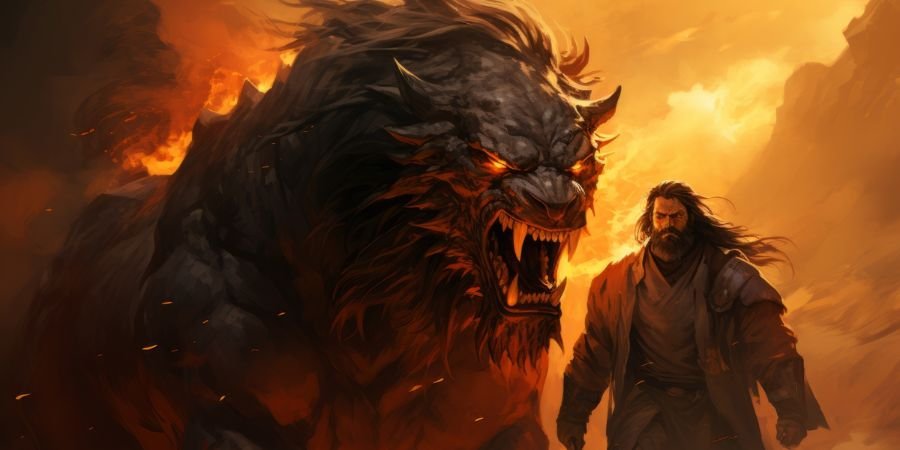
Across every civilization on earth, humans invented monsters. Not out of imagination alone, out of fear. The ocean swallowed ships. Volcanoes destroyed cities. Storms killed without warning. Ancient cultures needed names for forces that were powerful.
What emerged from that fear was some of the most terrifying mythical creatures ever described, beings so powerful that even the gods struggled against them. From Greek and Norse mythology to ancient Babylon and Hindu epics, these legendary creatures in mythology were not sideline characters. They were the main threat.
This list ranks the top 10 strongest mythical creatures across world mythology, scored on physical power, supernatural abilities, destructive capacity, divine status, and actual battle records.
Quick List: Top 10 Strongest Mythical Creatures (Ranked 10 to 1)
- Zmey Gorynych (Slavic) – Three-headed fire dragon. Regenerates when heads are cut. Power Score: 68/100
- Quetzalcoatl (Aztec) – Feathered Serpent. Created humanity. Worshipped for 2,000 years. Power Score: 72/100
- Yamata no Orochi (Japanese) – Eight-headed serpent spanning eight valleys. Power Score: 75/100
- Hydra of Lerna (Greek) – Cut one head, two grow back. Immortal central head. Power Score: 78/100
- Vritra (Hindu) – Cosmic serpent. Swallowed Indra, the king of gods. Power Score: 82/100
- Leviathan (Hebrew) – Fire-breathing sea dragon. Only God can control it. Power Score: 85/100
- Tiamat (Mesopotamian) – Primordial dragon goddess. Her body became the world. Power Score: 88/100
- Fenrir (Norse) – Great Wolf. Destined to swallow Odin. Power Score: 90/100
- Jörmungandr (Norse) – World Serpent. Kills Thor at Ragnarök. Power Score: 92/100
- Typhon (Greek) – Defeated Zeus in combat. Power Score: 98/100
If you are looking for the most powerful mythological creatures ever described across ancient texts, you’re in the right place.
How We Ranked the Strongest Mythical Creatures
Most mythical creatures lists rank by fame. Dragon at number one because everyone knows dragons. Phoenix because it looks cool. That is not how this list works.
Every creature here was evaluated across five categories:
| Category | What It Measures |
| Physical Strength | Size, raw force, combat capability |
| Magical Abilities | Supernatural powers, regeneration, immortality |
| Destructive Capacity | Scale of destruction – cities, lands, realms, or cosmos |
| Divine Status | Proximity to god-level power or cosmic significance |
| Battle Record | Documented wins and losses against gods and heroes |
Each creature receives a score out of 100.
Why popularity does not equal power: The Kraken is one of the most recognized mythical monsters on earth. It appears in movies, games, and books constantly. But compared to Typhon, who actually defeated Zeus and tore out his sinews, the Kraken is a large squid. Fame is not the same as power.
The creatures on this list are the ones ancient storytellers genuinely believed could unmake the world.
10. Zmey Gorynych – Slavic Mythology | Power Score: 68/100
Origin and Mythology
Zmey Gorynych is the great dragon of Slavic folklore, one of the most feared mythological creatures across Russia, Ukraine, Poland, and the broader Slavic world. The name translates roughly to “Serpent of the Mountains.” He appears throughout the Byliny, Russian heroic epic poems, as the primary adversary against whom legendary warriors called bogatyri tested themselves.
Unlike the solitary dragons of Western tradition, Zmey Gorynych was deeply woven into Slavic cosmology as a force of ongoing destruction, regularly threatening the mortal world and demanding tribute from kingdoms.
Powers and Abilities
- Three heads, each capable of independent fire-breathing and venom
- Regeneration, severed heads grow back unless the stumps are burned immediately
- Flight combined with devastating ground combat
- Shapeshifting, could take human form to deceive and infiltrate
- Associated with storms, drought, and disease, making him a natural disaster given physical form
- Possessed supernatural strength that outmatched any ordinary warrior
Greatest Feats
Zmey Gorynych terrorized entire kingdoms, kidnapped royalty, and demanded annual tributes from populations too afraid to resist. In the most famous Slavic epic, the hero Dobrynya Nikitich engaged Zmey Gorynych in a battle lasting three full days. Dobrynya was not stronger, he simply outlasted the dragon through extraordinary endurance.
In another tradition, Zmey Gorynych kidnapped the niece of Prince Vladimir of Kiev, triggering a campaign that involved multiple heroes before the dragon was finally brought down.
Weaknesses
- Regeneration requires that all wounds be cauterized, without fire to seal the stumps, heads grow back
- Vulnerable to enchanted weapons wielded by heroes with divine favor
- Susceptible to being tricked, several heroes used deception rather than force
- The shapeshifting ability was limited; clever heroes could identify him
Cultural Significance
Zmey Gorynych represented the ever-present threat of chaos at the borders of civilization. In Slavic thinking, the dragon at the edge of the known world was a metaphor for everything outside the safe and ordered world. Killing the dragon meant civilization survived another season. This creature sits firmly among the most powerful mythology beasts in Eastern European tradition.
9. Quetzalcoatl – Aztec / Mesoamerican Mythology | Power Score: 72/100
Origin and Mythology
Quetzalcoatl, the Feathered Serpent, is one of the oldest continuously worshipped mythological creatures in human history, revered across the Olmec, Toltec, Maya, and Aztec civilizations for over 2,000 years. The name combines quetzal (a brilliantly colored bird) and coatl (serpent), a feathered dragon uniting sky and earth. Primary sources include Aztec codices and Bernardino de Sahagún’s Historia General de las Cosas de Nueva España (c. 1540–1585).
Unlike most creatures in mythology, Quetzalcoatl occupied the space between creature and deity simultaneously, a divine being and a physical mythical beast.
Powers and Abilities
- Control over wind, rain, and Venus, celestial-scale influence
- Creator god abilities, actively participated in the creation of humanity
- Commanded the calendar and celestial order that governed all agricultural life
- His departure was prophesied to trigger the destruction of the current world age
- Could cross between realms, earth, sky, and the underworld
- Associated with knowledge, writing, and arts, the intellectual force behind civilization
Greatest Feats
According to Aztec creation mythology, Quetzalcoatl descended into the underworld and used his own blood, mixed with ground bones, to create human beings. He introduced maize to humanity, in Mesoamerican culture, the act that made civilization possible. Entire empires structured their calendars, architecture, and ritual life around appeasing him. Human sacrifices were offered in his name.
When Spanish conquistadors arrived in 1519, some Aztecs believed Hernán Cortés might be Quetzalcoatl returning, which contributed directly to the collapse of the Aztec Empire. A mythological creature whose legend shaped real historical events deserves serious placement on any power list.
Weaknesses
- His power was cosmic and creative rather than purely martial
- Had a known vulnerability to trickery, the god Tezcatlipoca deceived him into exile
- Physical combat record against other divine beings is limited compared to creatures ranked above
Cultural Significance
Quetzalcoatl represents one of the most profound examples of how creatures in mythology can carry the weight of an entire civilization’s meaning. He was not just a monster to fear, he was the source of human existence, knowledge, and order. Among legendary creatures in mythology, his 2,000-year uninterrupted worship across multiple civilizations is unmatched.
8. Yamata no Orochi – Japanese Mythology | Power Score: 75/100
Origin and Mythology
Yamata no Orochi is an eight-headed, eight-tailed serpent from Japanese mythology, one of the most formidable creatures in mythology from East Asian tradition. The name translates to “eight-forked great serpent.” It appears in Japan’s oldest historical chronicle, the Kojiki (Record of Ancient Matters, 712 CE), and the Nihon Shoki (720 CE).
This creature was so large that pine and cypress trees grew on its back, and its body stretched across eight valleys and eight hills simultaneously. It was not a creature that lived in the landscape, it was the landscape.
Powers and Abilities
- Eight heads, each independently capable of attack, making it nearly impossible to target simultaneously
- Massive physical scale, spanning eight valleys meant no terrain could contain or limit it
- Venom and fire from multiple heads operating in coordination
- Near-invulnerability to direct combat, no hero could fight all eight heads at once
- Associated with floods, storms, and uncontrollable rivers
- Annual return to claim sacrifices, a regular cosmic threat, not a single event
Greatest Feats
Yamata no Orochi had already consumed seven daughters of the earth deity Ashinazuchi before the storm god Susanoo arrived. Susanoo could not defeat the creature in direct combat. He devised a plan: fill eight barrels with sake, position them at eight gates, and wait.
All eight heads drank deeply and fell into a stupor. Only then could Susanoo attack. Inside one of its tails, he discovered the legendary sword Kusanagi-no-Tsurugi, one of Japan’s three imperial treasures, which remains a symbol of Japanese imperial authority today. A creature whose body contained a national sacred treasure is not ordinary.
Weaknesses
- Could be deceived, its appetite was its primary vulnerability
- Once intoxicated, lost the coordination advantage of eight independent heads
- Did not possess supernatural regeneration once defeated
Cultural Significance
Yamata no Orochi symbolized the destructive, uncontrollable power of flood rivers, a genuine and recurring catastrophe in ancient Japan. The sword found inside it connecting directly to the Japanese imperial family means this mythical creature left a mark on Japanese culture that persists to the present day. Among all mythical monsters, it is the only one whose defeat literally produced a living national symbol.
7. Hydra of Lerna – Greek Mythology | Power Score: 78/100
Origin and Mythology
The Lernaean Hydra is one of the most tactically terrifying mythical creatures with powers in all of recorded mythology. It lived in the swamps of Lerna in ancient Greece, poisoning the water and surrounding air. Its origins are documented in Hesiod’s Theogony (c. 700 BCE) and Apollodorus’s Bibliotheca (c. 1st–2nd century CE). The Hydra was a daughter of Typhon and Echidna, born from the two most monstrous beings in Greek mythology.
Powers and Abilities
- Multi-headed regeneration, cut one head off, and two grow in its place
- Immortal central head, the middle head could not be killed by any weapon
- Lethal breath and blood, its very presence poisoned the air and water around it
- Tracks left by its body were toxic enough to kill
- Its blood was so potent that Heracles used it to coat his arrows, those arrows later caused the accidental deaths of the centaur Chiron and others
- Size and physical strength sufficient to require a full hero with divine guidance to challenge
Greatest Feats
The Hydra’s greatest feat is simply this: it made conventional combat useless. Every hero’s instinct, cut off the threat, made the threat worse. When Heracles arrived to complete his Second Labor, he attacked the heads directly. For every head removed, two appeared. Without his nephew Iolaus burning each stump immediately after each strike, the task was impossible.
Even after Heracles succeeded, the Hydra’s blood remained one of the most dangerous substances in Greek mythology. A creature whose toxins outlasted its own death, and whose blood became a weapon that killed other heroes long afterward, has a legacy of destruction that extends well beyond its own lifespan.
Weaknesses
- The regeneration could be neutralized by fire, burn the stump before new heads grow
- Required swamp terrain; not a mobile threat
- Susceptible when targeted strategically rather than conventionally
Cultural Significance
The Hydra represents a problem that cannot be solved by brute force. Ancient Greeks understood that some threats multiply when attacked directly. Among the strongest monsters in mythology, the Hydra earns its place through a power that remains conceptually relevant: fighting it the wrong way makes everything worse. Every modern usage of “hydra problem” in politics, security, and systems thinking traces back to this creature.
6. Vritra – Hindu Mythology | Power Score: 82/100
Origin and Mythology
Vritra is the great cosmic serpent-demon of Hindu mythology and one of the most legitimately powerful creatures mythology has ever produced. He is described in the Rigveda, one of the oldest religious texts in human history, composed between 1500–1200 BCE, as a vast serpentine demon who blocked all the rivers of the world. This was not a local flood. Vritra’s obstruction was a cosmic catastrophe threatening to end all life on earth by halting the water cycle itself.
Powers and Abilities
- Absorption of cosmic energy, he drew power from the divine forces attempting to destroy him, growing progressively harder to kill
- World-scale obstruction, held back all water on earth simultaneously
- Near-invulnerability, standard divine weapons had no effect on him
- He physically consumed Indra, king of the Vedic gods, during battle, swallowing him whole
- Control over drought and atmospheric forces
- Represented asat, non-being, the primordial void, giving him cosmic-level destructive significance
Greatest Feats
Vritra’s most astonishing feat: he swallowed Indra. The king of the gods entered Vritra’s body during combat and only escaped because the other gods forced Vritra to yawn, Indra crawled out through his mouth. The king of the gods escaped through a yawn.
Indra could only defeat Vritra using a weapon made from the bones of the sage Dadhichi, a weapon that did not previously exist, had to be specifically created, and required the sage’s death to forge. No existing divine weapon was sufficient.
Weaknesses
- The Vajra – made from Dadhichi’s bones, was uniquely effective against him
- His power was primarily defensive and obstructive rather than aggressively offensive
- He was caught off-guard at twilight, neither day nor night, the only window Indra could exploit
Cultural Significance
Vritra is not just a monster, he is the primordial force of obstruction and stagnation in Hindu cosmology. His defeat by Indra represented the release of waters and the restoration of rain. In Vedic theology, the annual monsoon season was understood as Indra defeating Vritra again. Among most powerful mythical beasts across world mythology, Vritra stands out for operating at the scale of cosmic systems rather than individual battles.
5. Leviathan – Hebrew / Judeo-Christian Mythology | Power Score: 85/100
Origin and Mythology
Leviathan is one of the most culturally significant mythical monsters in the Western tradition, a fire-breathing sea dragon described across the Hebrew Bible in the Book of Job, Isaiah, Psalms, and Revelation. It predates Biblical tradition, with roots in earlier Canaanite mythology where it appears as Lotan, a seven-headed sea serpent. The creature represents primordial chaos, the deep, dark, uncontrollable ocean that existed before creation and that always threatens to return.
Powers and Abilities
- Fire-breathing – the Book of Job describes its breath setting coals alight and flames pouring from its mouth
- Scales described as shields of iron – essentially impenetrable natural armor
- Heart hard as stone – immune to mercy, negotiation, or fear
- Its presence causes the sea to boil
- In Jewish mystical tradition, God killed the female Leviathan to prevent reproduction, because two Leviathans would have destroyed the world
- Associated with Satan and end-times destruction in Christian tradition
Greatest Feats
Leviathan’s greatest feat is also its most theologically significant: God himself describes the creature to Job as proof of divine power. The argument in Job 41 is essentially, Can you control Leviathan? No. Only I can. That is how powerful I am.
A creature used as evidence of God’s omnipotence, in the primary religious text of three of the world’s largest religions, is a creature of extraordinary standing. In Psalm 74, God’s act of slaying Leviathan is described as one of the foundational acts of cosmic order.
Weaknesses
- Only God is described as capable of controlling or defeating it
- Its power is more cosmic and symbolic than tactical, it does not engage in conventional battles against comparable heroes
Cultural Significance
Leviathan became one of the most enduring symbols of overwhelming power in Western civilization. Thomas Hobbes named his landmark 1651 political treatise Leviathan, using the creature as a metaphor for the power of the state. When a mythological creature from ancient Hebrew texts shapes political philosophy 3,000 years later, its cultural power is beyond question.
4. Tiamat – Mesopotamian Mythology | Power Score: 88/100
Origin and Mythology
Tiamat is one of the oldest mythical creatures in recorded human history, a primordial dragon goddess from ancient Babylon, documented in the Enuma Elish, the Babylonian creation epic inscribed on clay tablets around 1100 BCE. She is the personification of the saltwater ocean, not a creature associated with the sea, but the sea itself given physical form.
At the beginning of existence, before the gods, before the earth, before the sky, there was only Tiamat (saltwater) and Apsu (freshwater). Tiamat is not powerful because she fights gods. She is powerful because she preceded gods.
Powers and Abilities
- Primordial creation – she did not have powers; she was the primordial force
- Creator of dragons and demons – she spawned an army of eleven monsters, including massive serpents, dragon-men, and the first demons as weapons
- Absorbed and redirected divine energy – younger gods could not harm her directly
- Possessed the Tablet of Destinies – the cosmic document conferring authority over the universe
- Her blood, when shed, formed the boundary between heavens and earth
Greatest Feats
When the younger gods disturbed her rest, Tiamat declared war on all of them. The first gods sent against her fled. Only Marduk, who demanded supreme authority over all gods as his price for fighting, stepped forward. He needed a special wind weapon, a net, and divine mandate just to have a chance.
He drove winds into her open mouth, splitting her from inside, then used her body to build the world: her upper half became the sky, her lower half became the earth, her eyes became the Tigris and Euphrates rivers. The world is made of her body. Among all powerful mythological creatures, Tiamat’s transformation into the cosmos itself is unmatched.
Weaknesses
- Her army, while large, was ultimately defeated by Marduk’s forces
- Her willingness to fight openly gave Marduk the opportunity to use the wind weapon
- Her rage after Apsu’s death may have overridden her strategic thinking
Cultural Significance
Tiamat represents the Mesopotamian understanding that chaos is not simply evil, it is the raw material of creation. The world was not built against chaos; the world was built from it. Among all legendary creatures in mythology, Tiamat is unique: she is both the monster and the material of the universe.
3. Fenrir – Norse Mythology | Power Score: 90/100
Origin and Mythology
Fenrir is the great wolf of Norse mythology and one of the most genuinely feared, most powerful mythical beasts in any tradition. Son of Loki and the giantess Angrboða, his story is documented in the Prose Edda by Snorri Sturluson (c. 1220 CE) and the Poetic Edda, particularly the Völuspá.
Fenrir did not start as a threat. He was raised among the Aesir gods. But he grew. And kept growing. And the gods began to understand what they were raising.
Powers and Abilities
- Limitless physical growth – his size was bounded only by the end of time
- Jaws that stretch from earth to sky – capable of consuming anything
- Supernatural strength that surpassed all Aesir gods combined
- Invulnerability to conventional binding – broke two divinely forged chains, Leyding and Dromi, effortlessly
- Destiny-bound – prophesied to kill Odin at Ragnarök, making him cosmically guaranteed to succeed at his greatest feat
- His sons Sköll and Háti chase the sun and moon, he propagated threats across the entire cosmic order
Greatest Feats
The Aesir gods tried to chain Fenrir three times. The first chain, Leyding, he snapped with a casual flex. The second, Dromi, twice as strong, broke just as easily. The gods had to commission the dwarves of Svartalfheim to forge Gleipnir from impossible ingredients: the sound of a cat’s footstep, the beard of a woman, the roots of a mountain, the sinews of a bear, the breath of a fish, and the spittle of a bird, things that do not exist, and therefore cannot be broken.
Even then, Fenrir only accepted binding if one god placed a hand in his mouth as a pledge. Only Tyr volunteered. When Fenrir realized he could not break free, he bit off Tyr’s hand.
He remains bound until Ragnarök. At the end of time, he breaks free and swallows Odin, king of the gods. A creature destined to kill the most powerful god, confirmed by the prophecy, earns third place on any legitimate power ranking.
Weaknesses
- Held by Gleipnir until Ragnarök, cannot act until the appointed time
- After swallowing Odin, is killed by Víðarr
- The one binding forged from non-existent materials holds him indefinitely
Cultural Significance
Fenrir represents the Norse understanding that some things cannot be controlled forever, only delayed. The gods knew what he would do. They raised him anyway, tried to contain him, and failed. He is the inevitability of destruction given fur and teeth. Among all mythological creatures, Fenrir is the most honest: the gods acknowledge his power and still cannot stop what is coming.
2. Jörmungandr – Norse Mythology | Power Score: 92/100
Origin and Mythology
Jörmungandr, the World Serpent, the Midgard Serpent, is the second most powerful creature in world mythology and one of the most cosmically significant legendary creatures in mythology ever conceived. Also a child of Loki and Angrboða, documented in the Prose Edda and Poetic Edda, Jörmungandr grew so large that Odin threw it into the ocean surrounding Midgard. Instead of containing it, the ocean gave it room to grow until it encircled the entire earth and bit its own tail.
Powers and Abilities
- World-encircling size – its body wraps the entire earth
- Venom so toxic it can poison the sky – not a local toxin; atmospheric-scale poison
- When it releases its tail, it signals the beginning of Ragnarök – the end of the world
- Its movement causes tsunamis and world-scale geological events
- Prophesied to kill Thor – the strongest warrior among the Aesir gods – during Ragnarök
- Cosmically linked to world stability; the ouroboros position maintains a kind of terrible balance
Greatest Feats
Thor and Jörmungandr meet three times in Norse mythology. In the first, Thor nearly lifted the serpent while in disguise as a cat, its weight almost broke the cosmos. In the second, Thor nearly hauled it from the ocean while fishing, Jörmungandr surfaced, they locked eyes, and the giant Hymir cut the fishing line in panic before anything worse happened.
The third meeting is Ragnarök. Thor kills the serpent. Then walks nine steps. Then dies from its venom, which by then has saturated the air. Thor, god of thunder, protector of humanity, strongest warrior in Asgard, dies nine steps after killing the World Serpent. A creature that kills the god of thunder deserves second place.
Weaknesses
- Can be killed – Thor accomplishes this at Ragnarök
- Its immense size limits mobility in confined contexts
- The ouroboros position, biting its own tail, is functionally a form of self-containment
Cultural Significance
Jörmungandr embodies the Norse worldview that even the mightiest gods operate within cycles of destruction they cannot escape. The World Serpent does not hate Thor, it simply is what will end him. Among all the most powerful mythical beasts in mythology, Jörmungandr uniquely represents the idea that power can be so vast it becomes structural, woven into the fabric of the world itself.
1. Typhon – Greek Mythology | Power Score: 98/100
Origin and Mythology
Typhon is the most powerful creature in all of recorded world mythology. Full stop.
He was the last child of Gaia (Earth) and Tartarus (the Abyss), born after Zeus overthrew the Titans, created specifically as an act of revenge to destroy the gods who had imprisoned Gaia’s Titan children. His story is documented in Hesiod’s Theogony (c. 700 BCE), Apollodorus’s Bibliotheca, and the Homeric Hymn to Apollo.
Hesiod describes Typhon as having a hundred serpent heads, each speaking in the voices of different animals, lions, bulls, dogs, serpents, simultaneously. His lower body was a coiled serpent. Fire blazed from his eyes. He was so tall that his head scraped the stars. When he raised his arms, he touched the horizons on both sides of the world.
Powers and Abilities
- One hundred serpent heads, each independently capable of attack, fire, and venom
- Godlike physical strength that surpassed all Olympians combined
- Fire-breathing from a hundred mouths simultaneously
- Venom of apocalyptic scale
- Wind generation so powerful that storms he created devastated entire regions
- Voice that shook the earth – each head produced a different sound, collectively capable of causing earthquakes
- Father of monsters – sired Cerberus, the Lernaean Hydra, the Sphinx, the Chimera, the Nemean Lion, Scylla, and others
- Ancient Greeks believed volcanic eruptions at Mount Etna were Typhon still raging beneath the surface – meaning his legend physically explained the geology of the Mediterranean
Greatest Feats
Typhon’s greatest feat, and the reason he sits at number one, is this: he defeated Zeus.
Not challenged by Zeus. Not surprised by Zeus. Defeated him. In their first battle, Typhon caught Zeus and tore out his sinews, the divine cords connecting his muscles, leaving Zeus completely helpless and hiding in a cave in Cilicia. Zeus, king of the gods, master of lightning, who had overthrown the Titans, was reduced to a limbless prisoner by Typhon.
When Typhon rose, the other Olympian gods, Ares, Athena, Apollo, Artemis, Hermes, Hephaestus, Poseidon, all fled to Egypt and disguised themselves as animals to hide from him. The most powerful pantheon in Western mythology ran away.
Hermes and Pan eventually retrieved Zeus’s sinews. Zeus recovered, re-armed himself, and fought Typhon across the Mediterranean, mountains were thrown, seas boiled, the earth shook. Zeus finally buried Typhon under Mount Etna.
It took Zeus at full power with thunderbolts, the entire might of Olympus, and an extended campaign across multiple countries to stop Typhon. And Typhon still almost won.
Weaknesses
- Ultimately defeated by Zeus’s thunderbolts in prolonged combat
- His immense size meant significant strikes could wound him
- Was vulnerable when caught off-guard or without his sinews after they were stolen back
- His confidence after the initial victory may have cost him strategic advantage
Cultural Significance
Typhon is the progenitor of mythical monsters, nearly every dangerous creature in Greek mythology descended from him. He represents the absolute limit of what ancient Greeks could imagine in terms of threatening power. The fact that he nearly succeeded, that the Olympian golden age almost ended before it began, means his shadow falls over all of Greek mythology.
He is not just the strongest creature on this list. He is the reason most of the other creatures on this list exist.
Honorable Mentions
These powerful mythological creatures nearly made the top 10 – powerful in their own right, but outranked in at least two scoring categories.
- Cerberus (Greek): The three-headed hound of Hades guards the entrance to the underworld. Terrifying, but his role is containment, not conquest. Son of Typhon.
- Basilisk (Greek / Medieval European): A serpent whose gaze kills instantly and whose breath withers stone. Among mythical creatures with powers, its instant-kill gaze is unique. Limited mobility keeps it off the main list.
- Kraken (Norse / Scandinavian): An island-sized sea creature capable of dragging entire ships underwater by creating whirlpools. One of the most recognized mythical monsters worldwide, but slow and geographically limited compared to the top 10.
- Griffin (Greek / Persian): A lion-eagle hybrid that guarded gold and divine treasure. One of the most respected mythological creatures in the ancient world. Swift, powerful, and revered across multiple cultures.
- Chimera (Greek): A lion-goat-serpent with fire breath, daughter of Typhon. Her multi-species design made her unpredictable in combat. Defeated by Bellerophon on Pegasus, aerial approach was the only safe method.
- Phoenix (Greek / Egyptian): Immortal and born from fire. The most resilient mythical creature on any list, it cannot permanently die. But immortality through rebirth is different from combat power, which is why it sits here rather than in the top 10.
Frequently Asked Questions
What is the strongest mythical creature of all time?
Typhon from Greek mythology holds that title based on ancient sources. He defeated Zeus, king of the gods, in direct combat, tore out his sinews, and sent the entire Olympian pantheon fleeing to Egypt in disguise. He fathered most of Greek mythology’s greatest mythical monsters. Only an extended campaign by Zeus with thunderbolts ultimately defeated him. No other legendary creature in mythology has a comparable battle record against divine opposition.
Can any creature defeat Typhon?
Within Greek mythology, only Zeus ultimately defeated Typhon, and it required a prolonged multi-stage campaign across the Mediterranean, divine weapons, the recovery of his stolen sinews, and enormous cost to the Olympians. In cross-mythology comparison, Tiamat has an argument, as a primordial force whose body literally became the world, she operates at a scale beyond individual combat. But in terms of documented battle records, no creature defeats Typhon cleanly or easily.
Are dragons the most powerful mythical creatures?
Dragons are the most widely represented mythical creatures across world cultures, appearing in Greek, Norse, Chinese, Japanese, Slavic, and Mesoamerican mythology. But power is not the same as prevalence. The strongest dragon-like beings, Tiamat, Typhon, Jörmungandr, are ranked individually based on what they actually accomplished in mythology. As a category, mythology beasts of the dragon type are consistently powerful. As individuals, Typhon and Jörmungandr specifically outrank most dragon entries on actual power metrics.
Which mythology has the strongest creatures?
Norse and Greek mythology produce the consistently strongest individual creatures. Norse mythology’s Jörmungandr and Fenrir are cosmically destined to kill the most powerful gods at the end of time, they do not just threaten the gods, they are guaranteed by prophecy to succeed. Greek mythology’s Typhon actually defeated Zeus before being subdued. Mesopotamian mythology’s Tiamat predates both traditions in terms of cosmic scale. For raw destructive potential across most entries, Norse mythology likely edges ahead, its most powerful mythical beasts are woven into the apocalypse itself.
What is the most powerful sea creature in mythology?
Jörmungandr, the World Serpent of Norse mythology, is the most powerful sea creature. It encircles the entire world and is prophesied to poison the sky at the end of time. The Kraken and Leviathan are runners-up.
Which mythical creature cannot be killed?
The Phoenix is immortal, it dies and resurrects in flame continuously. The Hydra’s central head was described as truly deathless. Jörmungandr and Fenrir are destined to die only at Ragnarök, they cannot be killed before their appointed time.
What are the most powerful mythological creatures in Hindu mythology?
Vritra, the cosmic serpent-demon who blocked all rivers and absorbed divine energy, is the most powerful creature in Hindu mythology. He absorbed Indra and required a weapon made from a sage’s bones to finally defeat him.
What is the difference between mythical creatures and legendary creatures?
The terms are used interchangeably in modern writing. Technically, mythical creatures appear in religious or cosmological stories (myths), while legendary creatures originate from historical folk tradition (legends). In practice, most sources, and this article, treat both as mythological creatures from world folklore.
Conclusion
The strongest mythical creatures were not invented to entertain. They were invented to explain. The volcano, the flood, the drought, the ocean that swallowed sailors whole, ancient civilizations needed something to call those forces. Something that could be named, described, and eventually perhaps defeated.
What they created in that process were some of the most enduring stories ever told.
Typhon nearly ended the Olympian age before it began. Jörmungandr wraps the world and will one day poison the sky. Fenrir waits in binding until the appointed hour. Tiamat is the earth and sky. These are not creatures at the edge of mythology, they are the reason mythology exists.
The most powerful mythological creatures across history share one quality: they made even the gods afraid. And in that fear, ancient humans found a way to talk about what it means to live in a world bigger, older, and more powerful than any of us.
They still do.
Read Also: Legacy Leadership: Building Businesses That Endure Generations