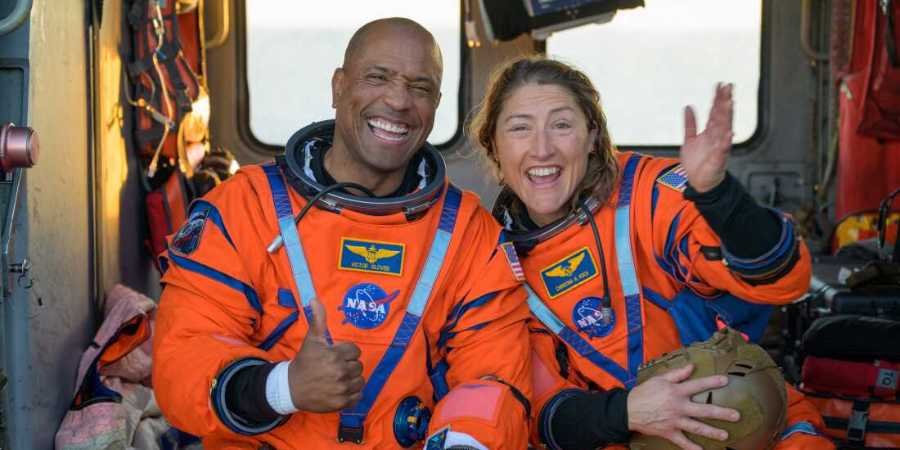
Millions of people across the U.S. have been tracking this one question all week. NASA’s Artemis II mission launched April 1, sent four humans farther from Earth than anyone has traveled in over 50 years, swung around the Moon, and is now heading home. Tonight is the night.
Summary: NASA’s Artemis II mission is scheduled to splash down off the coast of San Diego at approximately 8:07 p.m. EDT (5:07 p.m. PDT) on Friday, April 10, 2026. The spacecraft carrying four astronauts will land in the Pacific Ocean after a 10-day journey around the Moon.
If you are trying to set an alarm, plan your evening, or watch it live with your family, here is everything you need in one place.
Quick Facts: Artemis 2 Splashdown at a Glance
| Detail | Info |
| Splashdown Time (EDT) | 8:07 PM EDT |
| Splashdown Time (PDT) | 5:07 PM PDT |
| Splashdown Time (CDT) | 7:07 PM CDT |
| Splashdown Time (IST) | 5:37 AM IST (April 11) |
| Splashdown Time (GMT) | 00:07 AM GMT (April 11) |
| Date | April 10, 2026 |
| Location | Pacific Ocean, off San Diego, CA |
| Mission Duration | ~10 days |
| Spacecraft | Orion (named Integrity by the crew) |
| Recovery Ship | USS John P. Murtha |
| Where to Watch | NASA Live, Netflix, ABC News Live |
What Time Will Artemis 2 Splash Down?
NASA’s Artemis II mission is scheduled to splash down off the coast of San Diego at approximately 8:07 p.m. EDT (5:07 p.m. PDT) on Friday, April 10.
Here are the same time converted across major time zones so you know exactly when to tune in:
- Eastern Time (EDT): 8:07 PM
- Central Time (CDT): 7:07 PM
- Mountain Time (MDT): 6:07 PM
- Pacific Time (PDT): 5:07 PM
- UK (GMT): 12:07 AM Saturday, April 11
- India (IST): 5:37 AM Saturday, April 11
If all goes according to plan, the Orion capsule will hit Earth’s atmosphere over the open Pacific Ocean at 7:53 p.m. EDT and splash down off the coast of San Diego 14 minutes later.
Where Will Artemis 2 Land?
NASA teams on the ground are completing final preparations for Orion’s re-entry and splashdown around 8:07 p.m. EDT (5:07 p.m. PDT) Friday, April 10, off the coast of San Diego.
The Pacific Ocean near San Diego was chosen deliberately. The area gives recovery teams calm, accessible waters and puts the USS John P. Murtha within close range. Following splashdown, recovery teams will retrieve the crew using helicopters and deliver them to the USS John P. Murtha.
Once aboard, the astronauts will undergo post-mission medical evaluations in the ship’s medical bay before traveling back to shore to meet with an aircraft bound for NASA’s Johnson Space Center in Houston.
Artemis 2 Full Mission Timeline
Here is the complete journey from launch to splashdown, laid out simply:
- April 1, 2026 – Launch: NASA’s Orion spacecraft began its journey to the Moon following a successful April 1 launch on an SLS (Space Launch System) rocket from the agency’s Kennedy Space Center in Florida.
- April 2, 2026 – Translunar Injection Burn: Orion successfully performed its translunar injection burn, a 5 minute, 55 second maneuver that sent the spacecraft beyond Earth orbit, the first time astronauts have done so since Apollo 17 in 1972.
- April 6, 2026 – Lunar Flyby + Distance Record: NASA astronauts Reid Wiseman, Victor Glover, and Christina Koch, and CSA astronaut Jeremy Hansen surpassed the record for human spaceflight’s farthest distance from Earth, which was previously set by the Apollo 13 mission in 1970. They traveled 248,655 miles from Earth.
- April 7, 2026 – Heading Home: Following a swing around the far side of the Moon on April 6, the crew exited the lunar sphere of influence on April 7 and are headed back to Earth.
- April 10, 2026 – Splashdown: 8:07 PM EDT off San Diego
Total journey: approximately 695,081 miles from launch to splashdown.
How the Splashdown Actually Works
This is where it gets dramatic. Reentry from the Moon is significantly more intense than returning from the International Space Station. The physics involved are worth understanding.
It will take Orion about 13 minutes to travel the 400,000 feet from space to splashdown off the coast of San Diego. “The speeds are much, much greater coming back from deep space,” retired NASA astronaut Barry “Butch” Wilmore told ABC News.
Here is the sequence of events during reentry and splashdown:
7:53 PM EDT – Reentry Begins + Blackout
As Orion descends through about 400,000 feet, the spacecraft will enter a planned six-minute communications blackout at 7:53 p.m. as plasma forms around the capsule during peak heating. During this window, Mission Control goes silent. No communication in or out. The crew experiences up to 3.9 Gs of force pressing on their bodies.
This blackout is completely normal and expected. The heat shield does its job at temperatures reaching roughly 3,000 degrees Fahrenheit.
8:03 PM EDT – Parachutes Deploy
After emerging from blackout, Orion will jettison its forward bay cover, deploy its drogue parachutes near 22,000 feet at 8:03 p.m., and then unfurl its three main parachutes around 6,000 feet at 8:04 p.m. to slow the capsule for splashdown.
8:07 PM EDT – Splashdown
A series of specially designed parachutes will deploy, slowing Orion’s speed to a far safer 20 mph at the time of splashdown. The capsule hits the Pacific Ocean. The mission is complete.
Where to Watch Artemis 2 Splashdown Live
You have several solid options tonight:
- NASA Live (YouTube / nasa.gov) – free, always reliable
- Netflix – The Artemis II splashdown broadcast begins at 6:30 p.m. EDT / 3:30 p.m. PDT on Netflix as part of NASA+ live programming. No extra subscription required beyond your existing membership.
- ABC News Live / Disney+ / Hulu – Live coverage begins at 7 p.m. ET on ABC News Live, Disney+ and Hulu, with special coverage beginning at 7:30 p.m. ET on ABC.
Coverage typically starts 90 minutes before splashdown, so settling in around 6:30 PM EDT gives you full context.
Why Can Splashdown Times Shift?
The 8:07 PM EDT time is the current plan, but NASA does adjust splashdown timing based on a few real-world factors:
- Ocean and weather conditions at the landing zone
- Trajectory adjustments made during the final hours before reentry
- Range safety and crew safety protocols that take priority over any schedule
The location and time of Artemis II splashdown will continue to shift as mission milestones are reached. In the days leading up to splashdown, updates will be available on NASA’s website and in daily news conferences.
For the most current time, check nasa.gov directly in the hours before splashdown.
The Crew Coming Home Tonight
Four people are inside that capsule right now:
- Reid Wiseman: Commander, NASA
- Victor Glover: Pilot, NASA
- Christina Koch: Mission Specialist, NASA
- Jeremy Hansen: Mission Specialist, Canadian Space Agency
Commander Reid Wiseman, pilot Victor Glover, mission specialist Christina Koch, and CSA mission specialist Jeremy Hansen lifted off from Kennedy Space Center on April 1 and traveled farther from the planet than any human before them. Tonight, they come home.
FAQ: Artemis 2 Splashdown
What time is Artemis 2 splashdown in IST?
Artemis 2 splashdown is at 5:37 AM IST on Saturday, April 11, 2026 (8:07 PM EDT on April 10 converts to early Saturday morning in India).
Where can I watch Artemis 2 splashdown live?
You can watch free on NASA’s YouTube channel, on NASA.gov, on Netflix (no extra cost with existing membership), or on ABC News Live, Disney+, and Hulu starting at 7 PM EDT.
Why does NASA use ocean splashdowns?
The ocean acts as a natural cushion and provides a large, unpopulated landing zone. Recovery ships and helicopter teams can operate safely in open water, and the Pacific off San Diego gives NASA predictable conditions and quick access for the crew.
How fast is Orion during reentry?
The speeds coming back from deep space are much greater than returning from low Earth orbit. Orion enters the atmosphere at roughly 25,000 mph and slows to approximately 20 mph at splashdown using parachutes.
What happens to the crew after splashdown?
Within two hours after splashdown, the crew will be extracted from Orion and flown to the USS John P. Murtha. Recovery teams will retrieve the crew using helicopters, and once aboard the ship, the astronauts will undergo post-mission medical evaluations before returning to shore to board an aircraft bound for NASA’s Johnson Space Center in Houston.
What happens during the 6-minute blackout?
Together, the friction and compression of the atmosphere as Orion falls creates a plasma bubble that will engulf the spacecraft. It is that plasma that does not allow radio signals in or out. The crew is safe during this period, communication simply cannot pass through the plasma.
How long was the Artemis 2 mission?
NASA’s Artemis II mission is an approximately 10-day journey around the Moon including launch, a lunar flyby, and splashdown.