Growth is often celebrated as the ultimate marker of success. Yet for enterprises operating in volatile markets, growth without resilience is fragile. What determines longevity is not ambition alone, but the systems that allow a business to withstand disruption, absorb shocks, and continue operating when conditions change. Enterprise resilience is built quietly, through foresight, governance, disciplined decision-making, and an uncompromising understanding of risk.
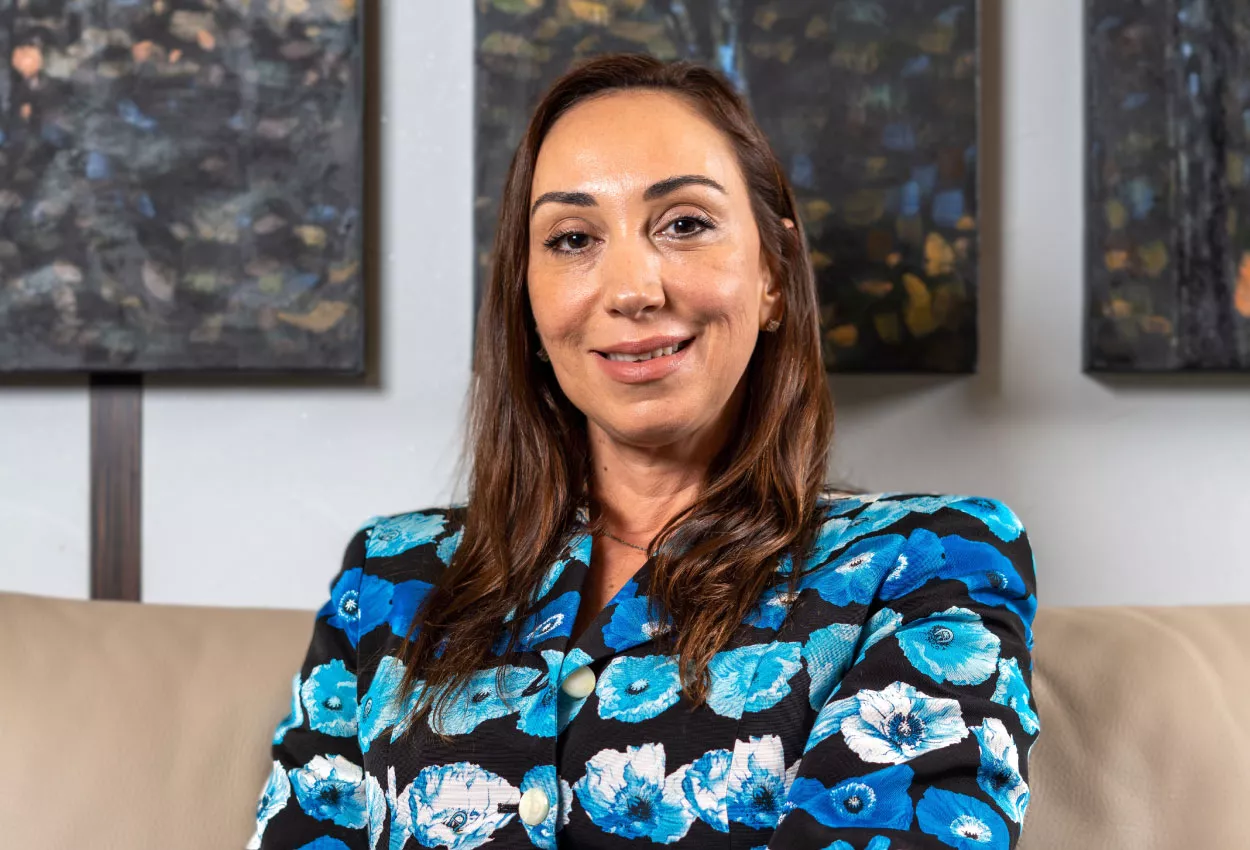
This is the terrain in which Yolla El Khoury operates. As CEO of ACE Gallagher Holding, she leads an insurance brokerage and risk advisory firm that positions protection not as a financial afterthought, but as a strategic enabler of business continuity.
Enterprise Resilience as a Leadership Responsibility
For Yolla El Khoury, resilience is not a department, a framework, or a plan that sits on the sidelines. It is a leadership responsibility, embedded in how decisions are made and risks are owned. Every strategic choice such as expansion, investment, digital transformation, introduces exposure. The task of leadership is not to eliminate that exposure, but to anticipate it early and design the conditions under which the business can continue to operate when pressure arrives.
At ACE Gallagher, this responsibility shapes how insurance is approached. Rather than treating protection as a transactional purchase, the firm integrates it into enterprise risk management. Work with clients begins by identifying vulnerabilities across cyber threats, supply chain dependency, legal exposure, operational disruption, and environmental risk. Those vulnerabilities are then translated into structured protection aligned with how the business actually operates and where it intends to go.
Under Yolla’s leadership, resilience is treated as a practical standard, not an abstract ambition. The question is not whether safeguards exist, but whether the organization can continue operating after a disruption; whether leaders can make decisions with incomplete information; and whether financial stability can be maintained without eroding trust. These criteria shape how risk is assessed, how protections are designed, and how advisory decisions are made.
Leadership As An Operating Model
Yolla’s approach to leadership is grounded in the view that leadership must function as a system, not a personality. Authority on its own does not create resilience. What sustains organizations under pressure is consistency in decision-making, clarity of roles, and the ability to align people, processes, and governance when conditions deteriorate.
She frames leadership as an operating model built on four pillars: accountability, trust, foresight, and execution. Accountability ensures decisions are clearly owned. Trust enables decentralised action without loss of control. Foresight allows leaders to act before risk becomes visible. Execution ensures strategy translates into operational reality rather than remaining aspirational.
This model is applied internally at ACE Gallagher. Teams are empowered to make decisions within defined frameworks, supported by clear escalation paths and governance structures. Rather than relying on excessive oversight, Yolla El Khoury prioritises decision readiness ensuring people understand risk thresholds, regulatory constraints, and client impact before acting.
The result is an organization that remains responsive without becoming reactive. Leadership is exercised through systems and standards, not constant supervision.
Trust Under Pressure
Yolla’s leadership style has been shaped by constant reflection and adjustment. Early in her career, she believed that close supervision was the key to maintaining high standards. Over time, experience taught her a different lesson. Too much control restricts initiative, slows progress, and limits the very innovation leaders hope to inspire.
She gradually shifted toward a model built on trust and ownership. By setting clear expectations and giving her teams the freedom to decide how to meet them, she created an environment where people feel responsible for outcomes rather than dependent on approval. This approach strengthens strategic thinking, encourages adaptability, and builds accountability across the organization. Open, two-way communication keeps everyone aligned, even as teams operate across different markets and time zones.
This balance of structure and flexibility is particularly important in the insurance sector, where regulatory demands are high and client needs are complex. For Yolla, discipline and independence are not opposites. They are complementary forces that keep the business responsive while staying firmly grounded in what serves the client best.
When the pandemic disrupted the global economy, Yolla led ACE Gallagher through the uncertainty with calm focus and empathy. As the company moved quickly into remote operations, she made sure employees were supported not just professionally but personally, introducing health and well-being initiatives to sustain morale. At the same time, she directed teams to reassess risk exposures, addressing new realities such as cybersecurity threats, disrupted supply chains, and changing financial vulnerabilities.
Her leadership during this period reflected her ability to anticipate shifts and respond with agility. Rather than reacting in isolation, she encouraged collaboration across teams, using challenges as opportunities to learn and strengthen the organization. For Yolla, resilience is not about surviving disruption but about evolving through it.
As she has often said, preserving stability means caring for people as much as protecting performance. In her role as CEO, ACE Gallagher did more than endure a crisis. It built deeper trust with clients and a stronger internal culture, proving that strategic foresight and human care are inseparable.
Risk Intelligence at the Intersection of Technology, People, And Governance
Modern risk is no longer confined to physical assets or discrete insurable events. It emerges where technology, human behaviour, and governance intersect and often fails where those elements are poorly aligned. Yolla El Khoury approaches risk intelligence with this reality in mind, treating it as a decision-support capability rather than a technical function.
Technology has expanded both operational capacity and exposure. Cyber threats, data breaches, and digital dependency introduce risks that evolve faster than traditional insurance models can track. At ACE Gallagher, risk intelligence is integrated with real-time assessment to help clients understand how digital systems, dependencies, and failure points affect operational continuity.
Equally significant is human fallibility. Poor decision-making, unclear accountability, and cultural blind spots often amplify risk more than external threats. Yolla places emphasis on governance literacy, ensuring managers and team leaders understand not only what risks exist, but how organisational behaviour, incentives, and decision dynamics shape outcomes.
In this context, governance is not treated as a compliance exercise. It is understood as decision architecture: who makes decisions, with what information, and under which constraints. When that architecture is clear, organisations respond faster and with greater confidence when disruption occurs.
Decision-Making In Times of Disruption
Periods of crisis expose how leadership systems function under strain. During the global pandemic, Yolla El Khoury led ACE Gallagher through a rapid operational shift while maintaining service continuity. Remote working was implemented quickly, but the more complex task involved reassessing client risk landscapes as operating conditions changed abruptly.
Cyber exposure increased. Supply chains fractured. Financial volatility intensified. Rather than reacting in isolation, Yolla prioritized structured reassessment. Teams were tasked with re-evaluating client exposures, stress-testing existing coverage, and advising on emerging vulnerabilities. For clients navigating rapid change, the firm’s promise of being “with you every step” is not a mere slogan, but a working reality, reflected in frequent reassessment, clear communication, and sustained advisory presence.
Internally, leadership attention extended beyond performance metrics. Employee wellbeing, communication clarity, and decision transparency were treated as resilience factors. Yolla understood that sustained performance under uncertainty depends on psychological safety as much as operational planning.
The result was continuity alongside strengthened internal and client confidence. The period reinforced a central principle in Yolla’s approach: resilience is built through preparation and disciplined decision-making, not improvisation.
Safeguarding Businesses Through Insight
At its heart, insurance broking is about protecting what matters most when uncertainty strikes. At ACE Gallagher, this means standing between clients and the insurance market to make sure risks are not only understood but intelligently managed. The firm works to uncover potential weaknesses, assess their financial impact, and design protection that safeguards both assets and day-to-day operations.
This role goes far beyond placing policies. It calls for a precise understanding of each client’s business, the threats it faces, and how those risks can be structured into workable solutions. From negotiating coverage terms to adapting strategies as conditions change, the work is continuous and highly tailored.
Under Yolla’s leadership, this advisory responsibility sits at the heart of everything the firm does. By turning uncertainty into structured, insurable risk, ACE Gallagher builds lasting relationships based on expertise, clarity, and trust.
A Workplace Designed for Growth
Yolla’s approach to leadership treats people as a core operating factor, not a cultural add-on. She focuses on building environments where expectations are clear, standards are consistent, and collaboration is structured rather than incidental. Teams are encouraged to speak up, challenge assumptions, and contribute to decision-making within defined parameters, not informally, but as part of how work is done.
For Yolla El Khoury, mentorship is not discretionary. It is a leadership responsibility tied to long-term organisational strength. She invests time in developing others, sharing experience openly, including both successes and difficult decisions, to build judgement, not dependence. The aim is to prepare future leaders to navigate complexity with clarity, confidence, and accountability.
A New Standard for an Old Industry
Yolla looks to the future of insurance as one that will continue to evolve through technology, data, and digital connectivity, yet remain grounded in its core responsibility to stand beside clients when it matters most. Innovation will change how risks are measured, how services are delivered, and how relationships are managed, but the fundamental promise of protection must remain untouched.
She sees strong potential at the intersection of sustainability, digital platforms, and risk management, particularly in addressing growing challenges such as climate exposure and cyber threats. These forces will shape a more responsive and resilient insurance ecosystem.
Her approach to leadership centers on continuous learning, collaboration across stakeholders, and a deep commitment to ethical responsibility. Yolla is focused on developing leaders who can build organizations that are adaptable, inclusive, and driven by purpose rather than short-term gain.
For her, achievement is not defined by financial performance alone. It is reflected in the ability to lead with integrity, to give others the space to grow, and to leave a positive imprint on the people and communities the business serves. She aims to set a new standard for leadership in insurance, one that connects commercial success with social responsibility and long-term impact.
Through Yolla’s vision, the industry is gaining more than direction. It is gaining momentum. Her leadership shows how principled, people-centred leadership can reshape insurance into a force that not only manages risk but strengthens society.