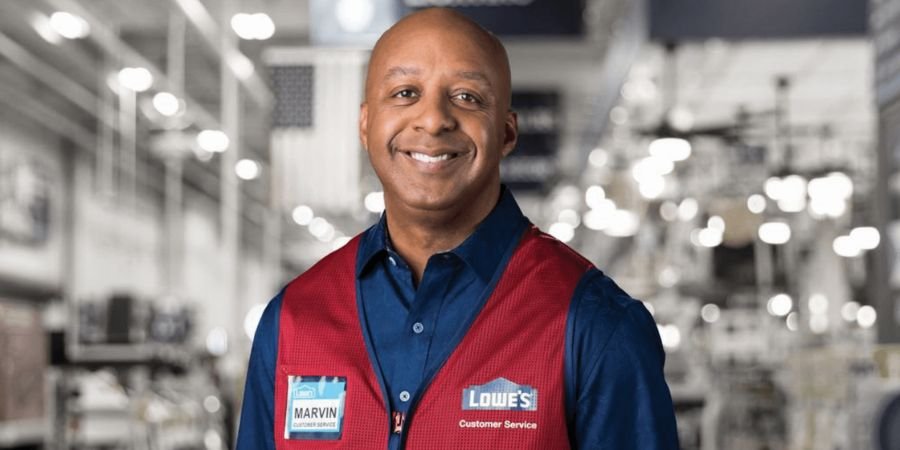
Marvin Ellison is today the Chairman and CEO of Lowe’s, a Fortune 50 company with over 2,200 stores and 300,000 employees across North America.
But his story starts about as far from a Fortune 50 boardroom as you can get.
Marvin Ellison’s early life began in 1966 in Haywood County, Tennessee, one of the poorest rural counties in the state. He grew up in Brownsville, a small town roughly 60 miles northeast of Memphis. He was the middle child in a family of seven kids. His parents never graduated high school. His family had no indoor plumbing until he was six years old.
Today, he is the first African American CEO in the history of both Lowe’s and JCPenney, and the first Black executive ever to lead two separate Fortune 500 companies.
The distance between those two facts is what makes Marvin Ellison’s biography worth reading.
Where Did Marvin Ellison Grow Up?
Marvin Ellison was born on June 1, 1966, in Haywood County, Tennessee. He grew up in Brownsville, a town he once described as having just three traffic lights.
Brownsville sits in rural West Tennessee. In the 1960s and 1970s when Marvin Ellison was a child, Haywood County was one of the most economically disadvantaged areas in the state. Poverty was not the exception. It was the norm.
The family home was about 12 miles outside of Brownsville itself. No indoor plumbing. No nearby opportunities. What they did have was each other, and a set of values that Marvin Ellison says defined everything that came after.
“It’s fair to say we were poor,” Marvin Ellison has written. “It’s truer still to say we lived in poverty. So did a lot of people around Brownsville.”
Marvin Ellison Family Background: The People Who Raised Him
Understanding Marvin Ellison’s family background is key to understanding the man.
His father, Ivory Ellison, was a proud and hardworking man. He had previously worked as a sharecropper before transitioning to work as a door-to-door insurance salesman. He never accepted public assistance, not once, despite the financial pressure of raising seven children. To make ends meet, Ivory often worked two or three jobs at a time.
Marvin Ellison has spoken about his father with deep admiration. One piece of advice his father repeated throughout his childhood stayed with him for life: “Never allow your surroundings to dictate your dreams.”
His mother was equally resourceful. She could, in Ellison’s own words, “stretch a dollar like nobody’s business.” Neither parent graduated high school. But both were deeply committed to their children’s futures.
Faith was central to the household. The Ellison family worshipped together and the church was a cornerstone of their community life. For Black families in rural Tennessee at that time, church was more than a place of worship, it was a social equalizer. As Marvin Ellison has noted, it was “a place where your economic status did not matter.”
The family also performed together musically. Marvin, his parents, and his siblings toured together as a traveling gospel group called The Ellison Family. Music was not a hobby, it was a bond and a source of identity.
Growing Up in Brownsville, Tennessee: What It Really Looked Like
Brownsville in the late 1960s and 1970s was a town still living in the long shadow of segregation.
The Civil Rights Act had passed in 1964 and the Fair Housing Act in 1968, but the realities of systemic inequality moved slowly in rural West Tennessee. As a young Black boy growing up in this environment, Marvin Ellison was acutely aware of the limitations placed on people who looked like him.
There were no gleaming examples of Black corporate success nearby. There were no obvious paths that showed him where ambition could take him. What there was, was a family that refused to accept that those limits were permanent.
The family home had no indoor plumbing until Marvin was six years old. Seven children, two working parents, one modest home, 12 miles outside a three-stoplight town. That was the starting point.
By the time Marvin Ellison would become CEO of a company ranked 31st on the Fortune 500 list, the contrast would be almost impossible to fully articulate.
Marvin Ellison Education: Working His Way Through College
Marvin Ellison’s educational journey is one of the most compelling parts of his biography.
His older sister was the first in the family to leave Brownsville for university, she attended the University of Tennessee. Watching her take that step had a profound impact on Marvin. He described her as a “courageous adventurer taking on a frontier that their family had never explored before.”
That moment planted a seed. Education was the only way out, and he knew it.
After graduating high school in Brownsville, Marvin Ellison enrolled at the University of Memphis in 1984 as a business major. But going to college was not a smooth transition. He had no family money behind him. Every semester had to be earned.
To pay his tuition, Ellison worked multiple jobs simultaneously. His shift work included:
- Graveyard shifts at a convenience store
- Janitorial work at a women’s department store
- Driving a plumbing supplies truck during summer
He was, in many cases, working full-time while trying to attend classes. It took him five and a half years to complete his undergraduate degree. That is not a failure, it is one of the most telling measures of his determination.
He graduated with a Bachelor’s degree in Business Administration in Marketing from the University of Memphis.
During those years, he also met his future wife, Sharyn, famously in the university library. She later recalled being drawn to the fact that he carried a briefcase around campus instead of a backpack.
He later went on to earn an MBA from Emory University, adding a prestigious postgraduate credential to a foundation he had built entirely through self-reliance.
Key Lessons from Marvin Ellison’s Childhood
The values Marvin Ellison absorbed during his childhood in Brownsville appear throughout every stage of his career. Here are the ones he has spoken about most directly.
1. Hard Work Is Non-Negotiable
His father worked two and three jobs without complaint. That was the baseline expectation. There was no talk of finding shortcuts. Work was how you survived. That same standard became Ellison’s own, evident in his willingness to balance full-time jobs with full-time study for over five years.
2. Never Accept That Your Environment Defines You
His father’s repeated message, “never allow your surroundings to dictate your dreams,” was not just encouragement. It was a survival tool. Growing up in a segregated, economically poor area, the psychological pressure to accept limitations was real. The Ellison household actively pushed back against that.
3. Faith as Foundation
The church was where the family grounded itself. For Ellison, faith was not separate from his sense of purpose, it was inseparable from it. He has spoken often about how deeply his spiritual upbringing guided his decisions in leadership.
4. Community Responsibility
Marvin Ellison did not just leave Brownsville and forget it. In 2021, he returned with Lowe’s grant funding and a team of volunteers to help build the city’s new town hall, one of 100 community impact projects Lowe’s completed that year to mark its centennial. The boy who grew up with no indoor plumbing came back as the CEO of a Fortune 50 company to invest in his hometown.
5. Humility in the Face of Success
Even after reaching the top of two Fortune 500 companies, Marvin Ellison has admitted that early in his career he felt inferior to colleagues with Ivy League degrees and White House connections. He chose to lean into his background rather than hide from it. That choice, to be exactly who he was, became his competitive advantage.
How Marvin Ellison’s Early Life Shaped His Leadership
The connection between Marvin Ellison’s childhood and his leadership style is not subtle. It is direct and well-documented.
- Operational discipline: He learned it first from watching his father manage scarcity. Running a family of nine people on limited income required precision. At Lowe’s, Ellison has become known for exactly this: a relentless focus on operational efficiency, cost discipline, and execution.
- Employee empathy: Ellison worked minimum-wage jobs for years. He has never forgotten what it feels like to be on the front line. His communication approach at Lowe’s, which he describes as direct and transparent, is shaped in large part by a respect for people at every level of an organization.
- Resilience under rejection: Ellison has been passed over for promotion ten times during his career. At one point at Target, he lost a promotion he deserved because of a single senior executive’s opposition, a painful experience he later discussed publicly. Instead of quitting, he changed his approach and kept building. That kind of resilience does not come from an easy childhood.
- Competing with integrity: Perhaps the most consistent thread in how Ellison describes his leadership philosophy is the concept of competing hard while maintaining integrity. That is not corporate language. It is the language of someone who watched his father work two jobs without ever compromising his dignity.
Marvin Ellison’s Historic Career Timeline: From Brownsville to the Boardroom
To fully appreciate Marvin Ellison’s early life, it helps to see what came after it.
- He began his retail career at Target in 1987, earning $4.35 an hour as a store associate
- He rose over 15 years to become Corporate Director of Asset Protection
- He joined Home Depot in 2002 and rose to Executive Vice President of US Stores, overseeing 700+ stores and 150,000+ employees
- In 2014, he became Chairman and CEO of JCPenney, the first African American in the company’s history to hold that role
- In 2018, he became Chairman and CEO of Lowe’s, again, the first African American to lead the company
He is the only African American ever to serve as CEO of two separate Fortune 500 companies.
That trajectory began in a house without indoor plumbing, 12 miles outside Brownsville, Tennessee.
FAQ: Marvin Ellison Early Life
Where was Marvin Ellison born?
Marvin Ellison was born on June 1, 1966, in Haywood County, Tennessee. He grew up in Brownsville, a small town approximately 60 miles northeast of Memphis.
What was Marvin Ellison’s childhood like?
Marvin Ellison’s childhood was marked by poverty. He grew up as the middle child of seven siblings. His family had no indoor plumbing until he was six years old and lived about 12 miles outside Brownsville. Despite financial hardship, his parents instilled strong values of faith, hard work, and education.
What is Marvin Ellison’s family background?
His father, Ivory Ellison, worked multiple jobs including as a door-to-door insurance salesman and had previously been a sharecropper. His mother was a resourceful homemaker. Neither parent graduated high school. The family was deeply rooted in church and performed together as a traveling gospel group called The Ellison Family.
What challenges did Marvin Ellison face early in life?
Ellison faced poverty, racial inequality in the segregated South, and a lack of resources or obvious role models. He had to work full-time jobs, including night shifts and janitorial work, to pay his way through college, which took him over five years to complete.
Where did Marvin Ellison go to school?
Marvin Ellison attended the University of Memphis, where he earned a Bachelor’s degree in Business Administration in Marketing. He later earned an MBA from Emory University.
How did Marvin Ellison’s upbringing influence his leadership style?
Ellison’s upbringing directly formed his emphasis on operational discipline, employee empathy, resilience, and competing with integrity. His father’s work ethic and the family’s faith-driven values are repeatedly cited by Ellison himself as the foundation of his leadership philosophy.
Conclusion
The story of Marvin Ellison’s early life is not just inspiring, it is instructive.
He did not succeed because of privilege, connections, or an elite education. He succeeded because two working parents in rural Tennessee refused to let poverty become a permanent condition, and passed that refusal on to their seven children.
The values he absorbed in Brownsville, hard work, self-reliance, faith, community, and an absolute refusal to be defined by his surroundings, became the operating system he carried into every boardroom he entered.
When Lowe’s employees today see their CEO speak with directness, empathy, and urgency about doing more for communities and front-line workers, they are seeing the product of a boy who grew up 12 miles outside a three-stoplight town, working nights to pay for his own education.
Marvin Ellison’s early life is the foundation of everything that came after. And that foundation was built not from wealth or access, but from a family that simply refused to give up.
Read Also: Meaghan Oppenheimer: The Screenwriter Behind Tell Me Lies