Growth once meant expansion, more markets, more customers, more campaigns, more data. Today, it means something far more intricate. Customer journeys stretch across platforms, time zones, and touchpoints. Marketing speaks in one rhythm, sales in another. Data flows, yet meaning often gets lost between dashboards and decisions. Artificial intelligence promises efficiency, automation promises scale, and strategy decks promise clarity, yet coherence is increasingly rare. The real challenge is no longer access to tools, but alignment. Alignment between teams. Alignment between promise and delivery. Alignment between systems and human experience. Sustainable growth now depends less on adding more and more and connecting what already exists into something intentional and unified.
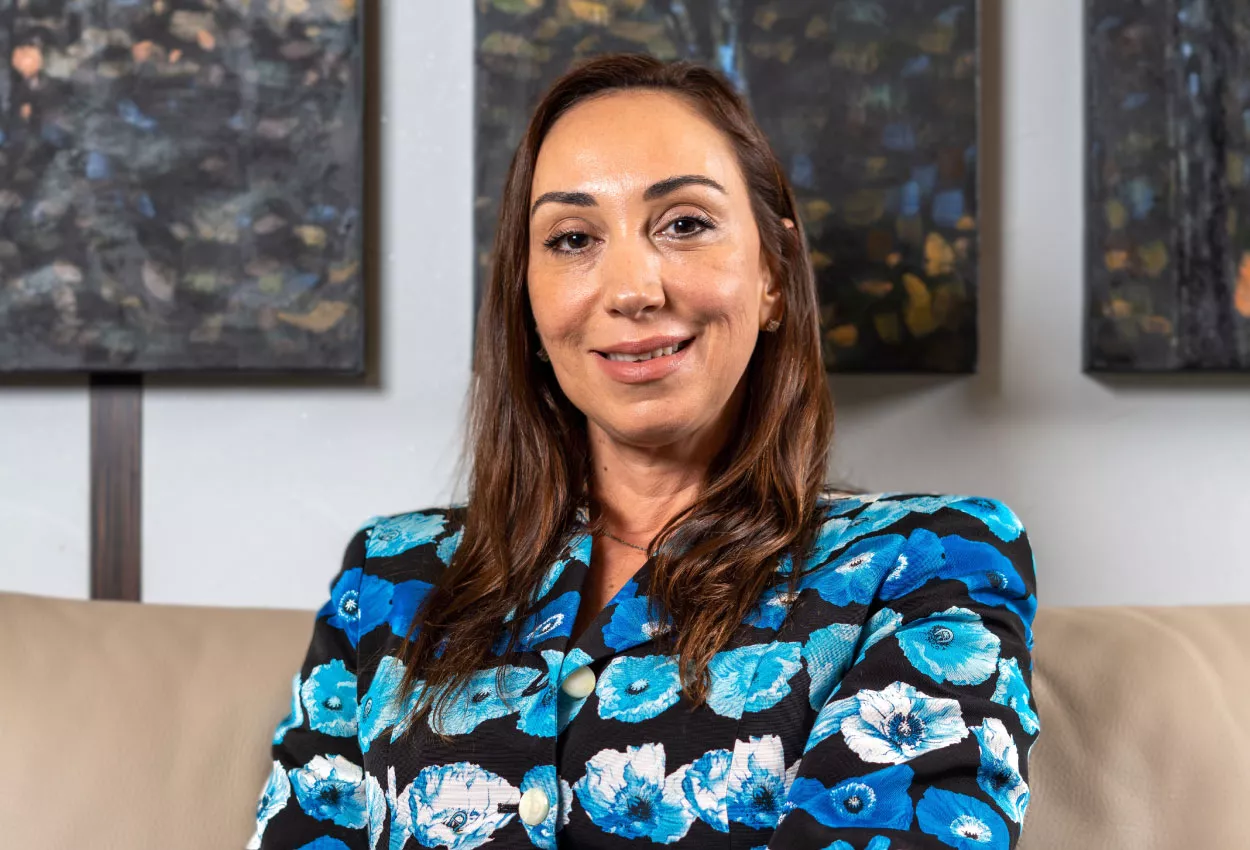
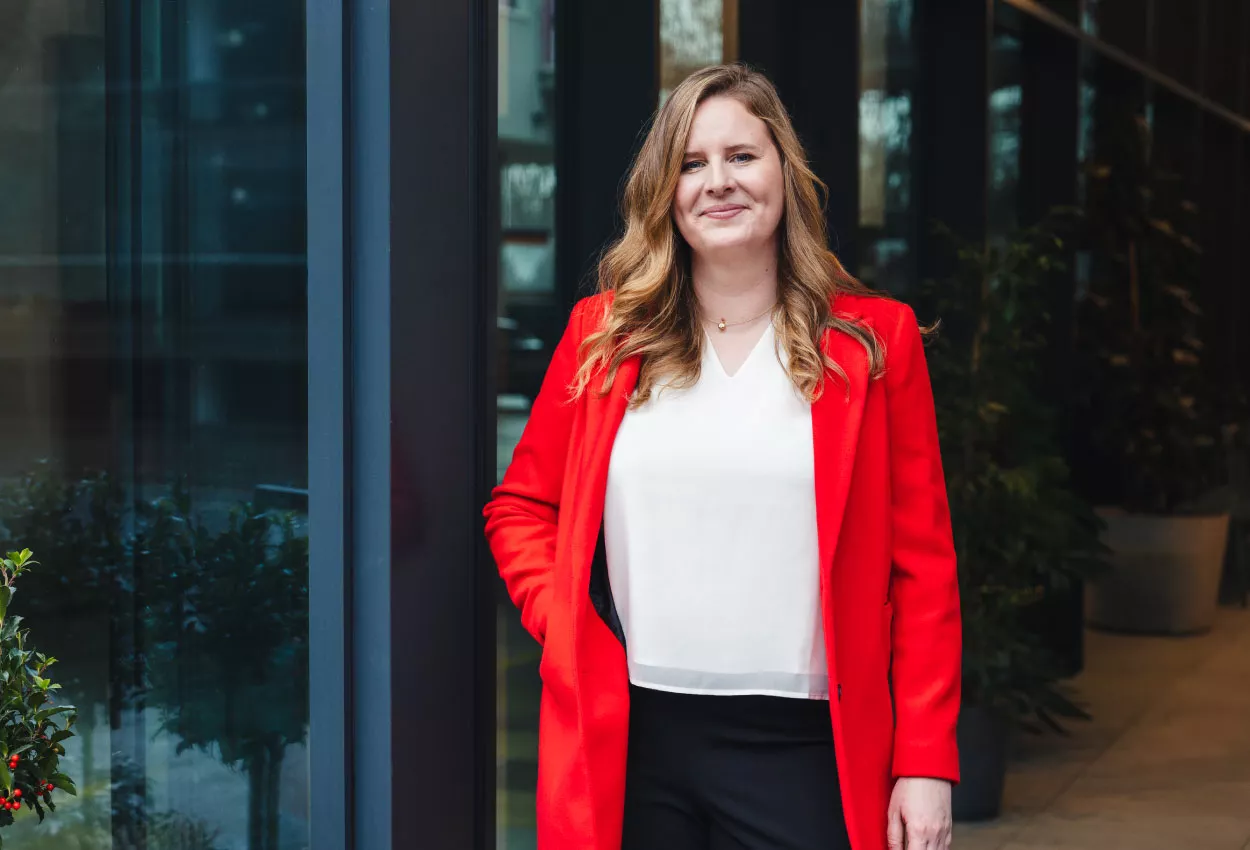
This is where Ines Hubmann builds her work. As leader of the CX Consulting practice at Huble, she helps organizations transform scattered efforts into cohesive customer journeys. She begins with perspective, stepping back to see what customers actually experience, where friction occurs, and where collaboration breaks down internally.
The Storyteller Who Became a Strategist
Ines began her professional journey in publishing and film, driven by a fascination with storytelling and the power of narrative. She was captivated by how stories can move people, shape perception, and communicate meaning. That curiosity led her to study media and later film. Along the way, she worked for magazines, produced short films, and gained hands-on experience on a television show. Each chapter deepened her understanding of how emotional connection is created through both words and visuals.
That fascination with storytelling never left her. Whether shaping brand strategy or guiding marketing initiatives, narrative and aesthetics remain central to her approach. When she helped build and lead a large global team of copywriters in the EdTech space, she relied heavily on her creative background to scale operations without losing clarity or voice. For Ines, growth is about unlocking creative and innovative potential within teams.
She has always found it natural to lead creative people because she understands the freedom they need to perform at their best. Her experience in film sharpened her visual instinct, making it intuitive for her to guide designers and set visual direction. Composition and storytelling feel instinctive to her. At the same time, she has continuously immersed herself in business and technology through hands-on learning.
At heart, Ines still sees herself as a creative strategist. She paints and writes, and her vivid imagination fuels her leadership work. Translating ideas into stories has always come naturally. That creative foundation enables her to develop strong visions and map out how to bring them to life. Understanding what moves people through film and text shaped how she approaches marketing and brand strategy today. It strengthened her systemic thinking, her ability to connect the dots, and her clarity in communication. Looking back, the many chapters of her life have layered together to form the storyteller and leader she is today.
A Global Lens on Leadership
Living and working across different countries from a young age shaped Ines into an open-minded and adaptable leader. Exposure to diverse cultures expanded her understanding of possibilities and encouraged her to step outside her comfort zone. Those experiences taught her that growth often begins with exploration.
Her international background makes it natural for her to build meaningful relationships across markets and cultures. It supports her ability to connect with clients, manage expectations, and engage diverse audiences. Surrounded by cultural diversity both professionally and personally, she developed a leadership style rooted in openness and adaptability.
This global perspective also shaped her commitment to inclusion. Ines strives to create environments where people feel comfortable showing up as their authentic selves. She believes trust and transparency grow when individuals do not feel the need to wear a mask at work. Despite her international experiences, she remains closely connected to her Austrian roots. Time with family and close friends keeps her grounded and balanced amid constant change.
Leadership Born from Setbacks
Working with startups, agencies, a unicorn company, and as a founder taught Ines that perseverance and resilience are non-negotiable. Entrepreneurship, in her view, demands consistency, patience, and a commitment to progress over perfection. Setbacks are inevitable, and the ability to stand up again defines long-term success.
As a solopreneur, she learned to rely heavily on intrinsic motivation and self-discipline. Entrepreneurship requires constant learning, daily decision-making, and stepping into uncertainty without the safety net of stability. She acknowledges that while she does not crave stability, she thrives most when collaborating within a strong team.
Starting her own business became a profound self-discovery journey. It clarified her strengths, exposed her weaknesses, and expanded her understanding of what is possible. Today, when advising C-suite leaders, she draws from lived experience rather than theory. She understands the pressures they face because she has navigated them herself. For Ines, entrepreneurship is both exhilarating and demanding, a mindset that never fully switches off.
Human Alignment as the True Driver of Growth
Over time, Ines recognized that sustainable growth depends as much on human alignment as on systems and strategy. She has repeatedly observed that companies built on a strong culture and people generate long-term trust and stability. When growth stalls, the issue is rarely strategy alone. It is often leadership, communication, and alignment.
She sees recurring patterns such as unclear communication, unrealistic targets, missing soft skills, and vague handovers that create instability. Leaders who align people around shared goals and motivate rather than intimidate create stronger foundations for growth. Technology can support progress, but it cannot replace human connection.
For Ines, poor communication is the most common growth blocker. A lack of active listening and relationship building leads to misalignment and disengagement. Inclusion and clarity around common goals are essential. She believes many organizations focus too narrowly on operational details while overlooking human understanding. People are not replaceable resources. They are the backbone of sustainable growth.
For Ines, impact goes beyond customer experience metrics alone. The social dimension of business matters deeply to her, shaping how organizations grow responsibly and how leadership decisions influence people beyond immediate commercial outcomes.
Crafting Unified Customer Pathways
As leader of the CX Consulting practice at Huble, Ines begins every engagement with the customer’s perspective. In daily operations, organizations often become immersed in internal details. Customer experience work steps back to map journeys, identify drop-offs, and restore clarity.
Her role involves helping leadership teams maintain a big picture view while reducing unnecessary complexity. Internally, she connects different specialties such as media, sales, technology, and solution architecture into one cohesive strategy. Cross-disciplinary understanding is essential, as is the ability to build strong bridges between clients and delivery teams.
As projects scale, documentation, alignment, and regular check-ins become critical. Setting realistic expectations around outcomes and timelines helps maintain trust and direction. For Ines, coherence is not accidental. It is built intentionally through structure and communication.
The Friction Points of Growth and Change
As companies grow, Ines frequently sees customer experience neglected. Leaders often focus on operational pressures and revenue targets, while listening to customers and employees becomes secondary. She believes organizations should invest as much effort into listening as they do into execution. When insights are translated into action, churn naturally decreases.
Strategy is another common friction point. It is sometimes dismissed in favor of quick wins. Yet strategy only creates impact when executed with patience and consistency. Organizations that commit to long-term implementation see meaningful results.
Organizational change remains the most complex challenge. It requires honest reflection, often with external support, to uncover blind spots. Misalignment between teams and leadership is common, and timelines frequently need adjustment to allow for deeper alignment. Change can feel uncomfortable, but acceptance is the first step toward improvement.
For change to succeed, trust, transparency, and open communication are essential. A people-first approach ensures employees and customers feel included in the journey. For Ines, sustainable transformation depends on authentic leadership and shared commitment to move forward together.
Bringing Discipline to AI Adoption
While AI dominates many conversations today, Ines believes technology should always remain secondary to clarity, alignment, and human understanding. For her, the real question is never about the tool itself, but about the purpose it serves.
She also believes that conversations around AI often overshadow broader priorities. For her, social impact and meaningful human outcomes matter more than technology deployment itself.
As organizations explore artificial intelligence to accelerate transformation, she encourages leaders to pause and begin with a simple question: What are we actually trying to achieve? Only when that objective is clear should AI enter the conversation, supporting work in ways that simplify rather than add complexity.
Her approach focuses on practicality over hype. She advocates for solutions that have already proven their value through real use cases, encouraging leaders to define success early and adopt new tools with intention. In her view, AI works best when integrated thoughtfully into a broader roadmap, starting with areas where it brings clear and measurable benefits.
Automation and structured workflows can significantly reduce manual effort and free teams to focus on higher-value work. At the same time, she recognizes that more advanced applications, particularly agent-based AI in customer-facing environments, require patience, testing, and careful oversight. When introduced without clarity or understanding, technology can weaken trust rather than strengthen it. For Ines, discipline and thoughtful adoption remain essential, ensuring that innovation supports people rather than distracting from them.
Mastering Focus in the Modern Customer Journey
When organizations attempt to optimize everything at once, Ines guides them back to focus. She typically begins by analyzing customer drop-off points and examining the collaboration between marketing and sales. Marketing must share the right insights with sales, and sales must feed back what truly resonates in real conversations. This feedback loop is frequently broken or under-optimized.
Buyer journeys have grown increasingly complex, and sales cycles are longer and less coherent. Ines starts by mapping lifecycle stages and identifying friction points across the journey. From there, she helps teams prioritize the areas that genuinely require attention, whether that involves targeting, messaging, refining internal processes, or removing barriers to entry.
Her philosophy is to begin at the core and expand outward. Everything can be improved, but not simultaneously. Clear priorities, a defined end goal, and the systematic removal of blockers enable sustainable progress rather than scattered optimization efforts.
Scaling Customer Experience Across Borders
Having led transformation initiatives across regions such as DACH, the EU, and the United States, Ines sees several underestimated challenges in scaling customer experience globally. One of the most common is the acquisition trap, where organizations invest heavily in acquiring new customers without developing a long-term engagement strategy to retain them.
Cultural differences present another significant challenge. Translation alone does not guarantee relevance. Markets must be deeply understood before expansion efforts can succeed. Local nuance, behavioral patterns, and expectations must all be considered.
Internally, siloed teams often undermine customer experience. True CX requires every department to serve the customer collectively, speaking from the customer’s perspective rather than a departmental lens. Because CX is a long-term investment, demonstrating return on investment can also be complex. The impact is real, but it often requires new measurement frameworks. Fragmented data and siloed systems further complicate global efforts, creating broken experiences. Unified data, in her view, is essential for building coherent and consistent customer journeys across markets.
Sustaining Resilience in High-Pressure Environments
In high-pressure and fast-scaling environments, Ines views well-being as essential rather than optional. On complex projects, she prioritizes regular breaks, sports, yoga, travel, time outdoors, and meaningful time with people close to her. Consulting demands sustained focus under tight deadlines and high complexity, making balance a strategic necessity.
Resilience also stems from the team. A supportive environment where colleagues truly support one another strengthens both performance and morale. For Ines, culture is not abstract. It is a practical driver of resilience.
She thrives on mental stimulation and challenge and does not naturally gravitate toward routine. Yet she is deliberate about switching off. Rather than consuming more information, she seeks experiences that help her disconnect, recharge, and simply enjoy life. This intentional balance sustains her clarity and focus in demanding contexts.
Human-Centered Leadership in an AI-Augmented Future
Looking ahead, Ines sees AI enabling a more proactive form of customer experience leadership. Advanced systems can identify issues before customers are even aware of them. However, increased speed introduces new risks. Misinformation must still be verified, meaning CX strategies now need to serve both human audiences and algorithmic systems.
Search behavior has evolved dramatically, with AI drawing insights from multiple sources simultaneously. As a result, community presence and brand visibility have become more important than ever. Despite these technological shifts, the core human need remains unchanged. People want to be heard, understood, and offered tailored solutions. For Ines, this is where the real focus belongs. Technology evolves, but human needs remain constant.
For customer experience leaders, the challenge is to embrace AI as an enabler while preserving the distinctly human qualities that create differentiation. Empathy, creativity, lived experience, and thoughtful decision-making remain irreplaceable.
Interestingly, despite rapid advancements in AI, adoption within organizations remains slower than expected. Regulatory concerns, data privacy issues, and unclear rollout strategies frequently delay implementation. Many leaders acknowledge AI’s importance but lack a concrete plan for embedding it into daily operations. Until that gap between intention and execution is closed, AI will not become fully integrated into everyday business practice, reinforcing her belief that technology alone cannot replace clarity, alignment, and human understanding.
The Thread That Holds Growth Together
In many ways, the story returns to where it began. Growth today is no longer defined by adding more tools, more processes, or more complexity, but by alignment between people, purpose, and shared direction. Through her work, Ines Hubmann helps organizations reconnect what already exists and turn scattered efforts into intentional progress. The storyteller who once explored how narratives shape human understanding now helps companies shape clearer stories of their own, aligning teams, experiences, and strategy around a common vision. For her, sustainable growth is ultimately human, built on connection, trust, and clarity rather than momentum alone. In a world moving faster than ever, her perspective remains grounded in a simple truth. When people move together with intention, growth becomes not just possible, but meaningful.
Read Also: The Most Influential Women Leaders to Watch Out in 2026