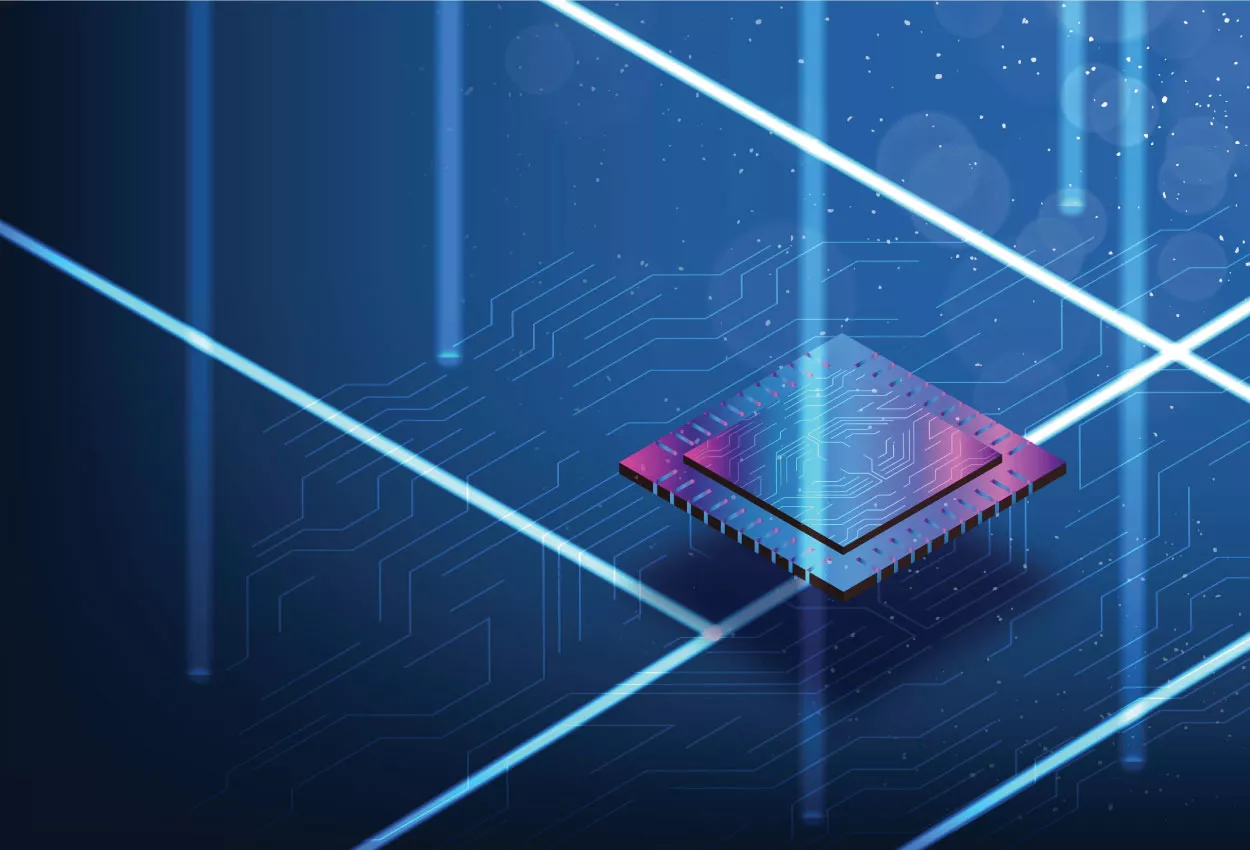
For decades, silicon has been the engine behind technological progress. Every smartphone, computer, data center, and artificial intelligence system owes its existence to the remarkable capabilities of semiconductor chips. As engineers continually reduced transistor sizes and increased processing power, the world experienced an unprecedented digital revolution.
However, the demands of modern technology are exposing the limitations of silicon. Artificial intelligence models require enormous computational resources. Cloud infrastructure consumes vast amounts of energy. Data centers continue to expand, placing growing pressure on power grids and environmental sustainability. The question facing the technology industry is no longer how to make silicon chips slightly better. The real challenge is whether an entirely new approach to computing is needed.
This search for a breakthrough has brought photonic quantum chips into the spotlight, offering a vision of computing powered not by electricity, but by light.
The Limits of a Silicon-Driven World
Silicon has served humanity exceptionally well, but every technology eventually encounters physical boundaries. As transistors become smaller and more densely packed, challenges related to heat generation, energy consumption, and manufacturing complexity become increasingly difficult to overcome.
Artificial intelligence has intensified these concerns. Training advanced AI models requires immense computing power, often consuming significant amounts of electricity. The growing reliance on digital services has also accelerated the expansion of data centers, creating sustainability concerns for governments, businesses, and environmental advocates alike.
While silicon continues to evolve, many experts believe that future technological demands may require a fundamentally different computing architecture. Incremental improvements may no longer be enough to support the next generation of innovation.
Harnessing the Power of Light
Photonic quantum chips represent a radical departure from traditional computing systems. Instead of relying on electrons to carry and process information, these chips utilize photons, the particles that make up light.
The advantages are profound. Light travels faster than electrical signals and generates considerably less heat during transmission. This creates the possibility of processing information at extraordinary speeds while dramatically reducing energy consumption.
In practical terms, photonic chips could perform complex calculations far more efficiently than conventional processors. Tasks that currently require massive computing infrastructure may eventually be completed with significantly lower power requirements and greater speed.
The shift from electricity to light has the potential to redefine what modern computing systems are capable of achieving.
Unlocking a New Era of Artificial Intelligence
One of the areas most likely to benefit from artificial intelligence is photonic quantum computing. AI systems rely on the ability to process vast amounts of data, recognize patterns, and make decisions in real-time.
AI applications are often hampered by bottlenecks caused by current hardware limitations in terms of speed and scalability. Many of these barriers could be overcome with photonic quantum chips, which could transmit data faster and process it more efficiently.
This progress might speed up machine learning, enhance predictive analytics, and lay the foundation of even more advanced AI systems. Its impact could be felt in almost every industry, from healthcare diagnostics and scientific research to financial modeling and self-driving transportation.
As AI becomes more entrenched in society, the demand for faster and more sustainable computing solutions will only increase
The Foundation of Intelligent Machines
The future of robotics is bound to the future of computing. More sophisticated robots have to constantly process data from sensors, interpret changing environments and make fast decisions.
Such capabilities require extraordinary computing power. Traditional semiconductor technologies may struggle to meet the needs of highly intelligent robotic systems that operate in real time.
Photonic quantum chips could offer the performance needed to support a new generation of autonomous machines. Future robots may communicate more efficiently, process information more quickly and operate with more precision than ever before.
Advances in photonic computing could make these machines vastly more powerful, whether they are used in healthcare, manufacturing, emergency response or infrastructure development.
A Future Illuminated by Possibility
All great technological revolutions start with a willingness to question conventional assumptions. Electronics replaced mechanical machines and changed the industries. The advent of the internet changed the way we communicate globally. Artificial intelligence is reshaping the way that people work and engage with technology.
Photonic quantum computing could be the next big shift.
There’s still plenty of research and development to do, but the prospect of faster processing, improved efficiency, and reduced energy consumption has piqued the interest of innovators worldwide. With more and more breakthroughs, the technology may be used for real-world applications that touch on every aspect of modern life.
Computing’s future may not be smaller transistors or more powerful electrical circuits. Or maybe it would be powered by the light itself. The future of technology is beyond silicon. It is smarter, faster, and sustainable, able to support the ambitions of the twenty-first century and beyond.