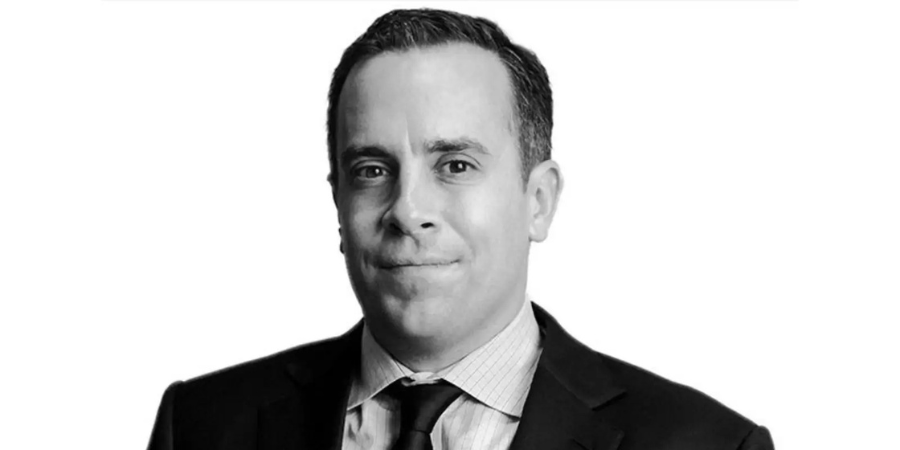
Most people who know the name Matt Danzeisen know it through his connection to Peter Thiel. That is a shame, because it undersells the story.
Charles Matthew Danzeisen is a Cornell University graduate and CFA charterholder who has spent decades operating across Wall Street, Silicon Valley, and Asia-Pacific, a trajectory shaped by venture capital, private equity, and genuine institutional expertise. Before anyone outside finance knew his name, he was already building a serious career at some of the most demanding institutions in the world.
Who is Matt Danzeisen?
Matt Danzeisen worked at BlackRock from 2002 to 2008, serving as Vice President and Portfolio Manager. His work centered on fixed income investments. From there, he moved to Clarium Capital Management LLC as a Portfolio Manager in equities from 2008 to 2017.
Around 2007, his professional path crossed with Peter Thiel’s. When Thiel explored relocating Clarium Capital, his macro hedge fund, to New York, Danzeisen was already based there. He left BlackRock and joined Clarium Capital in 2008, later transitioning into Thiel Capital as portfolio manager and head of private investments.
At Thiel Capital, his investment focus spans biotech, artificial intelligence, fintech, and early-stage startups with long-term strategic positioning. In 2012, he co-founded Crescendo Equity Partners alongside Thiel and others, headquartered in Seoul.
A current official profile at Haymaker Ventures describes him as Head of the Investment Advisory Committee, noting that at Thiel Capital he spent a decade working on private investments.
Quick profile:
| Detail | Facts |
| Full name | Charles Matthew Danzeisen |
| Education | Cornell University, CFA charterholder |
| Early career | Bank of America Securities, BlackRock (VP) |
| Major role | Head of Private Investments, Thiel Capital |
| Co-founded | Crescendo Equity Partners, Seoul (2012) |
| Board roles | Bridgetown 3 Holdings, Trumid Holdings LLC, iText Group NV, Coru Holdings Ltd |
| Personal life | Married Peter Thiel in Vienna, October 2017 |
What Can We Learn From Matt Danzeisen’s Finance Career?
His career did not happen because of luck or connections alone. It followed a clear pattern: build deep technical skills, move into private markets, invest with a long-time horizon, and operate with discipline across geographies. Those patterns translate into real, usable lessons.
Lesson 1: What Does Starting in Institutional Finance Actually Teach You?
Most people underestimate how much the early years form the rest of a finance career.
Danzeisen worked as an investment banker at Bank of America Securities before becoming a Vice President and Portfolio Manager at BlackRock in fixed income. Those are not light résumé lines. They suggest training in institutional finance, capital markets discipline, and portfolio thinking long before he became more widely known.
Fixed income at a firm like BlackRock means learning how risk behaves across economic cycles. It teaches precision. It teaches you that markets are not always rational and that pricing matters more than narrative.
What this means for you:
- If you are early in your career, depth beats breadth. Learn one area of finance thoroughly before expanding.
- Fixed income, credit analysis, and risk management are unglamorous but foundational. They show up in every serious investment role later.
- Technical skills, CFA, portfolio construction, financial modelling, open institutional doors that connections alone cannot.
Lesson 2: Why Does Moving From Public to Private Markets Matter?
One of the pivotal shifts in Danzeisen’s career was taking a lead role at Thiel Capital. There, he worked on private investments, overseeing large equity and debt deals in sectors like fintech, biotech, and AI.
The move from public markets to private investing is significant. Public markets are liquid, efficient, and heavily analyzed. Private markets are the opposite. Fewer eyes, longer time horizons, and higher potential returns, but only for those who know how to evaluate what is not yet visible.
Danzeisen’s background in fixed income and macro investing at BlackRock and Clarium Capital gave him the risk framework to make that transition credibly.
What this means for you:
- Private markets, private equity, venture capital, private credit, have historically outperformed public equities over long periods, according to Cambridge Associates data.
- The transition requires patience. Private investments do not have daily prices. You have to be comfortable with illiquidity.
- Understanding both public and private markets makes you a more complete investor.
Lesson 3: How Important is Sector Focus in Long-Term Investing?
Danzeisen focuses on long-term, ethical investing, particularly in sectors like technology, healthcare, and renewable energy. He prioritizes sustainable growth and seeks opportunities that create lasting value.
Financial technology innovations that revolutionize banking and payment systems, companies developing next-generation medical solutions, and sustainable energy alternatives are areas where his strategic focus is concentrated.
These three sectors share a common trait: they solve problems that scale. Technology reduces friction. Healthcare extends life. Energy powers everything else. Investing in structural shifts, not short-term trends, is a very different mindset.
What this means for you:
- Pick sectors you understand deeply rather than chasing whatever is generating headlines.
- Look for sectors with long structural tailwinds, demographics, regulation shifts, technology adoption curves.
- The best private investors often know one or two sectors better than almost anyone outside those industries.
Lesson 4: What Does Geographic Diversification Look Like at a Senior Level?
Most retail investors think of diversification as owning different stocks. Danzeisen’s career shows what it looks like at the institutional level.
He oversees investments across the United States, Europe, Asia, and Australia, and plays a key role in managing funds in countries like Japan and South Korea.
According to Handelsblatt, he effectively co-manages Thiel Capital alongside Peter Thiel. His mandate covers equity investments across the United States, Europe, Australia, Japan, and South Korea, including direct management of two funds in Japan and South Korea during key periods of the firm’s Asia expansion.
Geographic diversification at this level is about accessing different growth cycles, regulatory environments, and consumer behaviors. Asia-Pacific in particular has offered private market opportunities that Western capital has historically underweighted.
What this means for you:
- Global diversification is not just about currency risk. It is about accessing growth stories that are not available in your home market.
- Emerging markets carry higher risk but also structural growth advantages, younger populations, rising middle classes, faster technology adoption.
- Understanding the regulatory environment of a country before investing is as important as understanding the company itself.
Lesson 5: Why Do Board Roles Signal Investment Seriousness?
Danzeisen chairs Bridgetown 3 Holdings Ltd. and serves on boards including Trumid Holdings LLC, iText Group NV, and Coru Holdings Ltd.
Board seats are not honorific. They carry fiduciary responsibility, legal exposure, and real involvement in governance decisions. Senior investors who sit on boards have access to information, strategy discussions, and management evaluation that outside shareholders simply do not.
For Matt Danzeisen, board roles represent the natural extension of deep private market investing, you do not just put capital in and wait. You help shape the company’s direction.
What this means for you:
- If you are investing in private companies, governance involvement protects your capital better than passive ownership.
- For career growth, board advisory roles signal seriousness and expand your network into senior leadership.
- Understanding corporate governance, voting rights, board composition, fiduciary duties, is essential knowledge for any serious investor.
Lesson 6: What is the Finance Lesson Behind Co-Founding a Firm?
In 2012, Danzeisen co-founded Crescendo Equity Partners alongside Peter Thiel and others, headquartered in Seoul.
Beyond his work at Thiel Capital, Crescendo Equity Partners is a private equity firm specializing in growth-stage companies, focusing on identifying businesses with strong fundamentals and expansion potential.
Co-founding a firm while running another major role is a deliberate act. It signals that he saw a market gap, specifically in Asia-Pacific private equity, that existing structures were not addressing. That ability to identify white space and build a structure around it is one of the most transferable skills in finance.
What this means for you:
- Entrepreneurial thinking inside finance, identifying gaps, building new structures, creates compounding value over time.
- Growth-stage investing sits between venture capital and buyout private equity. It is often where the best risk-adjusted returns exist.
- Geographic specialization, like focusing on South Korea and Asia-Pacific, builds a competitive edge that generalists cannot easily replicate.
Lesson 7: How Does Matt Danzeisen Approach Risk in Private Investments?
Danzeisen is known for a cautious yet forward-looking investment philosophy. Rather than following short-term market trends, he focuses on businesses with lasting impact and scalable potential. This diversified approach reflects his belief in balanced and resilient portfolios.
Insiders describe Danzeisen as the calm to Thiel’s storm, a counterbalance to Thiel’s often radical bets and philosophical musings.
That balance is itself a finance lesson. Peter Thiel is known for concentrated, contrarian bets, PayPal, Facebook, Palantir. Danzeisen’s role is to apply discipline and risk management around those convictions. Every strong investment team needs both: the visionary and the operator who asks what happens if we are wrong.
What this means for you:
- Portfolio construction is not just about picking winners. It is about sizing positions correctly and knowing your downside before your upside.
- Risk management is a skill set, not just a personality trait. It can be learned through frameworks: scenario analysis, stress testing, position limits.
- Having a risk counterpart, or being one, is valuable in any investing or business context.
Lesson 8: What Does Matt Danzeisen’s Career Say About the Value of a CFA?
Danzeisen holds a CFA charterholder designation, which is one of the most demanding professional credentials in finance. The CFA program covers portfolio management, asset valuation, ethics, fixed income, derivatives, and alternative investments across three levels.
His career trajectory, from Bank of America to BlackRock VP to leading private investments at one of Silicon Valley’s most notable firms, followed a path where technical credibility mattered at every step.
What this means for you:
- The CFA is globally recognized and respected across asset management, investment banking, and private equity.
- According to the CFA Institute, over 190,000 professionals hold the charter worldwide, and pass rates for each level sit between 40–50%, making it genuinely selective.
- For anyone targeting institutional finance or portfolio management, the CFA signals intellectual rigor to employers.
Lesson 9: What Does Matt Danzeisen and Peter Thiel’s Working Relationship Teach About Finance Partnerships?
The working relationship between Matt Danzeisen and Peter Thiel exists on the grounds of deep mutual respect and a shared belief in changing the finance and technology sectors.
According to Handelsblatt, Danzeisen effectively co-manages Thiel Capital alongside Peter Thiel.
The lesson here is not personal, it is structural. The best finance partnerships work because each person brings something distinct. Thiel brings vision, ideology, and an extraordinary network. Danzeisen brings execution, risk discipline, and operational credibility across multiple geographies. Neither replaces the other.
What this means for you:
- Know whether you are the visionary or the operator in a partnership. Both are valuable. Problems arise when two visionaries partner without an operator.
- Trust in financial partnerships is built on track record and transparency, not just personal rapport.
- At senior investment levels, who you work with shapes your deal flow, your reputation, and your access to the best opportunities.
Lesson 10: What Does Operating Quietly in Finance Actually Look Like?
What makes Danzeisen especially interesting is how little of his life is presented in a self-promotional way. There is no widely known public brand built around podcasts, social media visibility, or constant interviews. Instead, the available public record presents him as a behind-the-scenes operator whose career has moved through respected financial institutions into private investment leadership.
In an era where every finance personality has a newsletter and a podcast, Danzeisen’s career is a reminder that results compound quietly. The board seats, the co-founded firms, the decade at Thiel Capital, none of these required a public profile. They required performance.
What this means for you:
- Reputation in institutional finance is built through your track record and your network, not your follower count.
- Quiet operators often have access to better deal flow because they are trusted with sensitive information.
- Building a career based on expertise rather than visibility creates longer-lasting, more durable success.
Summary: 10 Finance Lessons From Matt Danzeisen
| # | Lesson | Core Takeaway |
| 1 | Start in institutional finance | Technical depth in early roles shapes everything after |
| 2 | Move into private markets deliberately | Illiquidity is a feature, not a bug, for long-term investors |
| 3 | Focus on sectors with structural tailwinds | Technology, healthcare, energy solve problems that scale |
| 4 | Diversify geographically | Asia-Pacific and emerging markets offer growth Western capital underweights |
| 5 | Take board roles seriously | Governance involvement protects capital better than passive ownership |
| 6 | Build where gaps exist | Co-founding Crescendo Equity in Seoul addressed a real white space |
| 7 | Balance vision with risk discipline | Every strong team needs a visionary and an operator |
| 8 | Earn technical credentials | CFA credibility opens institutional doors |
| 9 | Choose partners who complement you | The best finance partnerships work because each side brings something distinct |
| 10 | Let results speak | Quiet performance compounds. Visibility is optional |
FAQs About Matt Danzeisen
Who is Matt Danzeisen? Charles Matthew Danzeisen is an American financier and investor. His career spans institutional asset management, private equity, and board-level governance across the United States, Europe, and Asia-Pacific.
What is Matt Danzeisen’s role at Thiel Capital? Danzeisen joined Thiel Capital in 2008 and rose to Head of Private Investments, managing deals in fintech, AI, and biotech.
Who is Peter Thiel’s husband? Matt Danzeisen married Peter Thiel in 2017 in a private ceremony in Vienna, Austria, reflecting Danzeisen’s low-profile nature.
What is Matt Danzeisen’s net worth? His net worth is estimated at $5–8 million, with a focus on long-term financial strategies rather than speculative ventures. Exact figures are not publicly confirmed.
Does Matt Danzeisen have children? Matt Danzeisen and Peter Thiel reportedly have children via surrogacy, but the couple keeps their family life private.
What did Matt Danzeisen do before Thiel Capital? He worked as an investment banker at Bank of America Securities before becoming a Vice President and Portfolio Manager at BlackRock in fixed income.
What is Crescendo Equity Partners? Crescendo Equity Partners is a private equity firm co-founded by Danzeisen in 2012, headquartered in Seoul, focused on growth-stage companies across Asia-Pacific.
Matt Danzeisen career is worth studying not because it is flashy, but because it is not. It follows a clean, disciplined line: build technical credibility, move into private markets, diversify thoughtfully across sectors and geographies, and operate with the kind of quiet consistency that institutional finance actually rewards. That is a template most people can learn from, regardless of where they are starting.